Strategic De-escalation: The Suspension of Project Freedom
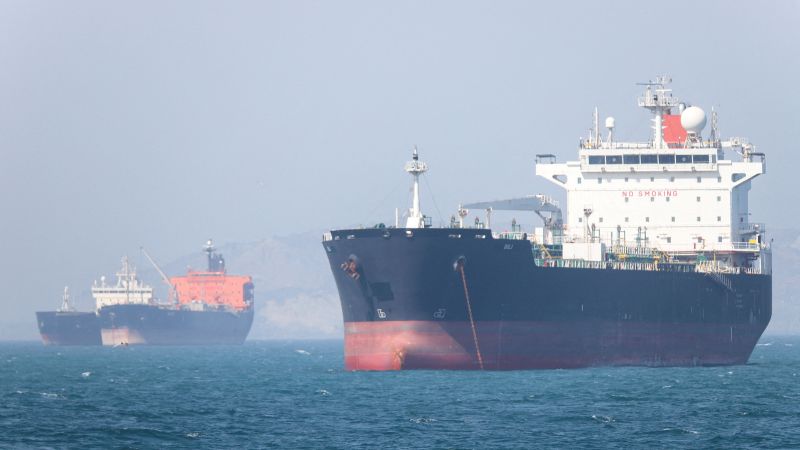
The abrupt tactical deceleration of the United States military operation, ‘Project Freedom,’ represents a fundamental reconfiguration of the maritime security architecture within the Strait of Hormuz. By transitioning from direct kinetic protection of commercial vessels to a posture of strategic containment via port blockades, the U.S. administration is attempting to deflate the geopolitical risk premium that has historically volatileized global crude benchmarks.
This operational pivot facilitates a temporary de-escalation in the world’s most critical energy chokepoint. While the Islamic Revolutionary Guard Corps (IRGC) Navy has asserted de facto operational control over transit protocols, the U.S. maintains economic leverage through restricted Iranian exports. For commercial shipping entities, this shift introduces a complex regulatory environment where safety is contingent upon Iranian maritime authority rather than Western naval umbrellas.
Market Correction and the ‘Peace Dividend’
Global energy markets responded with significant deflationary pressure. Brent crude plummeted 11%, breaching the $98 support level, while West Texas Intermediate (WTI) fell 11.3% to $90.74. Financial analysts characterize this correction as a ‘peace dividend’—the rapid removal of the war premium as traders transition toward a risk-on sentiment in anticipation of stabilized supply chains.
However, the rapid price descent highlights a fragile market sentiment. The current price floor remains highly susceptible to speculative reports of a memorandum of understanding. Without concrete diplomatic milestones, the market remains vulnerable to any reversal in rhetoric or renewed maritime friction.
The Beijing Nexus and Trilateral Diplomacy
China, as the primary consumer of Iranian crude, has emerged as the central mediator in this trilateral dynamic. Recent high-level discussions in Beijing between Iranian and Chinese foreign ministers have set the stage for the upcoming summit between President Trump and Chinese leader Xi Jinping. Beijing’s objective is clear: secure stable, low-cost energy flows to support its industrial sector by brokering a non-military resolution.
For Washington, leveraging China’s economic influence over Tehran offers a diplomatic off-ramp. This intersection of energy security and regional stability suggests that the resolution of the Hormuz crisis is now inextricably linked to the broader strategic competition and cooperation between the U.S. and China.
Operational Realities and Structural Friction
Despite market optimism, operational normalization will not be instantaneous. Transitioning a contested military zone back into a functional commercial waterway involves significant hurdles in maritime insurance (P&I coverage) and logistics. Navigating IRGC-established protocols introduces legal uncertainties for sanctioned entities, potentially delaying a return to pre-conflict trade volumes for several months.
Furthermore, the global economy is grappling with ‘demand destruction’ triggered by the preceding period of surging energy costs. High prices have already forced industrial sectors to curtail consumption or pivot to alternative sources—a structural shift that a simple price drop may not immediately rectify. The uneven distribution of global oil inventories further compounds this, leaving key regions exposed to supply shocks if diplomatic efforts falter.
Coercive Diplomacy and Institutional Outlook
The pause in ‘Project Freedom’ is not a total withdrawal but a component of coercive diplomacy. The U.S. administration has signaled that military operations could resume with higher intensity if negotiations fail to produce a comprehensive agreement. This dual-track strategy—diplomatic engagement backed by the threat of force—ensures that Tehran remains under pressure to concede on maritime security and regional influence.
Institutional trading desks are currently recalibrating portfolios to account for a potential peace deal. While investors are betting on diplomatic momentum, the lack of transparency regarding the proposed terms remains a primary risk factor. Until a formal, verifiable framework is established, the oil market will remain in a state of high-alert volatility, sensitive to every signal from the Washington-Beijing-Tehran axis.