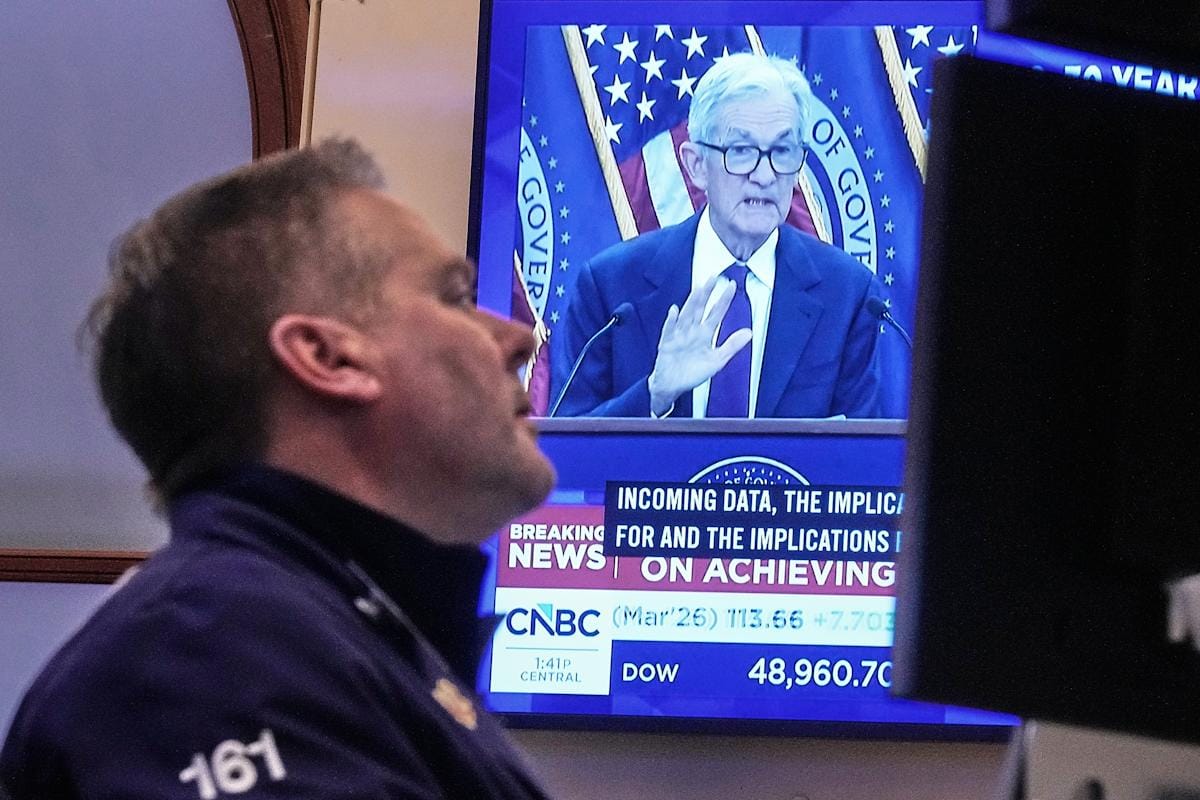
United States stock futures registered declines on Sunday night, signaling a cautious commencement to a new month of trading on Wall Street. Major indices, including the Dow Jones Industrial Average, S&P 500, and Nasdaq futures, observed significant downward movements as market participants began to position themselves for a week laden with influential economic and policy-related announcements. This early market reaction is indicative of underlying investor sentiment and risk assessment as global financial systems prepare for the full trading week.
Specifically, Dow Jones Industrial Average futures were reported to have lost 143 points in Sunday night trading. This movement in futures contracts provides an anticipatory gauge of how the underlying cash market index may perform upon opening. Futures contracts are financial instruments that obligate a buyer or seller to transact an asset at a predetermined price on a future date, effectively allowing market participants to speculate on or hedge against future price movements of benchmark indices. Their activity outside of regular trading hours often sets the tone for the subsequent trading session.
Beyond the Dow, broader market sentiment was reflected in the reported plunge of S&P 500 and Nasdaq futures. The S&P 500 index is widely regarded as one of the best gauges of large-cap U.S. equities and the overall health of the American economy. Its futures movements are therefore closely watched for a comprehensive outlook on corporate performance and investor confidence. Similarly, the Nasdaq Composite, heavily weighted towards technology and growth stocks, provides critical insights into the performance of innovation-driven sectors, making its futures activity a key indicator for this segment of the market.
Immediate Catalysts for Market Caution
Several immediate factors appeared to contribute to the observed declines in stock futures. A notable influence stemmed from the cryptocurrency markets, particularly a significant sell-off in Bitcoin over the weekend. While distinct from traditional equities, the interconnectedness of modern financial markets means that substantial volatility or price depreciation in major digital assets like Bitcoin can sometimes ripple through broader investor sentiment. A sharp decline in cryptocurrencies can, for instance, be interpreted as a broader withdrawal from risk assets or a reflection of diminished speculative appetite, impacting equity markets that have often seen speculative inflows.
The monitoring of Bitcoin’s performance by traditional traders underscores a growing trend where institutional investors and financial analysts integrate cryptocurrency market dynamics into their comprehensive risk assessments. The digital asset market, once considered peripheral, now frequently serves as an additional barometer for gauging global liquidity conditions and prevailing risk-on or risk-off sentiment. Consequently, a substantial weekend sell-off in such a prominent digital asset can trigger a cautious approach among equity traders anticipating the next week’s activities.
Anticipated Policy and Economic Influences
Looking ahead, the upcoming trading week is expected to be significantly shaped by two critical developments: an anticipated announcement regarding a Federal Reserve appointment by former President Trump, and the release of new jobs data. A Federal Reserve Board appointment is a pivotal event for financial markets due to the central bank’s profound influence over monetary policy. The individual chosen for such a role contributes to the collective decision-making body that sets benchmark interest rates, manages the money supply, and supervises financial institutions. Any change in the composition of the Federal Reserve’s leadership can introduce uncertainty or alter expectations regarding the future trajectory of monetary policy, directly impacting borrowing costs, corporate earnings, and overall economic growth projections.
The market’s attention to a prospective Federal Reserve pick reflects the profound impact of central bank independence and policy continuity on financial stability. Investors constantly assess the likelihood of shifts in hawkish or dovish leanings within the Federal Open Market Committee (FOMC), the primary monetary policymaking body. A new appointment could either reinforce existing policy frameworks or signal a potential pivot, prompting re-evaluation of asset allocations and risk premiums across various market segments. Such an event inherently carries significant weight in shaping forward-looking market sentiment.
Concurrently, the forthcoming jobs data represents another high-stakes economic indicator. Employment figures, particularly the monthly non-farm payrolls report, are closely scrutinized by economists, policymakers, and investors alike as a primary measure of economic health and labor market strength. Robust job growth typically signals a healthy economy, which can be positive for corporate revenues but might also fuel inflation concerns, potentially prompting the Federal Reserve to adopt a more restrictive monetary policy. Conversely, weaker job numbers could suggest an economic slowdown, which might lead to expectations of more accommodative monetary policy.
The intricate relationship between employment data, inflation expectations, and Federal Reserve policy is a cornerstone of macroeconomic analysis for traders. Strong employment, if accompanied by wage pressures, can contribute to inflationary trends, which the Federal Reserve is mandated to control through tools like interest rate adjustments. Therefore, the release of this data does not merely report past economic activity but significantly influences market participants’ projections for future interest rate decisions and overall economic trajectory, directly affecting the valuation of equities and other asset classes.
Commodity Market Dynamics and Sectoral Concerns
Beyond equities and digital assets, commodity markets also displayed notable movements that contributed to the complex tapestry of market sentiment. Reports indicated that stock futures were falling along with oil prices. Oil, a fundamental global commodity, often serves as a proxy for global economic activity. A decline in oil prices can suggest weakening industrial demand or concerns about future economic growth, which typically correlates with a more cautious outlook for equity markets, particularly those tied to manufacturing, transportation, and consumer spending.
The interplay of supply and demand dynamics in the global oil market is a perpetual focus for financial analysts. Factors such as geopolitical stability, production quotas from major oil-producing nations, and global consumption rates all contribute to price volatility. A downward trend in oil prices, therefore, can reflect a confluence of these elements, translating into broader economic anxieties that cascade into equity valuations, especially for energy sector companies and those whose operational costs are heavily influenced by fuel prices.
In contrast to the broad market declines, some commodity segments showed different trends. While some reports indicated a ‘silver sell-off’ as a contributing factor to broader market movements, other analyses concurrently observed both gold and silver ‘drifting higher’ during this period. These divergent observations underscore the complex and often multi-faceted nature of commodity market reporting, where different timeframes or specific market segments might experience varying dynamics. Gold and silver, traditionally considered safe-haven assets, often attract investor capital during periods of economic uncertainty or market volatility, serving as a hedge against inflation or currency depreciation. Their upward movement, even if nuanced by conflicting reports, can signal investor apprehension about the stability of riskier assets.
Furthermore, an emerging area of market deliberation involved “questions looming over AI trade.” This phrase suggests concerns regarding the sustainability, valuation, or regulatory landscape surrounding companies heavily involved in artificial intelligence technologies. The AI sector has experienced significant growth and investor interest, leading to substantial valuations for many related enterprises. Questions about the “AI trade” could imply worries about potential overvaluation, the pace of technological adoption, competitive pressures, or even nascent regulatory scrutiny that might temper future growth expectations. Such sectoral concerns can lead to profit-taking, rebalancing of portfolios, or a broader re-evaluation of investment themes, contributing to overall market cautiousness.
The scrutiny over the AI sector reflects broader market cycles where burgeoning technologies attract substantial capital, sometimes leading to periods of intense speculation. As such sectors mature, investors often begin to evaluate fundamental metrics more rigorously, questioning revenue models, competitive advantages, and long-term profitability. This transition from purely growth-driven investment to value-oriented assessment can introduce volatility and uncertainty within previously high-flying segments of the market, influencing overall market sentiment.
Structural Market Mechanisms and Interpretations
The observed fall in stock futures on Sunday night is a common occurrence that highlights the continuous nature of global financial markets, even when primary exchanges are closed. Futures markets operate nearly around the clock, offering a crucial venue for price discovery and risk management during hours when cash equity markets are inactive. This extended trading window allows institutional investors and high-frequency traders to react promptly to breaking news, economic data releases, or significant geopolitical events that occur outside of conventional trading hours, thereby influencing the opening sentiment for the week ahead.
The significance of “Wall Street begins a new month of trading” cannot be overstated in terms of market dynamics. The turn of the month often prompts various institutional activities, including portfolio rebalancing by fund managers, allocation of fresh capital by large investment vehicles, and the unwinding or initiation of new hedging strategies. This cyclical pattern can sometimes amplify market movements, as a concentrated volume of activity occurs within a relatively short timeframe. It represents a psychological reset point for many market participants, influencing the strategic outlook for the coming weeks.
The notion of “traders keeping an eye on” various indicators, such as the Bitcoin sell-off, speaks to the sophisticated surveillance and analytical frameworks employed by modern financial market participants. Professional traders utilize a vast array of data points, technical indicators, and fundamental analyses to anticipate market shifts. Their collective vigilance regarding specific asset classes or economic signals is a driving force behind early market movements, often preceding more widespread shifts in broader equity markets. This constant vigilance underscores the proactive and often anticipatory nature of futures trading.
In conclusion, the Sunday night decline in U.S. stock futures reflects a complex interplay of immediate market reactions to commodity volatility, particularly in Bitcoin, and forward-looking anticipation of significant economic and policy events. The upcoming week’s focus on a Federal Reserve appointment and crucial jobs data, combined with ongoing scrutiny of high-growth sectors like AI, creates an environment of heightened investor caution. These early movements in futures markets serve as important barometers, indicating the prevailing sentiment as Wall Street prepares to navigate a period potentially defined by key shifts in monetary policy expectations and economic outlook. While futures provide vital signals, their movements represent anticipatory positions rather than definitive outcomes for the cash markets, whose performance will unfold in the days to follow based on actual data and policy developments.