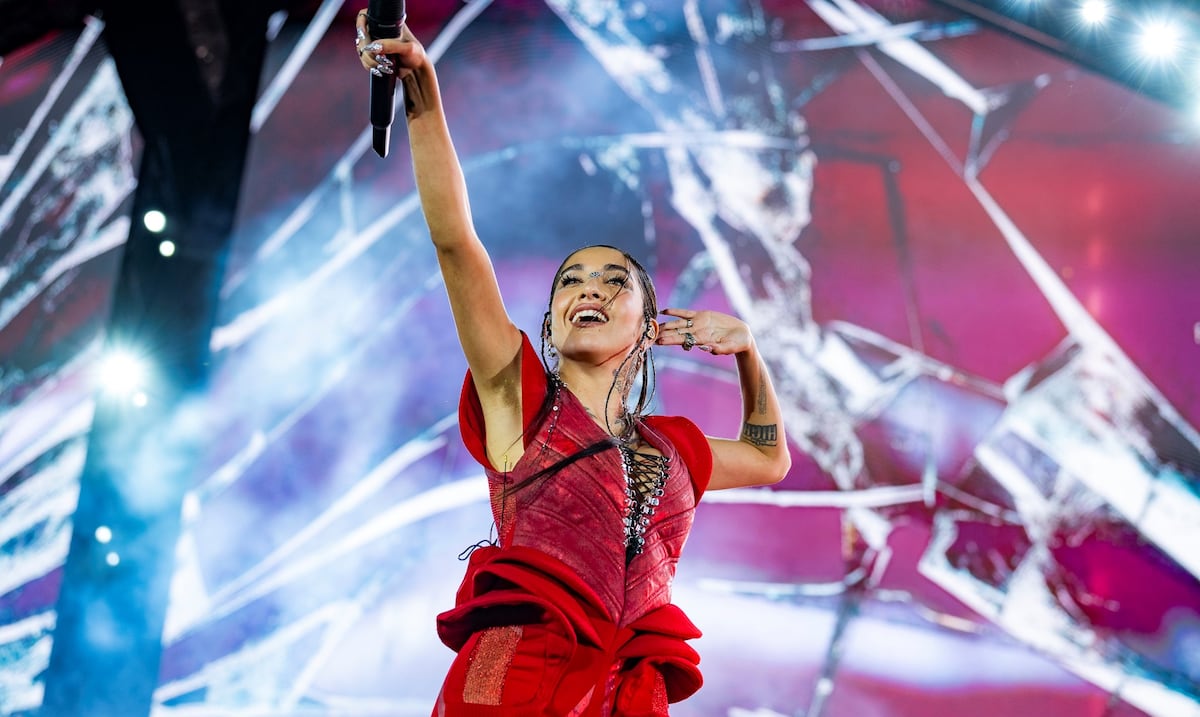
The designation of Maria Becerra to perform the Argentine national anthem at the 2026 World Cup Final represents a sophisticated synthesis of athletic pageantry and geopolitical branding. Her presence at MetLife Stadium signifies a pivot by the Argentine Football Association (AFA) and FIFA toward a digitally native demographic. Technical validation of her role was established through rigorous acoustic reconnaissance at the 82,500-capacity venue, a prerequisite for an event commanding a global audience of billions.
Synergistic Branding and the Messi Equity
Becerra’s communication strategy exemplifies modern celebrity asset management. By utilizing high-altitude social media dispatches featuring World Cup iconography and Lionel Messi’s jersey, she leveraged the captain’s immense cultural capital to institutionalize her standing within the national sports hierarchy. This visual narrative creates a symbiotic loop between the recording industry and elite football, effectively soft-launching a major commercial milestone for her management and global partners.
Logistical Realignment and Global Stage Hierarchy
Prioritizing the World Cup Final necessitated a significant operational pivot, specifically the rescheduling of her performance at Spain’s Bigsound Festival. This move illustrates the rigid hierarchy of global visibility, where the prestige of a FIFA final necessitates the suspension of regional contractual obligations. The confidentiality surrounding these maneuvers reflects the high-stakes environment of international sporting ceremonies, where operational complexity and nondisclosure agreements dictate the cadence of public announcements.
The Competitive Landscape of Cultural Representation
Selection for the anthem slot is an intricate interplay of player preference, institutional strategy, and cultural momentum. While Lali Espósito’s tenure in Qatar 2022 established a pop-centric precedent, the transition to Becerra indicates a drive for generational renewal. The presence of internal competition from exports like Tini and Andrés Calamaro underscores the anthem’s value as a tool for career consolidation, serving as the ultimate endorsement within the Argentine entertainment ecosystem.
Institutional Diplomacy and Traditionalist Integration
Professional etiquette within this high-stakes environment was recently modeled by Soledad Pastorutti. By maintaining institutional decorum and prioritizing the collective result over individual performance, Pastorutti mitigated potential friction between the folk traditionalists and the modern urban-pop movement. This diplomatic alignment ensures that the inclusion of younger artists is perceived as a natural expansion of national identity rather than a disruption of established heritage.
Operational Execution and North American Market Expansion
The MetLife Stadium sound checks serve as the definitive marker of official status, moving the narrative from speculative discourse to technical execution. For Becerra, this performance functions as a high-value entry point into the North American commercial hub. The strategic timing maximizes the return on investment for her ‘Nena de Argentina’ brand, potentially catalyzing significant growth in streaming metrics, touring revenue, and international endorsements within the U.S. and Mexican markets.
Conclusion: The Evolution of National Symbology
As the final between Argentina and Spain approaches, the resolution of the anthem singer selection cycle clarifies the cultural positioning of the national team in 2026. The inclusion of Andrés Calamaro in the logistical pool suggests the use of high-profile redundancies to mitigate operational risks. Becerra’s confirmation marks the commencement of a high-stakes performance that will redefine how national symbols are presented in an increasingly commercialized and globalized entertainment landscape.