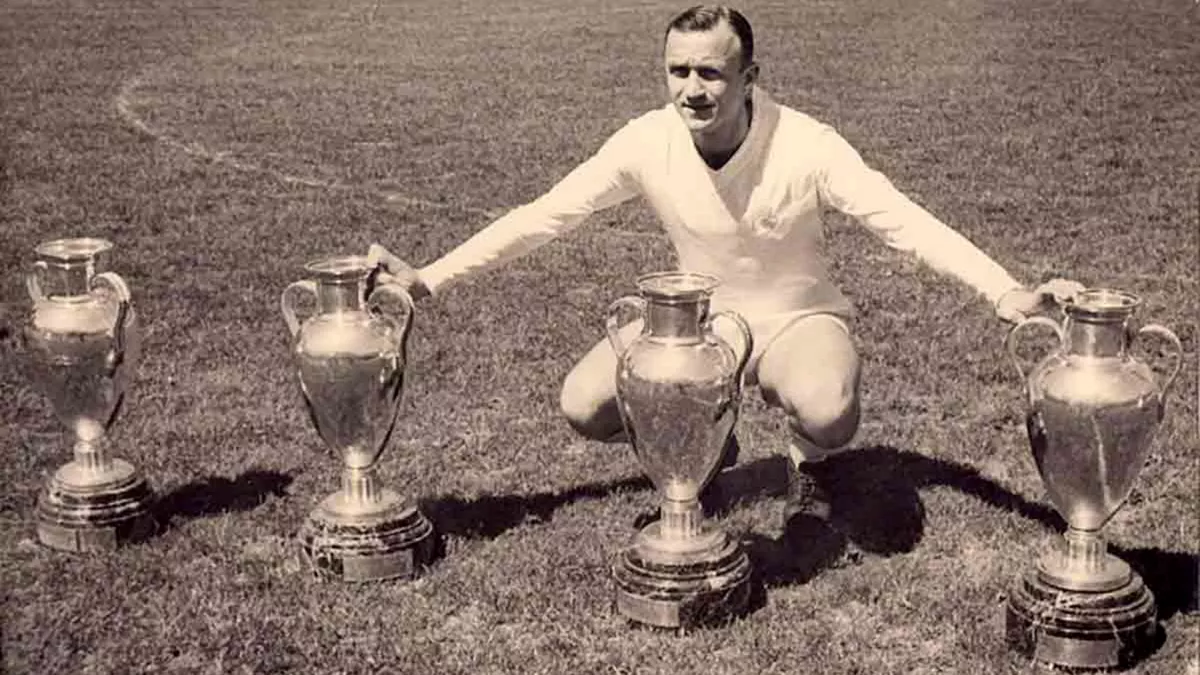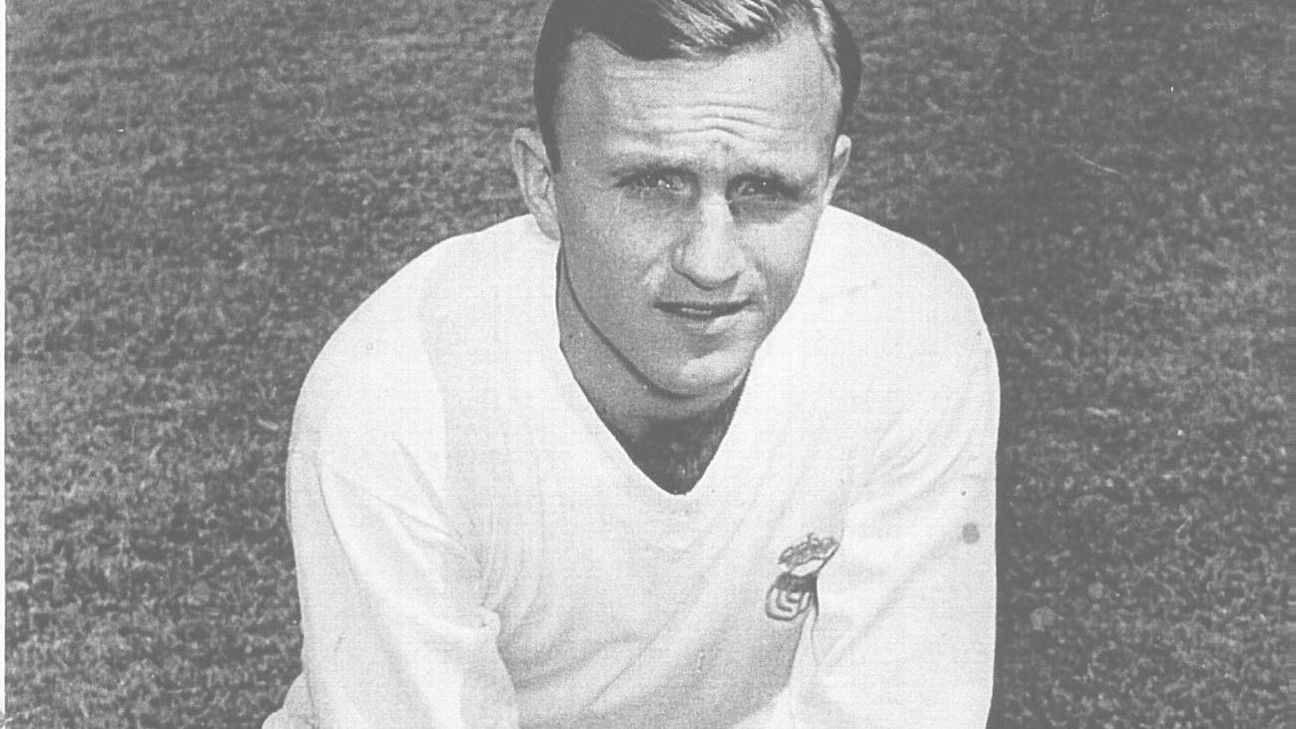
The passing of José Emilio Santamaría at age 96 marks the conclusion of a foundational epoch in professional football. More than a legendary defender, Santamaría was a strategic necessity for Real Madrid during the late 1950s—a period characterized by the club’s transition from a regional power to a global institution. His arrival in 1957 from Club Nacional de Football provided the defensive equilibrium required to sustain the offensive brilliance of Di Stéfano and Puskás, effectively professionalizing the club’s backline during the dawn of the European Cup.
The 1957 Tactical Integration
Santamaría’s transfer was a watershed moment in the globalization of the transfer market. By acquiring South America’s premier center-back, Real Madrid addressed a critical structural vulnerability. His 337 official appearances over nine seasons (1957–1966) were defined by an ‘operational durability’ that predated modern sports science. This consistency allowed Madrid to maintain a high defensive line, facilitating the ‘total football’ precursors of the era. His record of appearances stood for nearly 60 years, a testament to his physical resilience and tactical discipline.
Institutional Legacy and Brand Equity
Winning four European Cups, one Intercontinental Cup, and six La Liga titles, Santamaría was instrumental in building Real Madrid’s ‘Universal Legend’ status. The 1960 Intercontinental Cup victory, in particular, solidified the club’s claim to global supremacy, with Santamaría acting as the defensive anchor against aggressive South American tactical systems. Beyond the pitch, President Florentino Pérez has noted that the club’s modern commercial and competitive framework is a direct byproduct of the standards set by Santamaría’s generation.
Managerial Impact and the 1982 World Cup
Santamaría’s transition to management showcased his versatility. His seven-year tenure at RCD Espanyol brought rare stability to the club, while his appointment as Spain’s head coach for the 1982 FIFA World Cup represented the pinnacle of his technical career. Tasked with leading a host nation during a period of immense political and social transition, Santamaría’s leadership bridged the gap between traditional grit and emerging technical professionalism in the Spanish federation.
Regulatory Duality: A Career Across Borders
Santamaría remains one of the few players to represent two different nations in the World Cup: Uruguay (1954) and Spain (1962). This dual representation provides a historical window into the fluid eligibility regulations of the mid-20th century. His ability to integrate into both the Uruguayan ‘garra’ tradition and the technical requirements of Spanish football highlights a high tactical IQ that allowed him to thrive across disparate footballing cultures. His legacy is not merely one of titles, but of the successful cross-continental exchange of footballing philosophy.