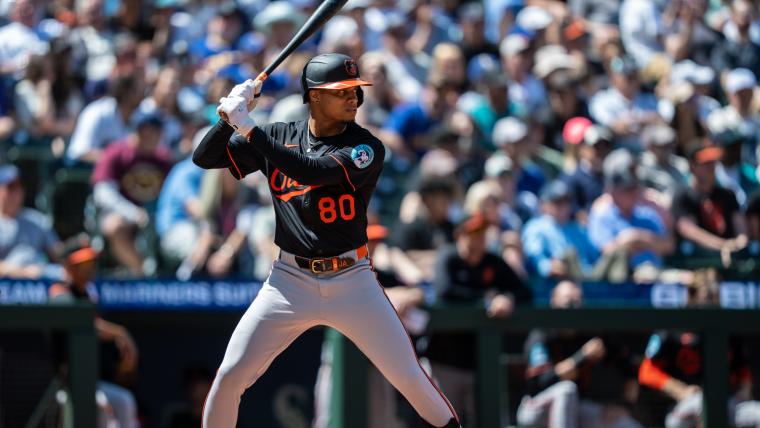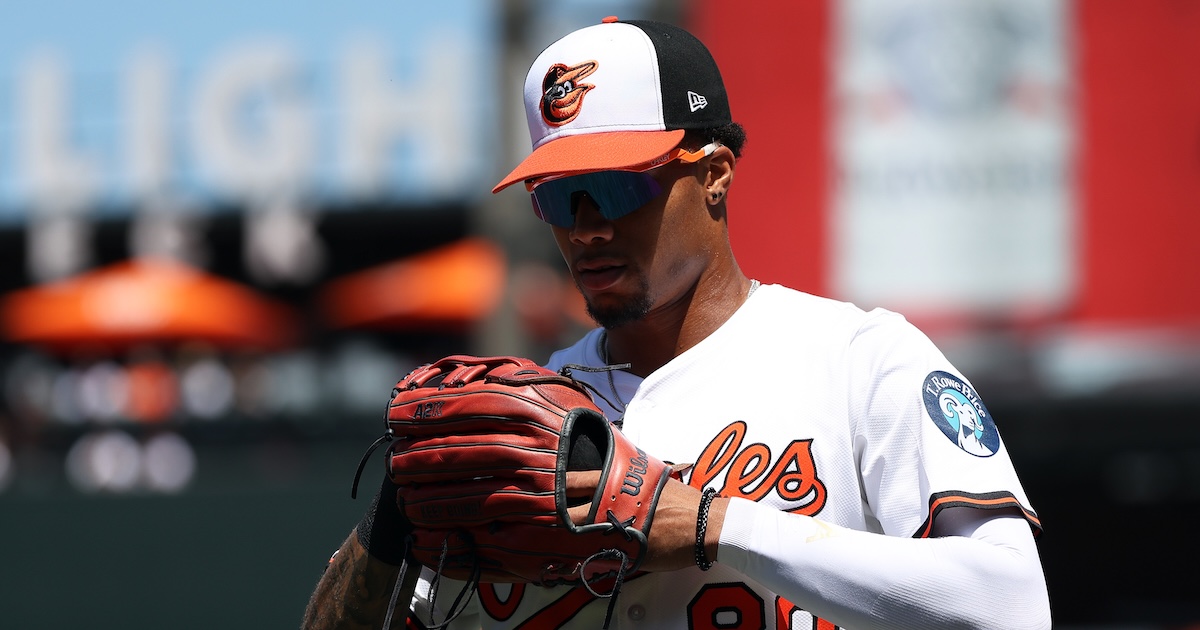
The retirement of Jordyn Adams from professional baseball to enroll at SMU marks a sophisticated recalibration of elite athletic capital. At 26, Adams is transitioning from a stagnating trajectory within the Milwaukee Brewers’ developmental system back to a collegiate gridiron where his high-school pedigree remains a gold-standard benchmark for performance potential.
Once a cornerstone of the 2018 recruiting class, Adams was ranked as the nation’s third-best wide receiver, positioned between current NFL luminaries Amon-Ra St. Brown and Ja’Marr Chase. This historical ranking underscores the immense ceiling that has defined his multi-sport career, providing a rare data point for evaluating late-stage athletic pivots.
The Mechanics of Professional Attrition
The decision to exit the diamond follows a period of diminishing returns across the Los Angeles Angels, Baltimore Orioles, and Milwaukee Brewers organizations. Despite the inherent patience afforded to a first-round selection, Adams’ professional baseball tenure was characterized by a struggle to translate raw tools into consistent Major League production. His final stint with the Triple-A Nashville Sounds lasted just 27 games, signaling the end of his status as a reclamation project.
Operational realities in the MLB prioritize developmental spots for prospects with immediate utility. For Adams, whose 2026 minor-league contract aimed to harness a notable power-speed profile—previously yielding 15 home runs and 44 stolen bases in a single season—the inability to maintain lineup consistency or health necessitated a strategic release. This exit served as the catalyst for returning to the sport where his physical advantages were most pronounced.
Strategic Integration and Program Impact
By joining SMU, Adams introduces a unique variable into the Mustangs’ offensive architecture: professional-grade maturity combined with elite vertical speed. His presence offers a high-leverage asset capable of disrupting defensive schemes designed for less experienced collegiate athletes. Beyond the field, SMU gains an intangible leadership element; Adams has navigated the pressures of a first-round contract and the rigors of professional travel, providing a seasoned perspective to the locker room.
However, the transition involves significant physiological hurdles. Adams must recalibrate his conditioning from the explosive, short-burst requirements of an MLB outfielder to the sustained physical contact and endurance demands of the American Athletic Conference. His prior commitment to North Carolina suggests a foundational tactical IQ that should expedite his integration into SMU’s playbook.
Market Outlook and Career Resuscitation
This move is a calculated attempt to capture the remaining value of his athletic window. At 26, the timeline for a professional football career is narrow, making immediate impact critical. The shift in narrative—from a struggling baseball prospect to a high-intrigue football addition—provides SMU with significant recruiting momentum and media visibility.
Ultimately, the success of this pivot will serve as a definitive case study on the viability of late-career transitions for multi-sport athletes. As the 2026 season approaches, the focus remains on whether Adams can translate his documented speed into on-field production, reclaiming the “blue-chip” status that once defined his market value.