Operational Context and Scheduling Dynamics
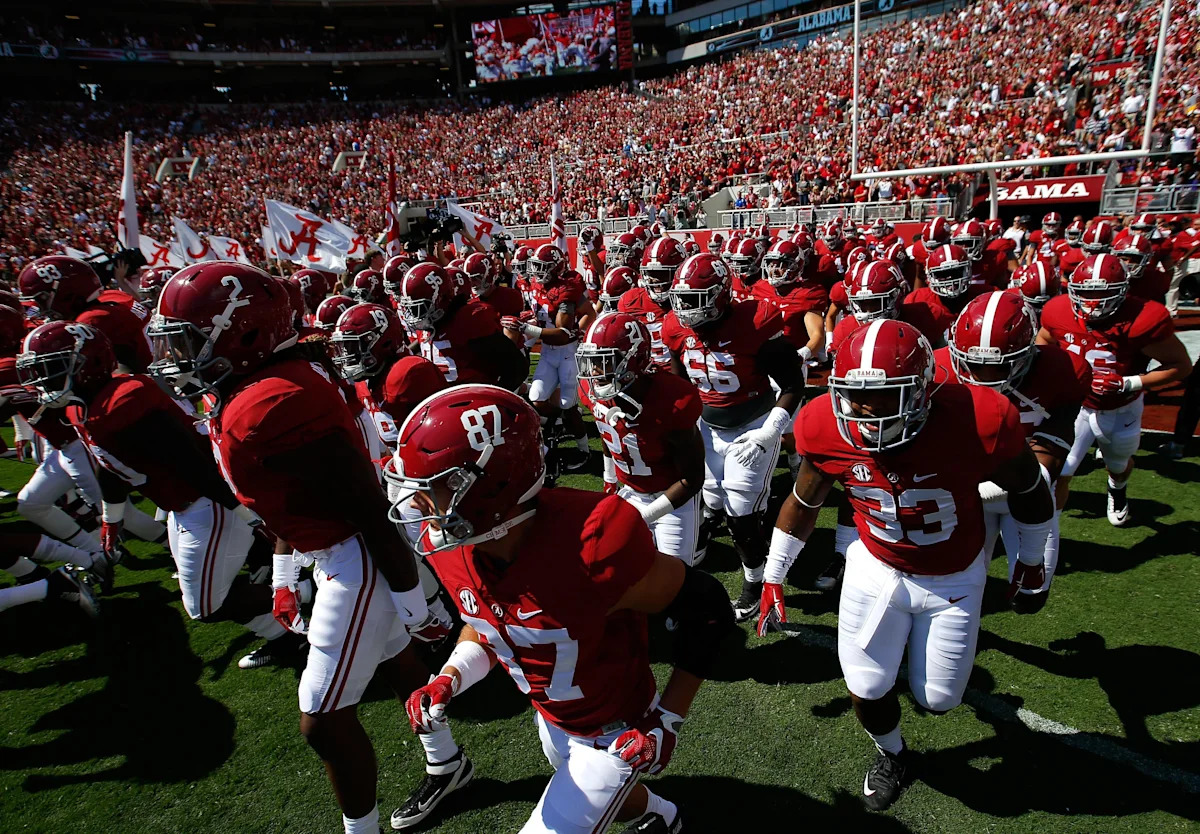
The September 5, 2026, season opener between the Alabama Crimson Tide and East Carolina Pirates at Bryant-Denny Stadium represents a significant pivot in non-conference scheduling. Originally intended to feature West Virginia, this fixture now serves as a high-stakes diagnostic for Kalen DeBoer’s program. Despite a recent contract extension providing administrative continuity, the institutional mandate at Alabama demands immediate execution. This contest functions as a primary barometer for the program’s competitive equilibrium following significant conference-driven scheduling modifications.
Roster Attrition and Offensive System Re-engineering
East Carolina enters this environment facing extreme personnel turnover. The departure of quarterback Katin Houser, alongside the program’s primary rushing and receiving assets, forces coach Blake Harrell into a total offensive recalibration. This structural vacuum creates acute vulnerability when measured against an elite defensive front. Conversely, Alabama initiates its own transition with Keelon Russell at the helm. Supported by a revamped offensive line and playmakers William Sanders and Jayvin James, the Crimson Tide aims to transition from developmental theory to tactical dominance without the typical early-season friction.
Defensive Leverage and Market Projections
Alabama’s defensive architecture, characterized by a veteran-heavy secondary and enhanced pass-rushing acquisitions, is designed to exploit East Carolina’s offensive instability. Betting markets reflect this talent disparity, with the Crimson Tide opening as a 28.5-point favorite and a projected point total of 52.5. These metrics underscore the expectation of a defensive lockout against an ECU unit in the nascent stages of reconstruction. The ABC-broadcasted fixture will ultimately hinge on Alabama’s ability to force early turnovers and neutralize ECU’s schematic adaptations under intense scrutiny.