Patriots Bolster Roster with Practice Squad Elevations for Week 1 Opener
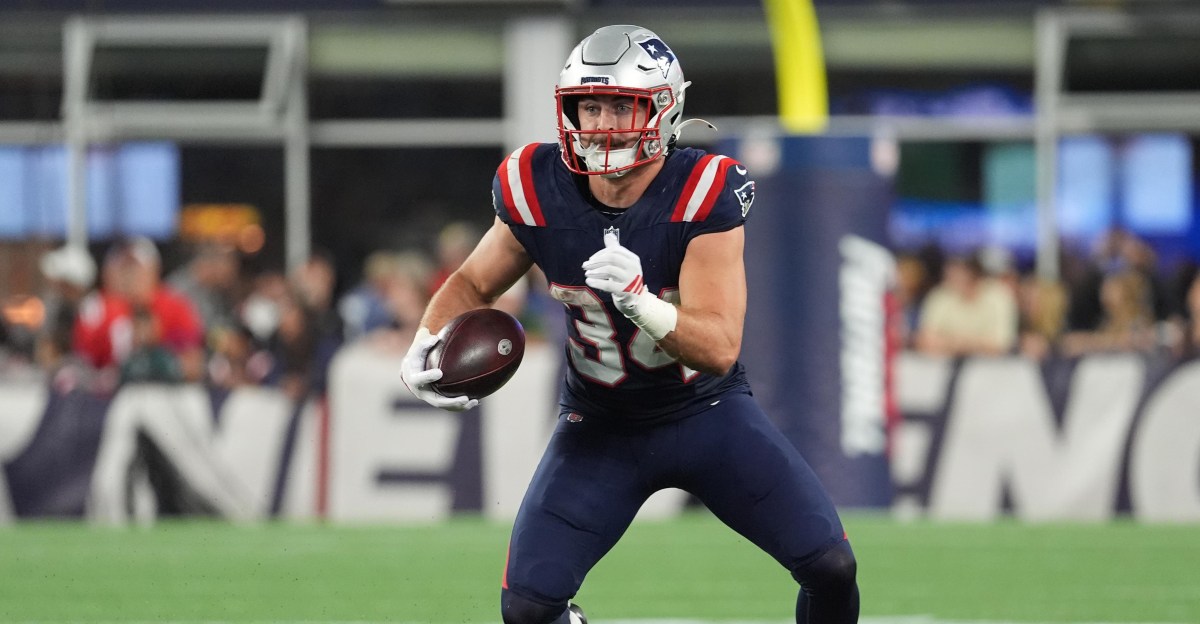
The New England Patriots have activated running back Lan Larison and punter Mitch Wishnowsky from their practice squad to the 53-man roster for their Week 1 season opener against the Seattle Seahawks. These moves address immediate roster deficiencies caused by injuries and player availability issues ahead of the critical divisional matchup.
Larison’s promotion directly fills the void left by running back TreVeyon Henderson, sidelined with an ankle injury. This creates an immediate opportunity for Larison to contribute to the Patriots’ ground game and passing attack against a formidable Seahawks defense.
Wishnowsky’s activation becomes necessary due to Bryce Baringer’s placement on injured reserve, creating a vacancy in the punting unit. Wishnowsky’s experience is crucial for maintaining consistent special teams performance, a phase of the game often critical in close contests, ensuring the Patriots can execute their punting strategy without compromise.
Player Intel and Strategic Roster Impact
Lan Larison, 24, out of UC Davis, initially joined the Patriots as a rookie free agent in May 2025. His rookie campaign was lost to injured reserve, highlighting an early challenge in his development. After an initial release on August 30, 2026, he was re-signed to the practice squad on September 1, 2026, signaling the team’s ongoing assessment of his potential amidst dynamic roster construction.
Mitch Wishnowsky, 34, an Australian native, brings seven seasons of NFL experience, previously with the San Francisco 49ers (2019-2024) and the Buffalo Bills (2025). His career trajectory, including a 2019 fourth-round selection by San Francisco and subsequent stints, illustrates the competitive landscape for specialists and the strategic considerations in player movement.
Wishnowsky joined the Patriots’ practice squad on August 31, 2026, just one day after his release from the Buffalo Bills on August 30, 2026. This swift transition underscores the efficacy of the practice squad system in providing immediate depth and strategic roster flexibility for critical personnel gaps.
Depth Chart Analysis and Competitive Outlook
Larison’s elevation positions him on a depth chart that includes lead back Rhamondre Stevenson and recent acquisition Corey Kiner. His potential debut reflects the Patriots’ strategy of cultivating internal talent and adapting offensive schemes based on personnel availability, a common tactical necessity in the early NFL season.
The Patriots’ decision to activate these players highlights the strategic importance of practice squad management as a cornerstone of roster flexibility and competitive resilience. This approach enables teams to absorb the impact of injuries and unexpected personnel changes, thereby preserving their competitive standing.
Wishnowsky’s prior experience with the 49ers (six seasons) and his brief tenure with the Bills provide a valuable operational baseline. His adaptability and consistent performance metrics across 105 regular-season games offer a reliable option to stabilize the punting game.
Operational and Financial Roster Dynamics
The NFL’s practice squad system offers significant operational and financial advantages. It allows teams to develop players, scout talent, and maintain a ready reserve without incurring the full salary cap implications of an active roster. Elevating Larison and Wishnowsky demonstrates the direct financial and operational leverage gained from this system, enabling teams to address immediate needs with players already familiar with the team’s schemes.
Larison’s progression from an undrafted free agent to a potential active roster contributor, despite an injury setback, reflects the Patriots’ investment in player development and their long-term personnel strategy. His sophomore summer performance, including receiving and kickoff return metrics, suggests versatility beyond a direct injury replacement role.
Wishnowsky’s extensive NFL history provides a data-driven profile for the Patriots’ coaching and analytics staff. His past performance statistics and experience in diverse game situations offer a predictable level of contribution, mitigating the risk of activating a less experienced player for a critical special teams role.
League-Wide Trends and Competitive Parity
The Patriots’ roster adjustments align with broader NFL trends where teams increasingly leverage practice squads to manage player availability volatility. This practice fosters competitive parity by allowing teams to remain competitive despite significant personnel challenges.
The strategic activation of players like Larison and Wishnowsky also reflects intense competition for roster spots and continuous talent evaluation across the league. Players released by one team are often quickly signed by another, illustrating the interconnectedness of NFL operations and the dynamic talent arbitrage in team building.
The Patriots’ proactive approach to bolstering their roster for the season opener underscores the importance of early-season performance for establishing momentum and competitive positioning. Seamless integration of practice squad players can provide a critical advantage in a league where margins are often razor-thin.
Player Development Philosophy and Long-Term Vision
Larison’s career path, including a season-ending injury in his rookie year, highlights the inherent risks and rewards of player development. His subsequent return and elevation suggest resilience and a commitment from the Patriots’ staff to nurture his potential, aligning with a long-term strategy of internal roster growth.
Wishnowsky’s veteran status and consistent performance offer a different strategic dimension. His activation provides immediate stability and experience, allowing younger players to develop without the pressure of filling critical roles prematurely. This dual approach—cultivating young talent while leveraging seasoned veterans—is a hallmark of sustained competitive success in the NFL.
The Patriots’ practice squad management, from initial signings to strategic elevations, reflects a sophisticated understanding of roster economics and competitive strategy. This system allows for dynamic resource allocation, ensuring adaptability to changing circumstances while balancing immediate game-day needs with long-term roster building.
Market Dynamics and Player Valuation
The movement of players like Wishnowsky between teams, particularly from a division rival like the Bills, highlights the fluid market for NFL talent. His release by Buffalo and subsequent acquisition by New England, even to the practice squad, demonstrates the continuous recalibration of player value based on team needs and salary cap considerations.
Larison’s journey from undrafted free agent to potential active roster player underscores the opportunities within the NFL’s structured development system. His sophomore summer performance metrics provide a tangible basis for the Patriots’ investment in his continued development, reflecting a calculated risk in player valuation.
The operational efficiency of the practice squad system allows teams to explore and evaluate talent without significant upfront financial commitment. This cultivates a competitive environment where players are continuously assessed, and teams can make strategic acquisitions based on observed performance and potential, influencing player valuation across the league.
Institutional Strategy and Competitive Edge
The Patriots’ decision to elevate Larison and Wishnowsky represents more than a tactical response to immediate personnel shortages; it reflects a broader institutional strategy. It showcases the team’s ability to leverage its practice squad as a strategic asset, ensuring roster depth and flexibility crucial for navigating the rigors of an NFL season.
This approach allows the Patriots to maintain a competitive edge by having players already integrated into the team’s culture and schemes ready to step in. Such preparedness can be a significant differentiator, particularly in early-season games where teams are establishing their rhythm and identity.
The successful integration of practice squad players can also foster a culture of opportunity and competition within the organization, motivating players at all roster levels and contributing to overall team performance and long-term success.
Operational Bottlenecks and Risk Mitigation
The necessity of elevating practice squad players points to potential operational bottlenecks in roster management, particularly concerning player health and depth at key positions. The injuries to TreVeyon Henderson and Bryce Baringer highlight the inherent vulnerability of relying on a limited number of players for critical roles.
However, the existence of a robust practice squad, exemplified by the activation of Larison and Wishnowsky, serves as a crucial risk mitigation strategy. It allows the team to absorb the impact of unexpected player absences without significantly compromising its ability to execute game plans or maintain a competitive level of play.
Wishnowsky’s rapid transition from release by the Bills to joining the Patriots’ practice squad and subsequent elevation underscores the efficiency of the league’s player movement mechanisms. This agility in roster adjustments is vital for maintaining operational continuity amidst the unpredictable nature of professional sports.
Strategic Personnel Management and Competitive Leverage
The elevation of Larison and Wishnowsky represents a strategic deployment of personnel that directly impacts the Patriots’ competitive leverage in Week 1. By filling immediate needs with players from the team’s developmental system, the Patriots maintain a higher degree of strategic continuity and operational readiness.
This practice allows the Patriots to avoid hasty, potentially suboptimal, personnel decisions under pressure. Instead, they rely on players already evaluated and integrated into the team’s tactical framework, enhancing their ability to execute their game plan effectively against the Seahawks.
Furthermore, the successful integration of practice squad players can serve as a psychological advantage, demonstrating the team’s depth and resilience. This can influence the competitive dynamic by signaling to opponents that the Patriots are well-prepared to handle adversity and maintain high performance regardless of personnel fluctuations.
Capital Allocation and Performance Leverage
Utilizing practice squad players for immediate game-day needs represents an efficient form of capital allocation within the NFL’s financial structure. Practice squad contracts are significantly less expensive than active roster contracts, allowing teams to maintain flexibility and manage their salary cap effectively.
By elevating Larison and Wishnowsky, the Patriots are leveraging their investment in player development and scouting to generate on-field performance without substantial additional financial outlay. This strategy maximizes the return on investment in their practice squad infrastructure.
The performance of these elevated players will directly influence the team’s Week 1 outcome, demonstrating the link between strategic personnel management and on-field results. Strong performances from Larison or Wishnowsky could provide significant performance leverage, contributing to an early-season victory and setting a positive tone for the remainder of the season.
Market Dynamics and Talent Pipeline Integration
The Patriots’ consistent use of the practice squad highlights a critical aspect of the modern NFL talent pipeline. Teams that effectively manage and develop players within their practice squad system gain a significant competitive advantage by having a readily accessible pool of talent ready to step in when needed.
Wishnowsky’s journey, including his release from the Bills and subsequent signing with the Patriots, exemplifies the dynamic nature of player movement and the constant search for talent across the league. This continuous evaluation ensures teams can capitalize on opportunities to acquire skilled individuals.
Larison’s progression from undrafted free agent to potential contributor also underscores the importance of scouting and player development. The Patriots’ investment in his recovery and continued presence on the practice squad indicates a belief in his long-term potential, a strategy that can yield significant returns.
Institutional Resilience and Strategic Adaptability in Practice
The Patriots’ ability to activate practice squad players for a critical Week 1 game demonstrates high institutional resilience and strategic adaptability. In a league where injuries and unforeseen circumstances are common, teams that can quickly and effectively adjust rosters are better positioned for sustained success.
This proactive approach to roster management allows the Patriots to maintain operational continuity and competitive focus, even when facing significant personnel challenges. It reflects a well-established organizational infrastructure capable of responding to dynamic situations with predictability.
The successful integration of players like Larison and Wishnowsky can also bolster team morale and reinforce a culture of opportunity, fostering a more cohesive and motivated playing group, enhancing the team’s ability to perform under pressure and adapt to the evolving demands of the season.