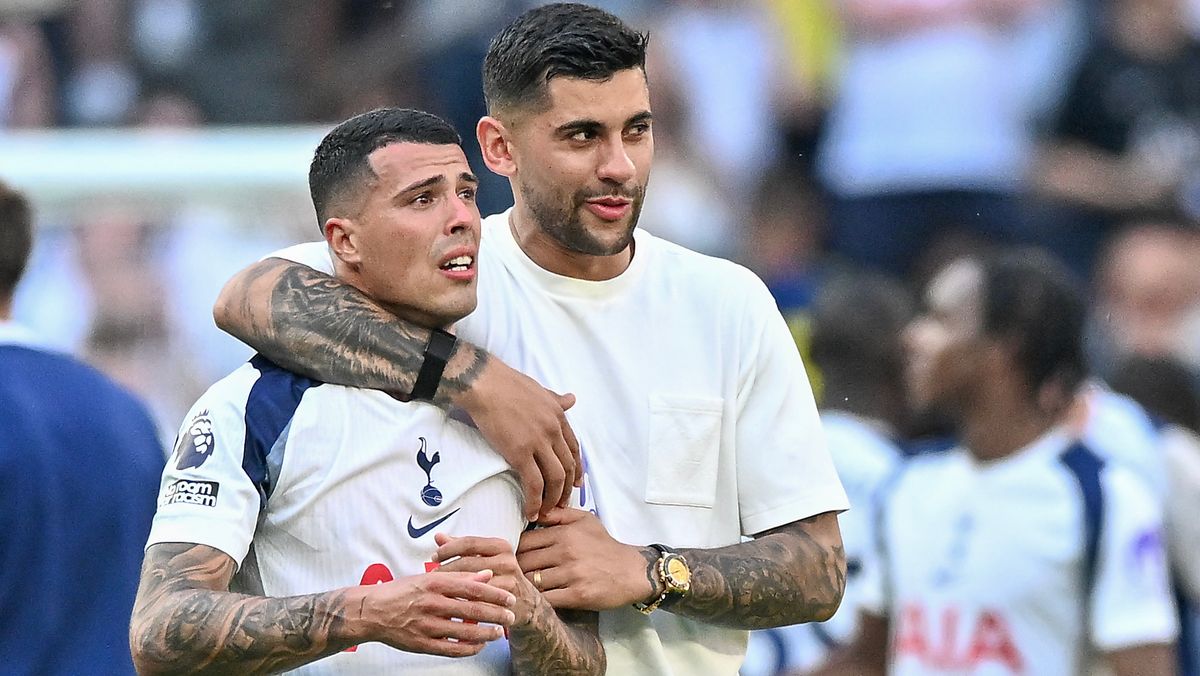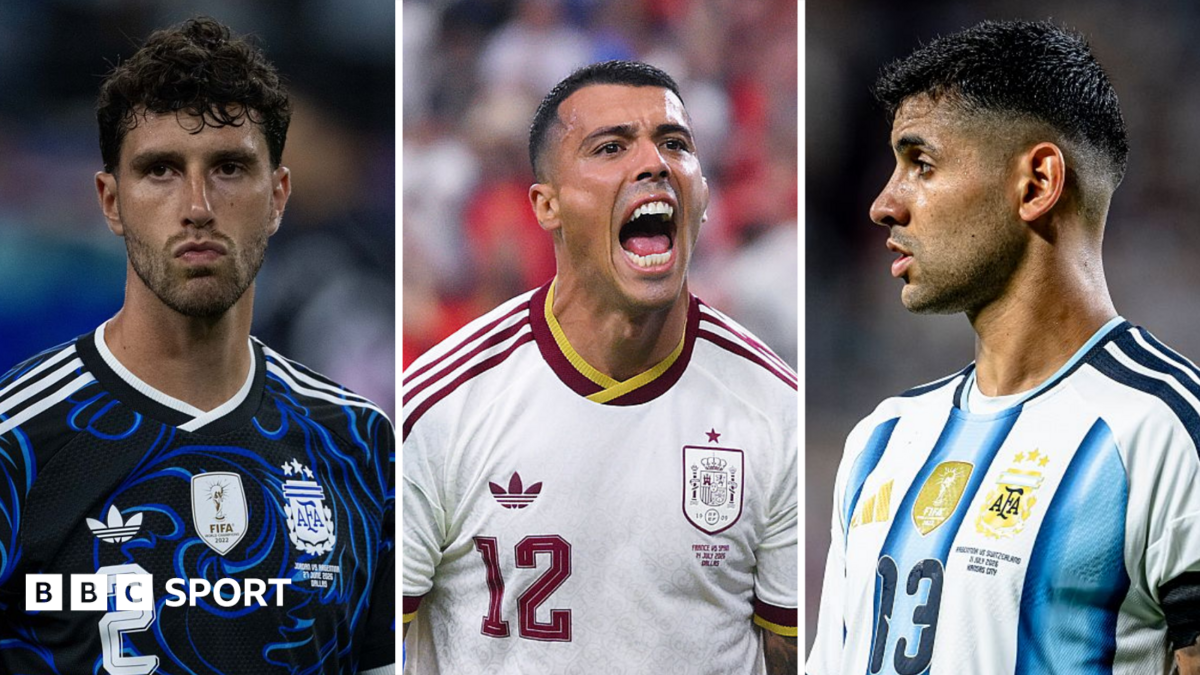
The 2026 World Cup final at MetLife Stadium presents a unique institutional milestone for Tottenham Hotspur. Regardless of the outcome between Argentina and Spain, the club will roster a world champion for the third consecutive tournament cycle—a statistical anomaly that underscores the persistent decoupling of individual international excellence from domestic club volatility.
The Strategic Divergence: Romero’s Exit vs. Porro’s Ascent
Cristian Romero and Pedro Porro represent antithetical trajectories within the Spurs ecosystem. Romero, the 28-year-old defensive anchor for Argentina, enters the final as a proven winner seeking a historic second title. However, his tenure in North London appears to be nearing a calculated conclusion. With his market valuation at its zenith, the club’s leadership is positioned to monetize an asset defined by elite performance often offset by disciplinary risks and injury concerns.
Conversely, Pedro Porro’s recent five-year contract extension signals a long-term commitment to a player who has evolved from a defensive liability into an offensive engine. His pivotal semi-final goal against France cemented his role in Luis de la Fuente’s tactical framework. Porro offers a more stable cornerstone for the club’s reconstruction, providing high-ceiling reliability that contrasts with Romero’s emotional volatility.
Institutional Strategy: The Senesi Integration
The acquisition of Marcos Senesi from Bournemouth on a free transfer exemplifies a low-risk administrative maneuver. While his tournament contributions were limited to a single start against Jordan, his presence in the Argentine squad provides intangible value. For Spurs, securing international-grade talent before post-tournament market inflation represents a rare instance of proactive recruitment, allowing the club to integrate a potential world champion who has yet to debut in the matchday kit.
Tactical Asymmetry and Brand Positioning
The final serves as a direct comparative vacuum for Tottenham’s scouting department. Argentina’s high-risk, emotionally charged defensive style mirrors Romero’s individual profile, while Spain’s structured ball retention has allowed Porro’s technical precision to flourish. This clash provides critical data for the club’s transition away from the ‘relegation-threatened’ form of the previous domestic campaign.
Ultimately, this ‘three-peat’ of World Cup winners—following Lloris in 2018 and Romero in 2022—is a powerful tool for global brand positioning. While domestic silverware remains elusive, the ability to consistently field finalists facilitates elite recruitment. The 2026 finale is more than a trophy presentation; it is the catalyst for a structural shift from the Romero era toward a future built on the tactical discipline and long-term viability of assets like Porro.