
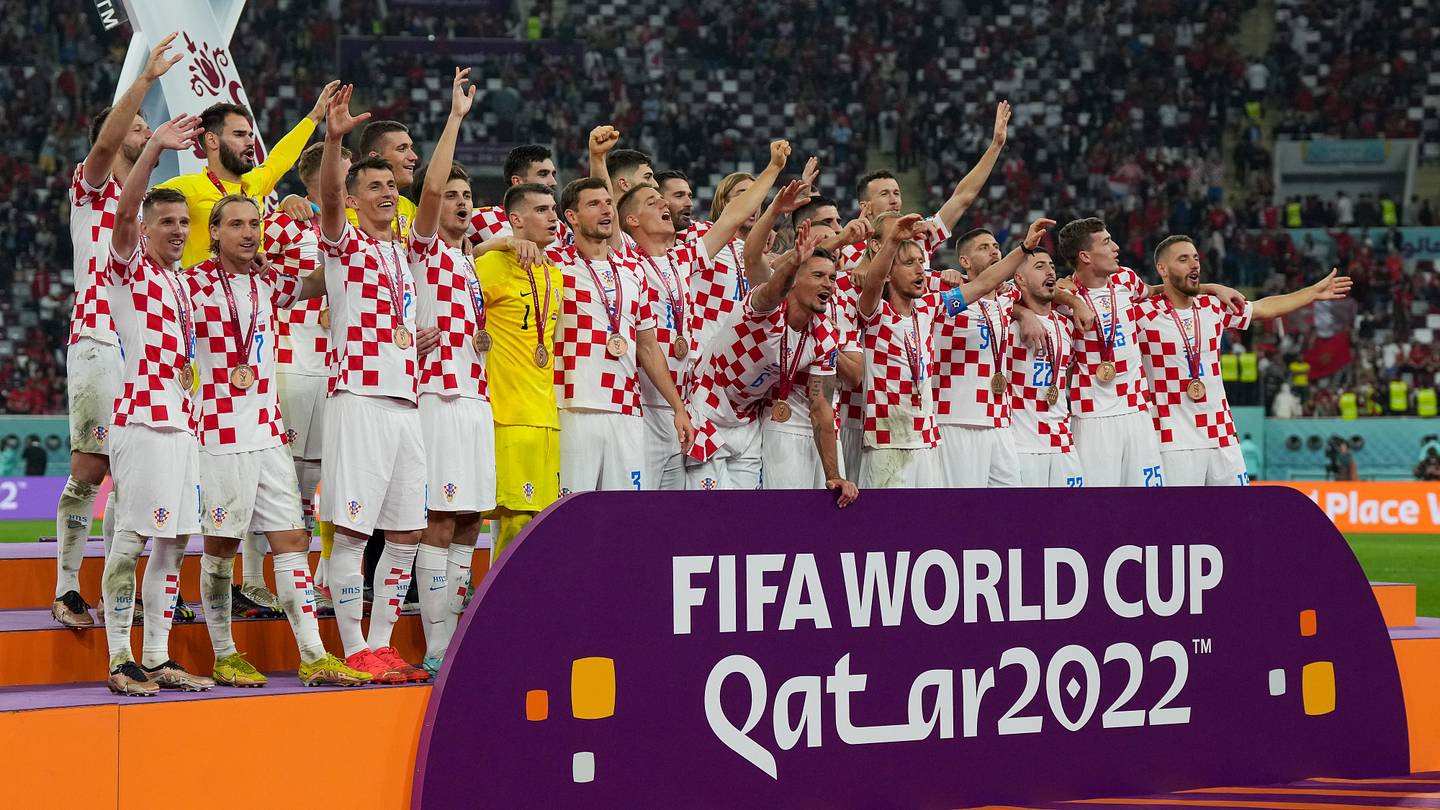
As the 2026 World Cup approaches its climax in North America, the third-place play-off between France and England emerges as a high-density encounter. While the final between Spain and Argentina commands the primary narrative, the bronze medal fixture represents a critical nexus of institutional prestige, commercial maximization, and tactical recalibration for two of UEFA’s most dominant federations.
Institutional Logic and Revenue Maximization
The third-place fixture serves as a vital pillar in FIFA’s operational framework, providing a penultimate broadcast window that optimizes commercial inventory and sponsorship visibility. Beyond broadcast rights, the match carries significant weight for national federations; the distinction between a podium finish and fourth place impacts the final distribution of prize pools and influences FIFA coefficient rankings, which dictate future tournament seedings.
The North American context amplifies the economic stakes. With high market demand for elite European matchups, this fixture drives substantial gate receipts and hospitality revenue. For local organizers, it serves as a final operational stress test for host-city infrastructure before the tournament’s conclusion, ensuring maximum economic impact through international tourism and media engagement.
Tactical Deregulation and Technical Evaluation
Historically, the third-place match is characterized by ‘tactical deregulation.’ Freed from the defensive rigidity often mandated by the high stakes of a semi-final or final, teams tend to adopt more expansive, offensive-oriented setups. This environment often produces higher scoring margins and allows technical directors to evaluate squad depth, providing competitive minutes to high-potential talent earmarked for the 2030 cycle.
For coaching staffs, the transition from semi-final disappointment to the pursuit of bronze requires a rapid psychological reset. The selection process involves balancing the maintenance of a competitive hierarchy with the necessity of managing player load after a grueling seven-match schedule. Consequently, the fixture often becomes a showcase for bench depth and technical versatility.
Historical Benchmarks: The 1986 Case Study
The precedent for high-scoring, high-drama bronze medal matches was set during the 1986 World Cup in Mexico. The encounter between France and Belgium remains a definitive benchmark. After a 2-2 deadlock in regulation—featuring goals from Jan Ceulemans, Jean-Marc Ferreri, Jean-Pierre Papin, and Nico Claesen—France secured a 4-2 victory in extra time through Bernard Genghini and a Manuel Amoros penalty.
This historical pattern of extra-time volatility and offensive efficiency underscores the unique statistical profile of the third-place match. It remains an outlier in international football, where the relaxation of tactical caution allows elite attackers to exploit spaces that are typically closed down in earlier knockout rounds.
Legacy and Future Trajectories
The outcome of the France-England match will fundamentally shape the post-tournament narrative for both nations. A bronze medal allows a federation to frame the campaign as a success, providing tangible evidence of consistent elite-level performance. Conversely, a fourth-place finish is frequently scrutinized as a missed opportunity to solidify a golden generation’s legacy.
As the 2026 cycle concludes, this match provides a final data point for analyzing the structural health of both programs. The ability to motivate elite personnel for a third-place fixture serves as a litmus test for the cultural and professional standards within the French and English setups, setting the tone for the qualification journey toward 2030.

Photo by jorono on Pixabay.