
Operational Paradigm: The Shift Toward Digital Spectacle
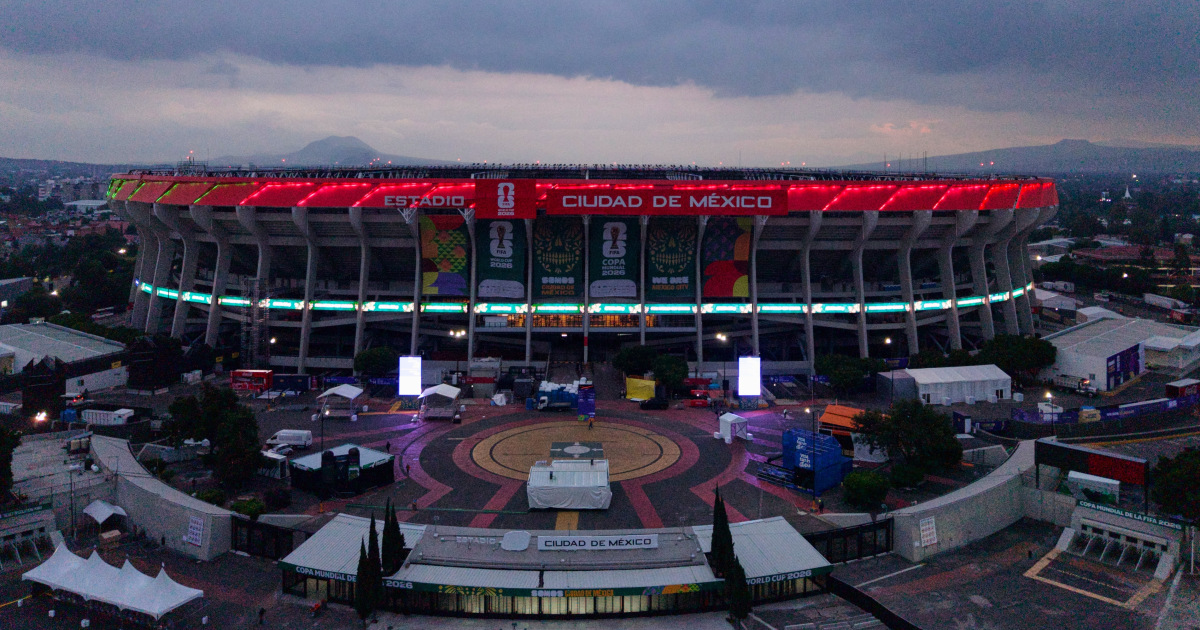
The deployment of Unmanned Aerial System (UAS) swarms at the Estadio Ciudad de México signifies a fundamental transition in FIFA’s event management strategy. Beyond aesthetic value, these maneuvers serve as a rigorous validation of digital infrastructure within high-density urban airspaces. This pivot reflects an institutional move toward Environmental, Social, and Governance (ESG) compliance, replacing traditional pyrotechnics with programmable, zero-emission aerial choreography that offers higher precision and lower environmental impact.
Commercial Synergies and Integrated Brand Activation
The synchronization of the Trionda official match ball and the FIFA World Cup trophy in the night sky represents the future of native advertising. By converting physical assets into high-definition digital formations, FIFA creates a repeatable, scalable asset for global broadcasters. For technical partners and rights-holders like Telemundo, this technology provides visually arresting, high-retention content optimized for both traditional television and short-form digital platforms, effectively bridging the gap between stadium presence and global secondary-screen consumption.
Infrastructure Stress-Testing and Urban Logistics
Utilizing the Estadio Ciudad de México as a primary testbed is a strategic necessity. The venue’s high altitude and complex urban signal environment provide a high-stakes environment for monitoring battery performance and signal propagation. Successful trials indicate advanced coordination between FIFA’s technical units and municipal civil aviation authorities, establishing a blueprint for U-Space management across the 48-team tournament’s multi-national footprint. These rehearsals mitigate technical risks—such as GPS latency or electromagnetic interference—ensuring operational redundancy for the global inaugural match.
Geopolitical Significance and Regional Leadership
Prioritizing Mexico City for these technological debuts acknowledges Mexico’s historical centrality to footballing culture while asserting its capability to host high-tech, modern mega-events. This investment ensures a uniform production standard across the tri-nation hosting structure, maintaining brand equity despite the tournament’s unprecedented geographic dispersion. The integration of local iconography with cutting-edge autonomous systems serves to reinforce a narrative of national pride and technological evolution, positioning the 2026 edition as the most digitally ambitious sporting event in history.

Photo by jorono on Pixabay.