Strategic Imperatives Drive International Friendly Engagements
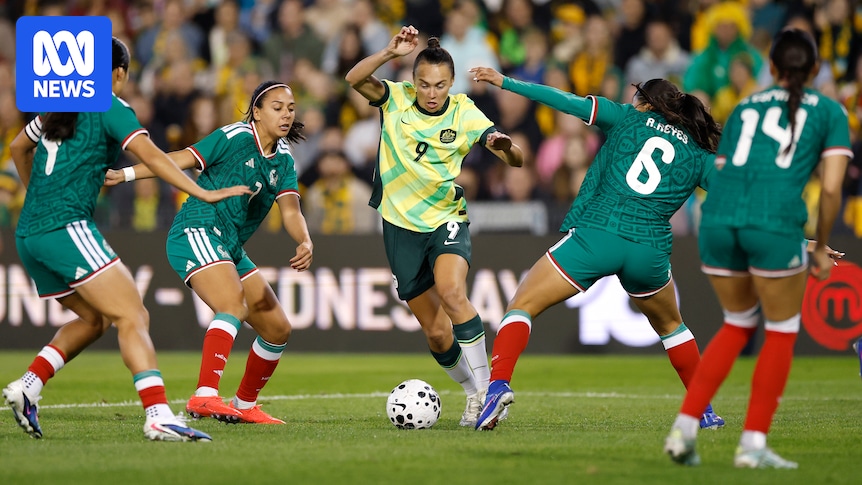
The recent international friendlies between Australia’s Matildas and Mexico’s national women’s team underscore divergent strategic imperatives guiding national federations in their pursuit of global tournament success. These fixtures served as vital platforms for tactical experimentation, squad depth assessment, and competitive conditioning, reflecting distinct long-term objectives.
Australia’s Post-Qualification Development Focus
Having secured their berth in the 2027 Women’s World Cup, Australia’s strategic focus shifts from immediate competitive results to expansive developmental agendas. This early qualification allows the coaching staff, led by Joe Montemurro, to leverage friendlies for significant tactical adjustments and evaluate emerging talent without qualification pressure, optimizing the team’s long-term performance trajectory. Montemurro’s post-match reflections on the initial 1-0 defeat, noting the need for “much-needed experience playing against different styles” like Mexico’s “direct and long” play and high-pressing fullbacks, highlight this approach. Addressing “disjointed performances” and “wasted chances,” particularly in the final third, becomes a primary objective, transforming match analysis into actionable training directives to enhance precision and decision-making under pressure. This experimentation phase is crucial for building a robust, versatile squad capable of adapting to diverse World Cup tactics, prioritizing learning from varied opponents for sustained competitive advantage.
Mexico’s Competitive Ascent and Qualification Imperatives
In contrast, Mexico approaches these friendlies with a sharpened competitive edge, driven by their ongoing pursuit of a 2027 Women’s World Cup spot via the CONCACAF W Championship. Their impressive run, including victories over regional rivals, validates their current tactical framework. For El Tri, matches against a World Cup-qualified opponent like Australia serve as critical benchmarks to assess competitive readiness and refine strategies for the demanding qualification tournament. Positive results against top-tier nations boost morale and international standing, potentially influencing future seeding. The strategic value lies in testing their established system, identifying optimization areas, and maintaining competitive momentum ahead of the CONCACAF W Championship, where four automatic World Cup spots are at stake, making every competitive exposure invaluable.
Tactical Adaptations and Coaching Philosophy
Montemurro’s detailed tactical observations, such as Mexico’s high fullback positioning, illustrate the granular analysis inherent in modern international football. This scrutiny goes beyond match results, delving into opponent strategies to develop counter-tactics and enhance player understanding. The mandate to “study it, analyse it and not get emotional about it” reflects a data-driven, analytical coaching philosophy emphasizing objective evaluation and continuous learning. Adapting to “more direct and long” play necessitates robust defensive transitions, effective aerial duels, and rapid counter-attacking strategies, refined through exposure to diverse styles. The directive to “remove ‘wrong’ decisions in final third” focuses on cognitive processing and execution under pressure, aiming to improve player awareness, spatial recognition, and decision timing for increased offensive efficiency.
Player Milestones, Squad Depth, and Succession Planning
Caitlin Foord’s milestone of 150 caps for the Matildas symbolizes continuity and experience, providing leadership during strategic experimentation and squad rotation. The explicit use of these fixtures to “assess squad depth” is a strategic imperative for sustained success, involving systematic evaluation of fringe players and emerging talents in competitive scenarios to identify potential successors and ensure a robust talent pipeline. This depth assessment mitigates risks from injuries or fatigue, ensuring competitive integrity and fostering internal competition. Integrating new players alongside established figures facilitates knowledge transfer and enhances collective tactical intelligence, a hallmark of successful national programs.
Institutional Context and Media Engagement
The scheduling of these friendlies within FIFA calendar windows reflects an institutional framework balancing national team preparation with club commitments and player welfare. The media narrative surrounding the Matildas’ quest for “redemption” highlights commercial and reputational stakes, where public perception and fan engagement are critical for sponsorship and investment. Montemurro’s comment on Mexico not being “a pushover for the fans to enjoy” addresses the dual mandate of friendlies: rigorous team tests and engaging content for stakeholders. Live coverage and public discourse contribute to women’s football’s growing profile and market value, underscoring the increasing institutional and commercial significance of national women’s teams.
Broader Implications for National Team Development
The strategic use of international friendlies by Australia and Mexico exemplifies a sophisticated approach to national team development. For Australia, it leverages early World Cup qualification to build a deeper, more tactically versatile squad. For Mexico, these encounters are vital steps in their qualification journey, honing tactical execution and mental fortitude. These contrasting approaches illustrate the multi-faceted role of friendlies: immediate preparation, long-term player development, tactical innovation, and national team branding. Ultimately, these matches drive competitive standards higher, fostering a more dynamic international arena and influencing future coaching strategies, player selection, and national programs’ long-term global positioning.