White House South Lawn: A Stage for Potential Permanent Transformation
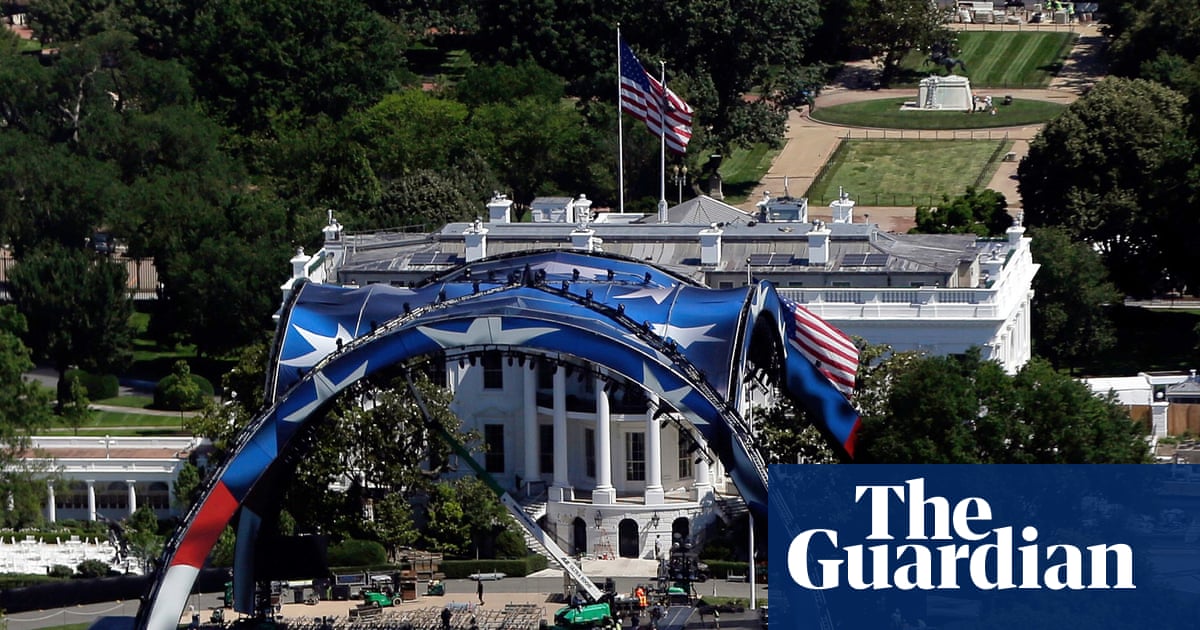
President Donald Trump has publicly expressed a desire to make the Ultimate Fighting Championship (UFC) “Claw” lighting structure a permanent fixture on the White House South Lawn. Initially erected for a specific fight event, the suggestion, disseminated via a TikTok video, proposes an indefinite stay for the large-scale, branded installation, fundamentally altering the traditional use of this historically significant space.
Trump invoked the Eiffel Tower’s history as a temporary structure for the 1889 World’s Fair, which later became an iconic permanent landmark. He characterized the “Claw” as “quite attractive to a lot of people” and mused about its potential to “never, ever” be removed. This analogy frames the permanence not as an imposition, but as a potential evolution of an appreciated feature, mirroring historical precedents of temporary structures becoming enduring symbols.
Strategic and Aesthetic Repercussions of Permanence
The decision to permanently install the UFC “Claw” carries significant strategic, aesthetic, and logistical implications for the White House. Beyond the immediate challenges of maintenance, security, and operational integration, permanent placement would redefine the symbolic and functional role of the South Lawn. Traditionally a venue for state functions and ceremonial events, its character could be irrevocably altered by a structure associated with professional sports entertainment, raising questions about the prioritization of national symbolism over commercial branding.
This potential shift deviates from established protocols for temporary event installations on presidential grounds. Establishing a precedent for retaining large, branded structures could invite similar proposals in the future, potentially leading to a redefinition of the South Lawn’s appearance and purpose. Such a decision would inevitably face intense scrutiny from historical preservationists, cultural critics, political opponents, and the public, given the iconic status of the White House.
Capital Investment, Operations, and ROI Re-evaluation
While specific capital investment figures for the “Claw” are not detailed, its construction implies substantial costs. Permanent installation would amortize these initial costs over a longer period, shifting the financial calculus for future events. Operational shifts would include dedicated maintenance, specialized security protocols, and potential ongoing agreements with the UFC. The return on investment would need re-evaluation beyond the immediate event, transforming a temporary asset into a long-term, potentially contentious, addition. This could influence future budgeting for grounds maintenance and event infrastructure, setting a new benchmark for federal property utilization.
Stakeholder Exposure, Public Perception, and Media Leverage
The proposal directly exposes the Trump administration to criticism regarding the aesthetic and historical integrity of the White House. Public reactions, described as “outrage” and labeling the structure “tacky,” highlight a significant public relations challenge and underscore the deep public sentiment for preserving the White House’s iconic image as a symbol of national heritage. Conversely, supporters might view it as a bold modernization. The ensuing media debate amplifies the UFC’s visibility, creating a powerful, albeit controversial, platform for brand promotion and a significant point of political leverage, turning a seemingly minor infrastructure decision into a national conversation.
Historical Parallels and Institutional Response
The Eiffel Tower comparison, while intended to legitimize permanence, invites historical scrutiny. The Eiffel Tower represented industrial progress; the “Claw” represents contemporary sports entertainment. Institutional responses from historical preservation bodies, such as the White House Historical Association, would be critical. The precedent of temporary structures becoming permanent could challenge future administrations, potentially leading to a historically incongruous landscape around the executive residence. This debate touches upon broader questions of managing and modernizing historical sites amidst evolving cultural and commercial interests.
Downstream Effects on Event Planning and Commercialization
A permanent “Claw” would fundamentally alter presidential event planning. The South Lawn’s versatility would be constrained by a dominant, fixed structure, impacting usability and aesthetics. Event staging would require reimagining, potentially limiting activities or necessitating structural modifications. This could also influence commercial partnerships, encouraging other entities to propose long-term sponsorships, potentially commercializing presidential grounds unprecedentedly and redefining the balance between official duties, public access, and private enterprise.
Public Discourse, Political Strategy, and Cultural Symbolism
The public discourse, marked by “outrage” and accusations of tackiness, demonstrates potent political leverage derived from cultural debates. The proposal taps into a strategy of generating controversy via social media to mobilize supporters and provoke critics. The “Claw” debate extends beyond infrastructure to differing visions for the presidency, national symbols, and commercial interests in public life. This dynamic, amplified by media coverage, turns infrastructure decisions into significant political talking points, influencing voter perceptions and campaign narratives by framing the debate around progress versus tradition and popular appeal versus elite sensibilities.
Broader Implications for National Heritage Sites and Public Perception
The “Claw” discussion extends to the management and preservation of national heritage sites. The White House, as the seat of executive power and a symbol of democratic ideals, carries a distinct historical weight compared to the Eiffel Tower. If a precedent is set, it could increase pressure for similar installations on other federal properties, creating complex regulatory environments. Balancing modernization with heritage preservation would be central, with concerns about commercialization and aesthetic impact on landmarks affecting policymakers and the public.
Operational Challenges and Financial Leverage Models
Operational challenges for a permanent “Claw” include ongoing maintenance, structural integrity, electrical needs, and security adaptation. Integration into the landscape requires consideration of drainage, ground stability, and flora impact, harmonizing with classical architecture. Beyond construction, this demands continuous resource allocation. Permanent placement could unlock new financial leverage and sponsorship models, potentially generating revenue through rentals or long-term corporate partnerships, shifting how White House grounds are utilized for revenue and setting a precedent for commercial involvement.
Cultural Impact, Symbolic Representation, and Media Narrative
The White House symbolizes governance, history, and national identity. Introducing a permanent commercial entertainment structure could dilute these symbols. The “Claw’s” modern design and association with combat sports contrast sharply with the executive mansion’s traditional aesthetic and historical gravity. This could affect perceptions of the presidency domestically and internationally, potentially diminishing the symbolic weight of the White House on the global stage. Media framing, emphasizing “outrage” or Trump’s rationale, shapes public discourse and political strategy, controlling the narrative around progress versus tradition and popular appeal versus elite sensibilities.
Long-Term Vision for Presidential Grounds and Institutional Integrity
Permanently installing the “Claw” suggests a long-term vision for presidential grounds diverging from historical norms, integrating commercial entertainment infrastructure into the nation’s executive symbol. This could encourage similar large-scale, branded installations for future administrations, necessitating a review of zoning, preservation, and public access policies. Such a decision reflects a philosophy on presidential engagement with popular culture and commerce, potentially redefining the White House’s symbolic role and impacting its aesthetic, historical, and functional integrity long-term.