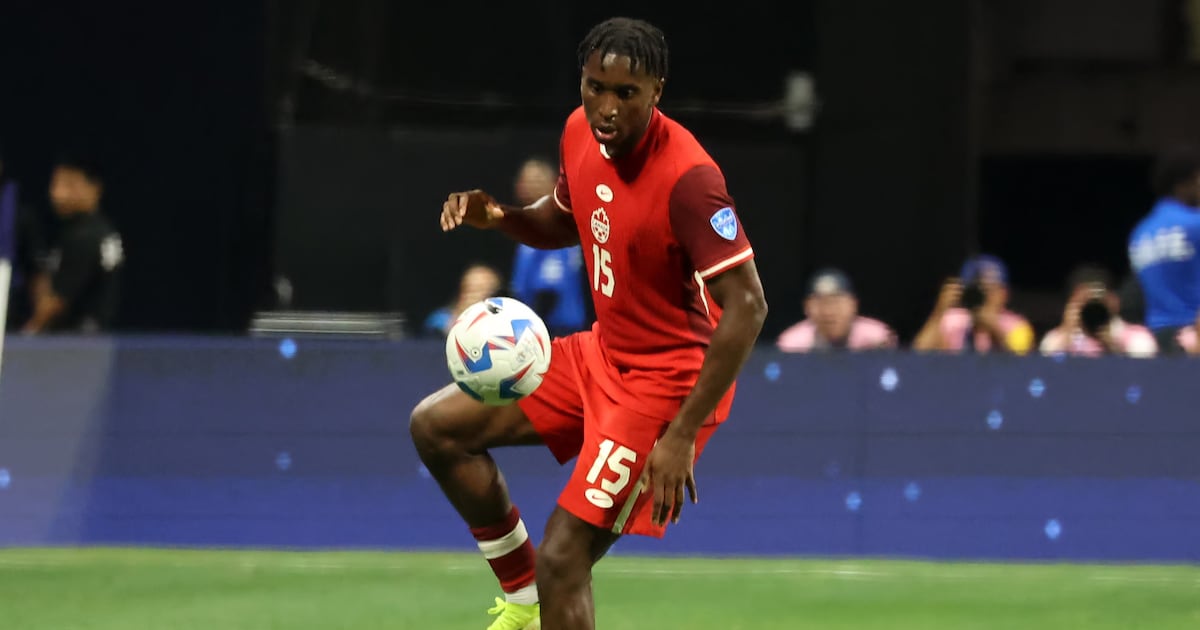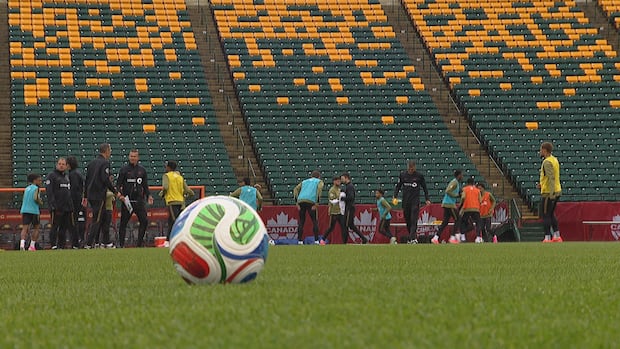
The international friendly between Canada and Uzbekistan at Edmonton’s Commonwealth Stadium serves as a vital tactical diagnostic for Jesse Marsch’s side. Beyond a mere exhibition, the fixture represents a high-stakes stress test of Canada’s systemic depth following the strategic disruption caused by Marcelo Flores’ ACL rupture. This injury, sustained during the Concacaf Champions Cup final, necessitates an immediate recalibration of the squad’s offensive geometry and transitional efficiency before the June 11 registration deadline.
The absence of Flores creates a creative vacuum in the half-spaces that Marsch must mitigate through personnel selection. The stylistic divergence between candidates—Jayden Nelson’s explosive verticality, Daniel Jebbison’s physical presence, and Junior Hoilett’s veteran technical security—will dictate Canada’s attacking shape. While Hoilett offers stability, the selection of Nelson or Jebbison would better facilitate the high-frequency pressing and aggressive counter-pressing that define Marsch’s tactical philosophy.
Central to Canada’s evolution is Jonathan David, whose transition from Lille to Juventus has significantly elevated the squad’s tactical pedigree. David’s exposure to Italian defensive structures is expected to refine Canada’s efficiency against low-block opponents. His partnership with Alphonso Davies remains the primary offensive engine, yet the burden of creative output has intensified. The midfield pivot, anchored by Porto’s Stephen Eustáquio, must now prioritize more direct vertical progression to bypass Uzbekistan’s disciplined defensive lines.
Defensive Stability and Transitional Mechanics
Defensively, the return of Richie Laryea and Moïse Bombito restores critical attributes to Marsch’s backline. Laryea’s recovery from a thigh injury provides the necessary width and overlapping threat to stretch deep-sitting defenses. Simultaneously, Bombito’s recovery speed is the fundamental prerequisite for Canada’s high-line defensive strategy, allowing the team to compress the pitch without being exploited by long-ball counters.
Uzbekistan, led by Lens’ Abdukodir Khusanov, offers a simulation of the physical and organized opposition Canada will face in 2026. This match marks Uzbekistan’s emergence on the global stage, presenting a tactical puzzle: breaking down a compact, defensive unit that prioritizes structural integrity over possession. For Canada, the challenge is maintaining tempo and finding interior passing lanes when primary transition routes are congested.
Institutional Stakes and Market Momentum
The match also carries significant institutional weight for Canada as a co-host. The performance in Edmonton serves as a metric for the program’s long-term investment in youth development and dual-national recruitment. Furthermore, the rising market valuation of the roster—exemplified by Tajon Buchanan’s move to Villarreal—highlights the increasing global demand for North American tactical versatility. A cohesive performance against Uzbekistan would further validate these valuations ahead of the summer transfer window.
Ultimately, this friendly is an exercise in risk management. Marsch must balance the need for tactical cohesion with the imperative of injury prevention as the opener against Bosnia and Herzegovina looms. The decision-making in Edmonton regarding player minutes and substitute roles will be the final indicator of Canada’s operational readiness for the most significant tournament in the nation’s history.