

The celestial convergence of a calendrical blue moon and a micromoon in May 2026 provides a high-density case study in orbital mechanics and chronological misalignment. This phenomenon occurs when the second full moon of a Gregorian month coincides with the lunar apogee, highlighting the mathematical friction between the 29.5-day synodic month and solar-based timekeeping.
Chronological Disparity and the Metonic Cycle
The occurrence of a blue moon—the second full moon within a single month—is a direct result of the 0.5-day discrepancy between lunar cycles and standard calendar lengths. This accumulation of fractional time is mathematically cyclical, manifesting seven times within the 19-year Metonic cycle. While seasonal blue moons (the third of four in a season) maintain synchronization with equinoxes, calendrical blue moons underscore the arbitrary nature of the Gregorian framework compared to the celestial clockwork tracked by institutions like The Old Farmer’s Almanac.
Physics of the Micromoon: Apogean Dynamics
A micromoon is defined by the moon’s position at its orbital apogee, the point of maximum distance from Earth in its elliptical path. On May 31, 2026, the moon will reach a calculated distance of 252,360 miles (406,135 kilometers). Compared to a perigee-based supermoon at 225,130 miles, this 27,230-mile differential significantly impacts observable metrics.
Technical data from the Virtual Telescope Project indicates that the inverse-square law of light results in a 10% reduction in luminosity and a 6% decrease in angular diameter. For astrophotographers and researchers, this orbital eccentricity requires precise calibration, as the peak fullness at 4:45 a.m. occurs at the extreme of the moon’s non-circular velocity flux.
Stellar Occultation and Multi-Body Alignments
The 2026 event is further enriched by the proximity of the star Antares. This potential stellar conjunction or occultation allows astronomers to use a fixed stellar background to calibrate lunar position with extreme precision. Simultaneously, a western sky alignment of Jupiter, Venus, and Mercury creates a multi-body observation window, demonstrating the varying orbital velocities of the inner and outer planets relative to Earth’s position.
Global Dissemination and Observation Logistics
The documentation of this event relies on a global infrastructure, including Cape Canaveral’s reporting hubs and Gianluca Masi’s live webcasts from Italy. Such centralized data dissemination mitigates geographical limitations, providing high-precision optical records for regions where atmospheric conditions—like those monitored by 4Warn Weather in Metro Detroit—might otherwise obscure the 10% brightness reduction. While localized observers must navigate meteorological dependencies and high UV transitions during the following day, digital access ensures a standardized visual record of lunar libration and orbital variance.
Economic Branding vs. Scientific Reality
While the term ‘blue moon’ remains a linguistic artifact rather than a chromatic description, its branding value drives significant public engagement and scientific literacy. This ‘celestial branding’ catalyzes interest in telescope optics and stargazing tourism, maintaining the relevance of orbital physics in a crowded media landscape. The historical pattern of these events, including the rare ‘double blue moon’ years like 2018 and the projected 2037 occurrence, reinforces the long-term predictability of the Earth-Moon-Sun system, bridging the gap between ancient observational practices and modern astrometry.
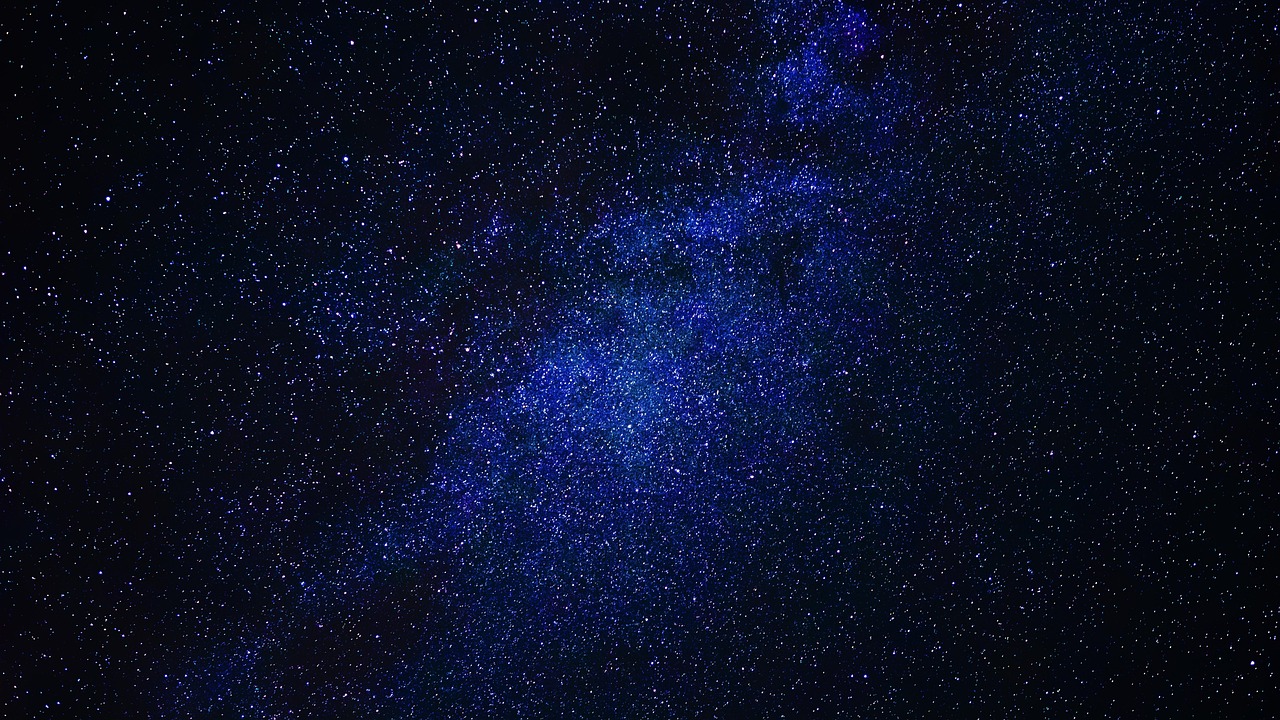
Photo by Felix-Mittermeier on Pixabay.