The Macro-Strategic Framework of UFC Macau
The UFC’s return to the Galaxy Arena in Macau represents a calculated phase in the promotion’s Asia-Pacific (APAC) market penetration strategy. Coming off a brief operational pivot to domestic cards at the Apex in Las Vegas, this international deployment leverages local talent pipelines to anchor regional broadcast partnerships while sustaining global media distribution. The structural composition of this 13-fight card highlights how the organization balances regional market development with immediate competitive parity.
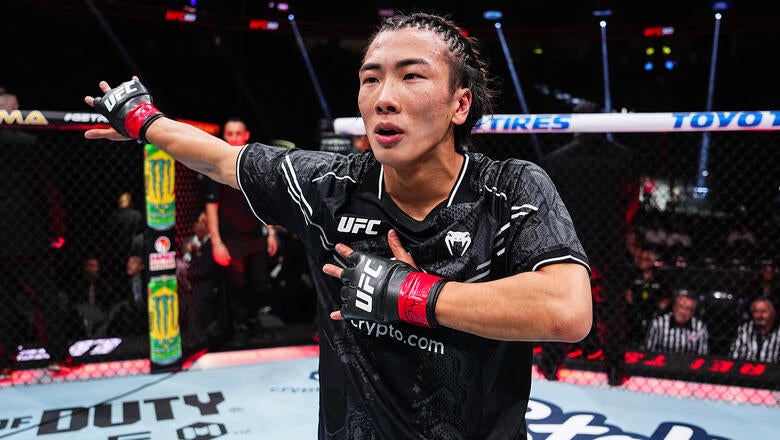
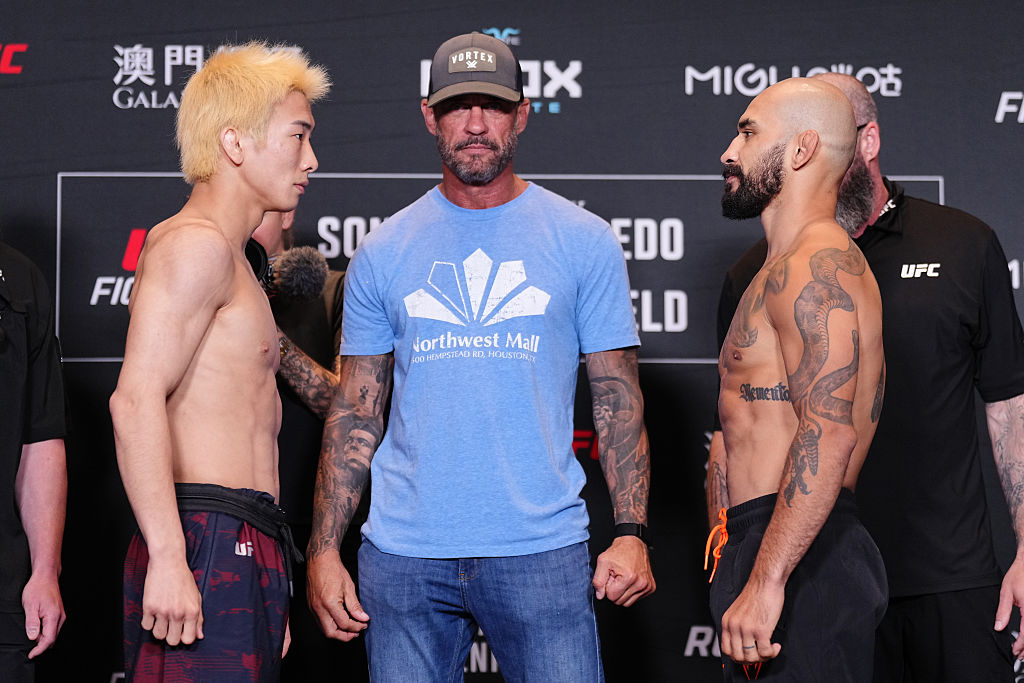
At the center of this card is a flyweight matchup between Japanese prospect Rei Tsuruya and American newcomer Luis Gurule. Finalized on short notice following the withdrawal of Jesus Aguilar, this bout illustrates the promotional reliance on a highly agile, contingent roster. For the promotion, safeguarding international broadcast integrity requires a deep pool of athletes ready to accept high-risk, low-preparation opportunities under stringent timelines.
The commercial return on expansion events like UFC Macau depends on transforming regional prospects into internationally recognized contenders. Tsuruya, a decorated 23-year-old grappling specialist, represents a key pillar of the promotion’s Japanese market strategy. Consequently, the late-notice change in opponent introduces structural volatility, testing his camp’s tactical adaptation and the organization’s contingency matchmaking protocols.
The Micro-Economics of Short-Notice Matchmaking and Weight-Class Adjustments
Luis Gurule’s decision to accept a short-notice assignment against Tsuruya just weeks after his promotional debut highlights the asymmetric incentives built into the UFC’s career pathways. For unranked athletes, stepping in as a short-notice replacement is a highly effective way to build institutional leverage, secure promotional favor, and accelerate contract progression. By preserving this matchup, Gurule establishes himself as a dependable asset, hedging against the reputational penalty of a loss.
However, the physiological demands of this rapid turnaround are severe. Moving up to flyweight within a condensed training window prevents the implementation of a structured, opponent-specific camp. This training deficit is compounded by the metabolic strain of consecutive weight cuts and the circadian disruptions of rapid transit to Macau. Gurule is essentially trading optimal physical preparation for immediate promotional advancement.
From a portfolio management perspective, Gurule is leveraging recent competitive momentum to offset these structural disadvantages. A victory would yield consecutive promotional triumphs within an exceptionally tight operational window, exponentially driving up his market valuation. Conversely, a loss under these compromised preparation parameters carries minimal career downside, as industry observers and algorithmic models discount defeats sustained on short notice outside an athlete’s natural weight class.
Divergent Talent Pipelines: Road to UFC vs. Dana White’s Contender Series
This matchup serves as a direct competitive comparison between the UFC’s two primary talent acquisition funnels. Tsuruya entered the promotion through the Road to UFC tournament framework—a localized, single-elimination bracket designed to systematically scout and cultivate elite talent across East Asia. This pipeline operates as a targeted marketing initiative, supplying culturally resonant, competitive prospects tailored for cards in regional hubs like Macau.
In contrast, Gurule earned his roster spot via Dana White’s Contender Series (DWCS) in 2024, securing a split-decision victory over the undefeated Nick Piccininni. The DWCS ecosystem acts as a centralized talent funnel prioritizing immediate competitive readiness, high finishing rates, and cost-efficient roster scaling. These dual pathways reflect a balanced approach to roster construction, matching regional audience development with high-volume, centralized recruiting.
The intersection of these two developmental pipelines in Macau offers valuable performance data for promotional executives. Tsuruya represents a long-term, structured investment in regional infrastructure, while Gurule represents the battle-tested, high-output pool generated by the Contender Series. The outcome of this bout serves as a micro-level test of the return on investment (ROI) for these distinct scouting models.Tactical Metrics & Quantitative Analysis
An evaluation of fight metrics reveals a sharp contrast in physical leverage and tactical execution. Tsuruya holds a significant physical advantage, carrying a four-inch reach advantage (68 inches to Gurule’s 64 inches) alongside a slight height advantage. In the flyweight division, where spatial management dictates exchange volume, these physical discrepancies will heavily influence where the fight takes place.
Tsuruya’s approach is built on elite grappling efficiency, averaging 5.06 takedowns per 15 minutes across his career, including his run through the Road to UFC bracket. This grappling rate allows him to dictate pacing, limit damage, and systematically dismantle his opponent’s base. While his striking metrics remain modest at 2.24 significant strikes landed per minute, his defensive posture and 52% accuracy rate reflect a disciplined system designed to facilitate transitions to the mat.
Conversely, Gurule offers a higher striking volume, landing an average of 3.46 more significant strikes per minute than Tsuruya. However, this offensive output comes with defensive vulnerabilities, as shown in his second-round stoppage loss to Ode Osbourne. To disrupt Tsuruya’s game plan, Gurule must use lateral movement and high-volume output to deny clinch entries—a difficult task given the lack of a full, targeted training camp.
The Joshua Van Precedent and Flyweight Volatility
The trajectory of Tsuruya’s career shows how volatile the 125-pound division can be. Prior to his recent competitive reset, Tsuruya suffered his sole professional loss at UFC 313 to Joshua Van, who had entered that matchup as a short-notice replacement for Bruno Silva. Van’s ability to stop Tsuruya’s takedowns and win the striking exchanges handed the prospect his first setback and launched Van’s own divisional run.
Van’s subsequent campaign, which saw him fight four times and eventually capture the flyweight championship, illustrates how quickly career trajectories can shift in this division. A single win over a highly regarded prospect can change an athlete’s career path, creating the promotional momentum needed to secure high-profile opportunities. For Tsuruya, that loss was a clear reminder of the dangers posed by highly motivated, short-notice opponents.
Returning after an extended absence, Tsuruya faces a structurally similar challenge in Gurule. The Japanese fighter’s physical and technical reset—symbolized by cutting his signature long hair to prevent interference during training—shows an effort to eliminate marginal inefficiencies. Having experienced the downside of divisional volatility, Tsuruya’s preparation points to a highly disciplined approach designed to avoid repeating past mistakes.
Market Valuation & Broadcast Distribution
The betting markets reflect strong institutional confidence in Tsuruya’s advantages. Across major sportsbooks, Tsuruya opened as a substantial -325 favorite, with Gurule returning as a +260 underdog. These odds represent the market’s assessment of Gurule’s hurdles, specifically his short-notice preparation, his move up in weight, and Tsuruya’s dominant grappling metrics.
For analytical bettors, the value lies in the method-of-victory markets, where Tsuruya to win by stoppage (KO/TKO, DQ, or submission) is priced at +165. This pricing indicates that while Tsuruya is heavily favored, the market anticipates a competitive fight that could test his conditioning after a layoff. Gurule’s durability and high striking volume remain variables that could force Tsuruya to rely on positional control to secure a decision.
From a broadcast perspective, scheduling the preliminary card at 4:00 a.m. Eastern Time on Paramount+ targets a specific global viewing demographic. This timing balances live prime-time coverage in APAC markets with early-morning consumption in North America. Distributing this content across digital platforms is a key part of the UFC’s media rights strategy, proving the promotion’s ability to drive engagement across multiple time zones.
Forward-Looking Strategic Evaluation
The outcome of Tsuruya vs. Gurule will have immediate implications for the flyweight division’s hierarchy. A dominant performance by Tsuruya would re-establish his position as a top-tier prospect, justifying the UFC’s long-term investment in the Japanese market and setting up high-profile matchups. It would also prove his ability to make tactical adjustments after his first career defeat.
For Gurule, this bout is a low-risk, high-reward opportunity to disrupt the promotion’s regional plans and establish himself as a versatile, multi-division competitor. Even in defeat, a competitive performance on short notice would secure his spot as a reliable roster asset capable of performing under pressure. Ultimately, this matchup highlights the complex balance of athlete incentives, promotional logistics, and market dynamics that drive the modern sports landscape.