Buffalo Bills Prioritize Capital Accumulation and Defensive Scheme Transition in 2026 Draft
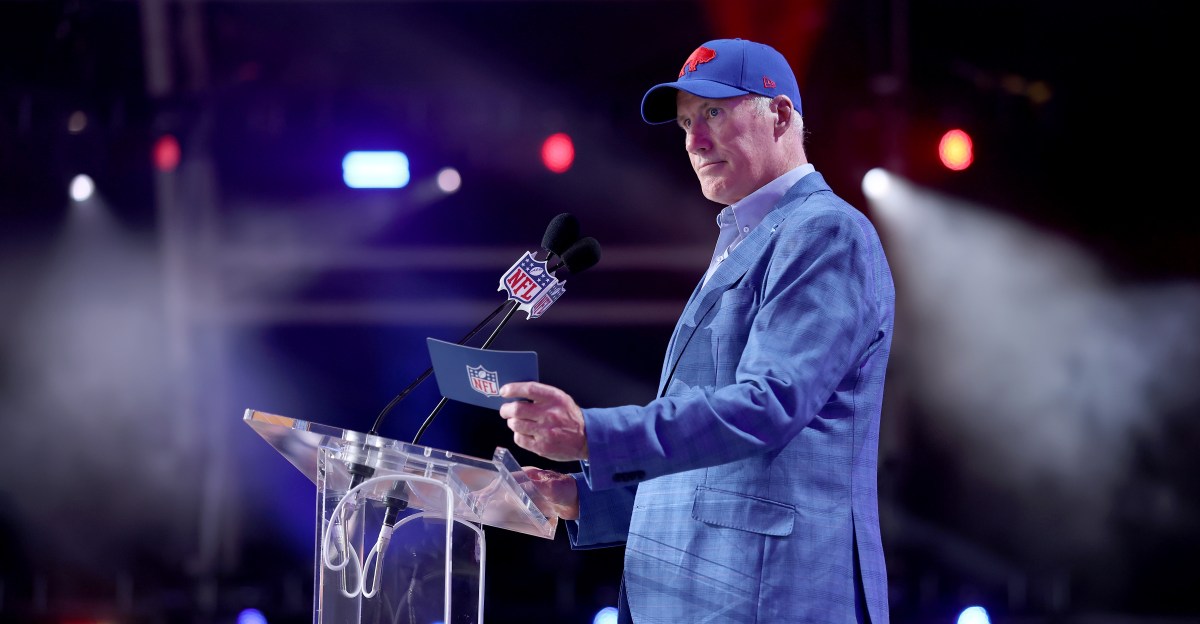
The Buffalo Bills entered the 2026 NFL Draft with a strategic imperative to maximize value from limited resources. This position was dictated by prior personnel decisions, specifically the trade of a second-round pick to the Chicago Bears for wide receiver DJ Moore. This transaction significantly reduced the team’s total draft capital, forcing General Manager Brandon Beane to adopt a calculated approach to asset management. The Bills’ subsequent actions during the draft, particularly the series of trades that moved the team out of the first round entirely, reflected a prioritization of volume over premium positioning.
This strategic posture—accepting a lower quantity of high-value picks in exchange for a higher quantity of mid-round selections—is a common tactic for teams operating under capital constraints. The objective shifts from securing a single, high-impact player to increasing the probability of finding multiple contributors across different positions, thereby mitigating risk and addressing a broader range of roster needs. The Bills’ draft strategy was fundamentally shaped by the necessity to replenish depth and find specific operational fits for a new defensive scheme, rather than simply targeting the highest-rated player on the board.
Capital Arbitrage: Maximizing Value from First-Round Exit
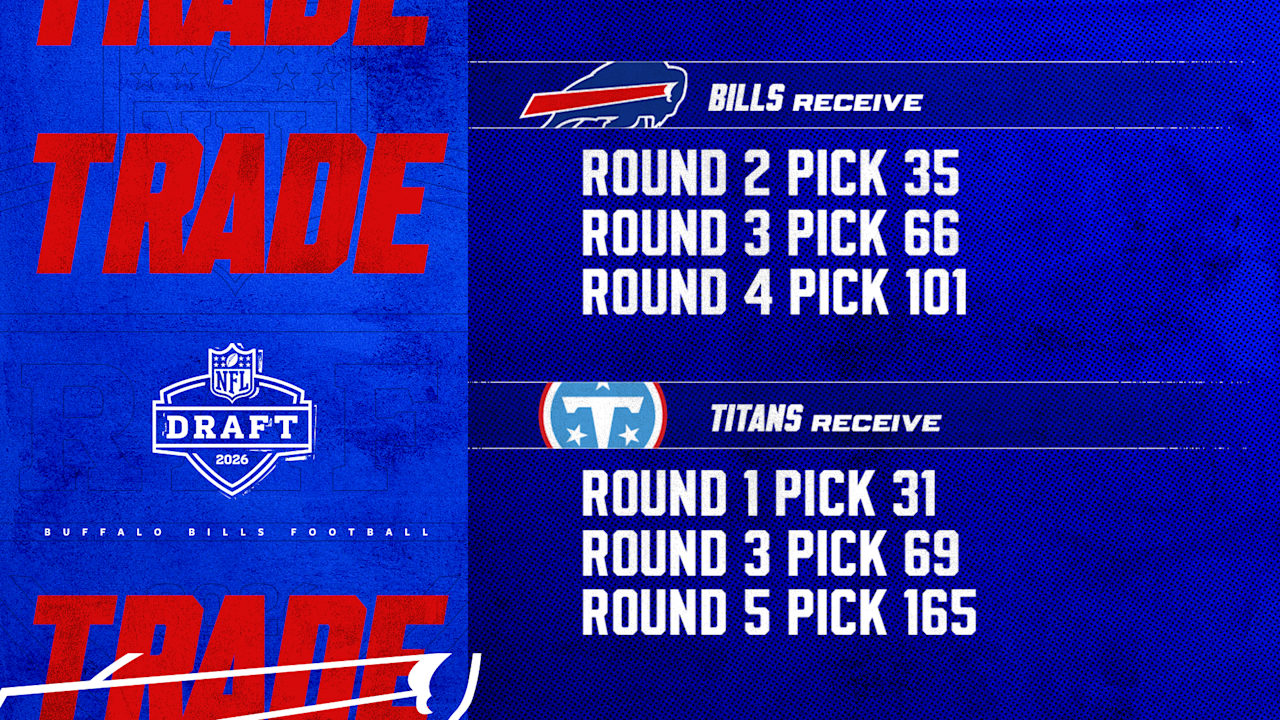
The Bills’ decision to trade out of the first round was executed through a sequence of transactions, demonstrating a deliberate strategy to extract maximum value from their initial position at pick No. 26. The team first traded back to No. 28 with the Houston Texans, then further back to No. 31 as the New England Patriots moved up. The final trade with the Tennessee Titans saw Buffalo exchange pick No. 31 (Round 1), pick No. 69 (Round 3), and pick No. 165 (Round 5) for pick No. 35 (Round 2), pick No. 66 (Round 3), and pick No. 101 (Round 4).
This sequence represents a sophisticated approach to draft capital management, effectively monetizing the perceived value difference between the end of the first round and the beginning of the second. By trading back from pick 31 to pick 35, the Bills gained a fourth-round selection (No. 101) while only slightly adjusting their position in the second round and improving their position in the third round (moving from 69 to 66). This indicates that the perceived drop in talent between pick 31 and pick 35 was deemed less significant than the value derived from acquiring the additional fourth-round pick. This approach prioritizes the accumulation of assets and increases the team’s flexibility to address multiple needs in the middle rounds of the draft.
Operational Alignment: Reshaping the Defensive Scheme
The specific player selections made by the Bills directly reflect the operational imperative to transition to a new defensive system. The source explicitly notes the team’s switch to a 3-4 base defense under first-time defensive coordinator Jim Leonhard. This scheme change necessitates specific personnel profiles, particularly for edge rushers and interior linemen, differing significantly from the requirements of a traditional 4-3 defense.
The selection of T.J. Parker, an edge rusher from Clemson, at pick No. 35, was a direct response to this operational need. The source states that Parker is a productive addition who should help in the transition to the 3-4 defense. In this scheme, edge rushers often function as outside linebackers, requiring a specific blend of pass-rushing ability and coverage skills. Parker’s profile, including his record for forced fumbles and overall production, aligns with the requirements of an attacking 3-4 system.
Furthermore, the source notes the team’s need for a “zero-tech/nose tackle” on Day 3. This position is critical in a 3-4 defense, as the nose tackle is responsible for occupying multiple blockers to free up linebackers and edge rushers. The focus on acquiring personnel for this specific role further confirms that the draft strategy was driven by the operational demands of the new defensive scheme. The team’s selections were not merely about acquiring talent in general, but about acquiring talent with specific attributes required for the system change.
Risk Mitigation through Value-Based Drafting
The selection of T.J. Parker at pick No. 35 demonstrates a successful application of value-based drafting. The source notes that Parker was considered a “safe pick but a quality one” and suggests that drafting him at No. 26 would have generated the same reaction. This implies that the team successfully acquired a player whose value was perceived to be higher than his draft position, effectively extracting surplus value from the trade down. By securing Parker at pick 35, the Bills gained additional draft capital while still acquiring a player who met their operational needs and internal valuation metrics.
This methodology suggests a strategy focused on mitigating risk during a period of significant operational transition, prioritizing reliable production over speculative upside. While acknowledging that Parker is still developing counter maneuvers, the team’s decision to select him at this position indicates a belief in his potential to contribute immediately to the new defensive scheme. The subsequent decision to re-enter the second round to select cornerback Davison Igbinosun further reinforces the team’s commitment to addressing specific operational needs. This demonstrates a flexible approach to asset management, balancing the desire for volume with the need to acquire specific talent for critical positions in the new defensive system.
Day 3 Strategy: Depth Management and Roster Sustainability
With seven selections remaining for Day 3 (Rounds 4-7), the Bills’ focus shifts to depth management and roster sustainability. The source notes the team’s remaining needs, specifically mentioning the “zero-tech/nose tackle” and the “wide receivers room.” These later rounds are crucial for building a sustainable roster by acquiring players who can contribute on special teams, provide depth, and potentially develop into future starters.
The emphasis on the wide receiver position highlights the long-term strategic need to replenish talent at key positions. The source’s mention of the wide receivers room suggests a focus on developing a pipeline of talent to ensure long-term offensive stability. Similarly, the need for a nose tackle in the later rounds underscores the importance of finding specific fits for the new defensive scheme, even if those players are not high-round selections.
The accumulation of multiple picks in Rounds 4 through 7 (No. 101, No. 125, No. 126, No. 167, No. 168, No. 182, No. 220) provides the team with significant flexibility on Day 3. This volume strategy increases the probability of finding contributors in later rounds, which is essential for managing salary cap constraints and building a deep roster capable of withstanding injuries and maintaining performance throughout a long season. The strategic decision to trade back in the first round ultimately provided the capital necessary to execute this depth-focused approach on Day 3.