Strategic Volatility in the National League Promotion Matrix
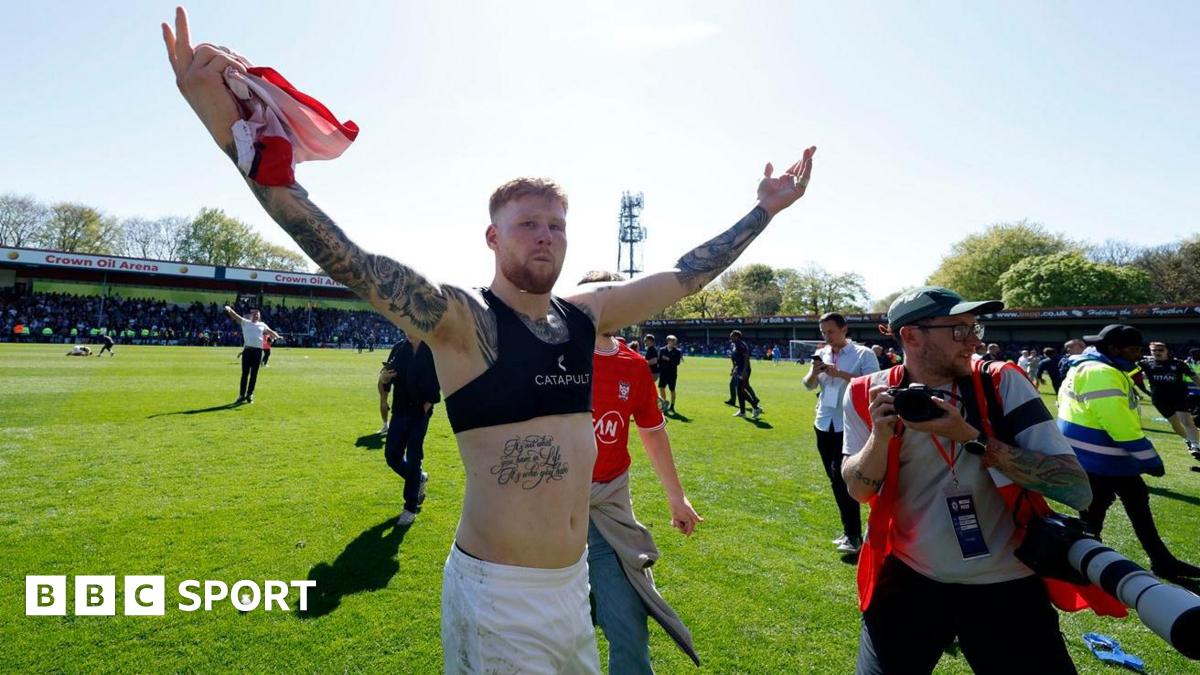
The conclusion of the National League campaign has been redefined by a profound shift in competitive leverage following Rochdale’s 99th-minute victory over Braintree Town. This result transcended a mere three-point acquisition; it fundamentally recalibrated the championship trajectory by forestalling York City’s premature title celebration. The late intervention by Mani Dieseruvwe serves as a primary case study in how high-stakes performance under acute temporal pressure can disrupt institutional expectations and delay the multi-million-pound implications of promotion.
For York City, the operational consequences are taxing. The club must now maintain peak competitive readiness into the season’s final hours, introducing layers of psychological attrition and physical fatigue. This extension of the title race also benefits the league’s commercial narrative, heightening engagement for broadcasters and sponsors who capitalize on prolonged uncertainty at the summit of the table. Rochdale’s execution underscores a tactical resilience essential for the upcoming play-offs, where the ability to exploit defensive vulnerabilities in transition often dictates sporting and financial solvency.
Officiating Discretion and Administrative Friction
Post-match discourse from Braintree Town manager Steve Pitt has highlighted growing systemic tensions regarding timekeeping subjectivity. Pitt’s contention that the match exceeded the signaled seven minutes of added time points to a perceived lack of administrative consistency. This friction between club leadership and officiating bodies reflects broader anxieties regarding regulatory transparency during the season’s most critical phases. When officials deviate from signaled increments, it introduces a non-quantifiable variable that challenges established defensive strategies.
For Braintree Town, a club already navigating the structural fallout of relegation, this 99th-minute concession was viewed as an avoidable failure exacerbated by external decision-making. This incident prompts broader questions regarding the institutional oversight of match officials and the potential requirement for automated, rigid time-management protocols to preserve competitive integrity. In a professional ecosystem where promotion and relegation trigger seismic shifts in revenue, the perception of officiating inconsistency can deter potential investment and destabilize the league’s reputation for fairness.
Fiscal Distress and Capital Reconfiguration
Braintree Town’s relegation has triggered an immediate search for external investment, highlighting the precarious financial landscape of the fifth tier. The loss of National League status precipitates a sharp contraction in central distributions and commercial visibility, necessitating a complete overhaul of the club’s capital structure. Seeking investment during competitive decline is a complex maneuver; Braintree must now present itself as a distressed asset with high recovery potential to attract risk-tolerant capital.
The financial disparity between promotion-aspirants like Rochdale and relegated entities continues to widen, creating a tiered hierarchy within the division. Clubs with robust commercial engines are better equipped to absorb the volatility of a promotion race, whereas smaller outfits remain reliant on precise fiscal management and external funding for survival. Braintree’s ability to secure capital will depend on demonstrating a viable operational path back to the National League, emphasizing the necessity of institutional stability during periods of transition.
Operational Resilience vs. Defensive Attrition
The fixture at Cressing Road exposed the contrast in operational focus between a side chasing promotion and one resigned to relegation. Braintree’s late-game collapse is a symptom of psychological attrition; while the squad performed admirably for the majority of the match, the final moments revealed a breakdown in collective focus. Rochdale’s top scorer, Mani Dieseruvwe, exploited this lapse, demonstrating the individual quality that differentiates elite performers within the National League’s competitive strata.
The tactical battle between Jim McNulty and Steve Pitt underscored the importance of bench depth and late-game adjustments. Rochdale’s sustained offensive pressure forced Braintree into a reactive posture, eventually inducing the decisive error. In parallel, York City’s stalemate with Rochdale highlighted the thin margins of error at the top. Despite statistical dominance, York’s inability to bypass goalkeeper Oliver Whatmuff—who produced a series of high-leverage saves—serves as a reminder that clinical efficiency is the ultimate arbiter of success in the promotion matrix.
Institutional Implications for the English Football Pyramid
The convergence of these results creates a high-pressure environment for the National League’s governing body. Ensuring the final matchday adheres to the highest standards of integrity is paramount for the league’s brand equity. The National League occupies a unique position as the bridge between professional EFL structures and semi-professional regional tiers, where a single 99th-minute goal can have multi-generational impacts on a club’s community and financial standing.
As the season reaches its climax, the league must address systemic challenges, including time-management controversies and the financial instability of relegated clubs. By refining these operational standards, the National League can enhance its status as a destination for serious investment. The events at Cressing Road and the York City stalemate are not merely isolated results; they are critical data points in an evolving institutional narrative that continues to test the limits of sporting and financial resilience.