
The Strategic Shift in Political Communication: From Nuance to Digital Leverage
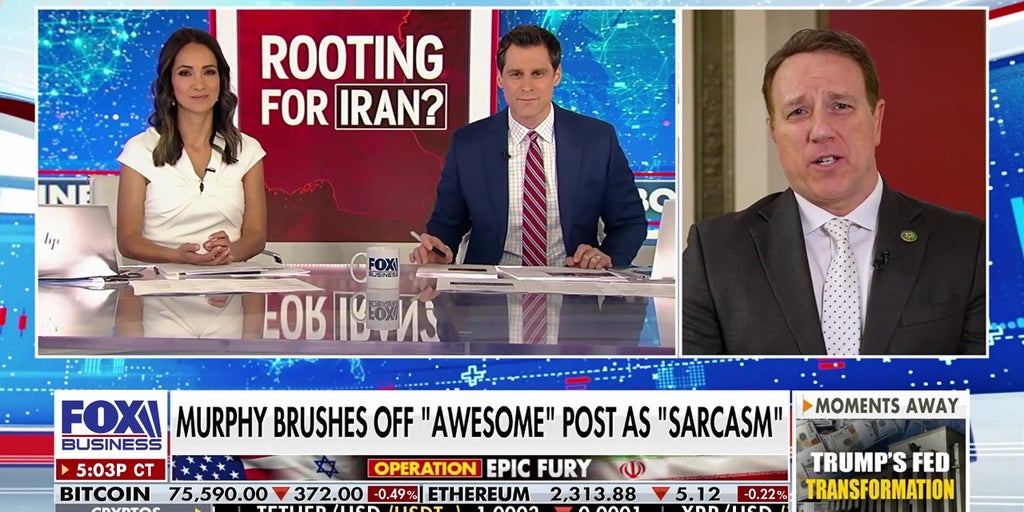
The recent political exchange between Representative Pat Fallon and Senator Chris Murphy regarding Iran exemplifies the strategic evolution of high-stakes political communication in the digital age. The dispute, initiated by Senator Murphy’s social media post on Iran, illustrates how platforms like Twitter function as primary battlegrounds for narrative control. Political actors increasingly utilize these platforms to bypass traditional diplomatic channels and media gatekeepers, reframing complex foreign policy issues in simplistic, high-impact terms.
The nature of the social media post—a concise, ambiguous comment—underscores a calculated shift in messaging strategy. Brevity and emotional resonance are deployed to maximize engagement and provoke strong reactions, rather than facilitate nuanced discussion. For Senator Murphy, this approach served as a high-leverage tool to articulate a position on a sensitive international topic. For Representative Fallon, the immediate criticism of the post provided an opportunity to mobilize a specific political base, reframing the action as strategically misguided or inappropriate. This dynamic prioritizes ‘performance leverage’ over detailed policy articulation, allowing political actors to quickly define the terms of debate and force opponents into a reactive position.
Partisan Amplification and the Feedback Loop
The controversy surrounding the social media post did not exist in isolation; it was immediately integrated into a broader partisan media ecosystem designed to amplify specific narratives. The programming schedules of major news outlets, such as Fox News and Fox Business, provide insight into the structured environment where these political conflicts are processed and disseminated to specific audiences. Programs like “Mornings With Maria,” “Fox & Friends,” and “Fox News @ Night” create a consistent thematic flow tailored to a particular demographic.
This structure ensures a receptive audience for discussions concerning national security and foreign threats. When a figure like Senator Murphy makes a controversial statement, the partisan media system rapidly incorporates it into pre-existing narratives. This creates a feedback loop where political actions generate content for media outlets, which in turn amplify specific viewpoints, solidifying audience loyalty and reinforcing existing biases. This process often overshadows the underlying policy implications of the debate, transforming a complex issue into a high-engagement, partisan talking point.
Digital Fragility and Information Integrity Challenges
Beyond political and media dynamics, the technical challenges inherent in digital information dissemination introduce a critical layer of fragility to the ecosystem. Source data indicating a scrape failure due to factors like “JavaScript is disabled,” “browser extension,” or “network issues” highlights the operational vulnerabilities of modern information access. These technical glitches are not merely passive inconveniences; they actively shape public discourse by disrupting reliable data flows and creating information gaps.
In a rapid-fire news cycle dominated by social media controversies, technical failures can significantly impact the accuracy and completeness of information available to the public. When access to consistent, verifiable information is compromised, individuals rely more heavily on pre-existing partisan filters and sources. This vulnerability further entrenches existing biases, making it difficult for objective analysis to gain traction. The infrastructure supporting political communication is therefore a critical component that can be exploited or simply exacerbated by external factors, impacting how events are perceived and understood across different stakeholders.
Consequences for Stakeholder Incentives and Governance
The incident reveals a complex interplay of stakeholder incentives that drive political discourse toward polarization. For political figures, the primary incentive is often to maximize visibility and mobilize their base through high-leverage digital communication. This approach allows for direct communication with constituents, offering a significant performance advantage in a polarized landscape where symbolic gestures often outweigh substantive policy discussions. This constant cycle of social media controversies contributes to a broader fragmentation of political discourse.
The consequences for effective governance are significant. Policymakers face increasing pressure to communicate complex issues through soundbites, hindering consensus-building on critical issues like foreign policy toward Iran. For the media industry, the reliance on social media controversies creates a competitive dynamic where speed and sensationalism often prioritize over accuracy and depth. The strategic decisions made by partisan news outlets reflect a prioritization of content that resonates with existing audience biases, further solidifying the division between different information ecosystems. This environment creates challenges for objective journalism and public understanding.
Photo by janeb13 on Pixabay.