

World Quantum Day, observed on April 14 in homage to Planck’s constant (4.14 x 10^-15 eV·s), has evolved from a scientific commemorative to a critical benchmark for industrial synchronization. This date signifies the boundary where classical physics fails and quantum mechanics offers a new computational substrate. For global enterprises, this transition represents a pivot from exploratory R&D to strategic infrastructure investment.
The narrative surrounding quantum viability is undergoing a fundamental correction. The industry is moving away from the ‘ten-year horizon’ trope toward a ‘utility era’ focused on Noisy Intermediate-Scale Quantum (NISQ) devices and the roadmap toward fault-tolerant systems. This compression of timelines has forced a re-evaluation of capital allocation, as early-mover advantages in quantum-native algorithms become increasingly defensible.
Strategic utility is currently most acute in molecular simulation and material science. By bypassing the exponential complexity that cripples classical silicon-based architectures, quantum processors enable the modeling of chemical catalysts and high-density battery chemistries with unprecedented precision. These applications are not merely academic; they are the future drivers of operational margins in the energy and pharmaceutical sectors.
However, the shift to a quantum-centric economy introduces systemic risks, particularly within cybersecurity. The potential for Shor’s algorithm to compromise asymmetric encryption necessitates an immediate transition to Post-Quantum Cryptography (PQC). Institutional leaders must treat quantum readiness as a dual-track strategy: capturing the performance leverage of quantum-AI integration while mitigating the exposure of legacy data to future decryption.
The institutionalization of this technology is evidenced by initiatives like the ‘Quantum Revolution’ exhibition at Espacio Fundación Telefónica. Curated by physicist Sonia Fernández Vidal, the exhibition functions as a knowledge-transfer platform, bridging the gap between theoretical physics and professional socialization. It contextualizes the ‘Second Quantum Revolution’—the shift from using quantum effects (transistors, lasers) to actively manipulating individual quantum states.
The current bottleneck remains hardware fragility and decoherence. The requirement for extreme cryogenic environments and sophisticated error correction protocols creates a specialized market for quantum-as-a-service (QaaS) and middleware providers. As standardization begins to take hold, the organizations that have already integrated quantum-ready workflows into their classical stacks will be best positioned to scale during the next phase of technological maturity.
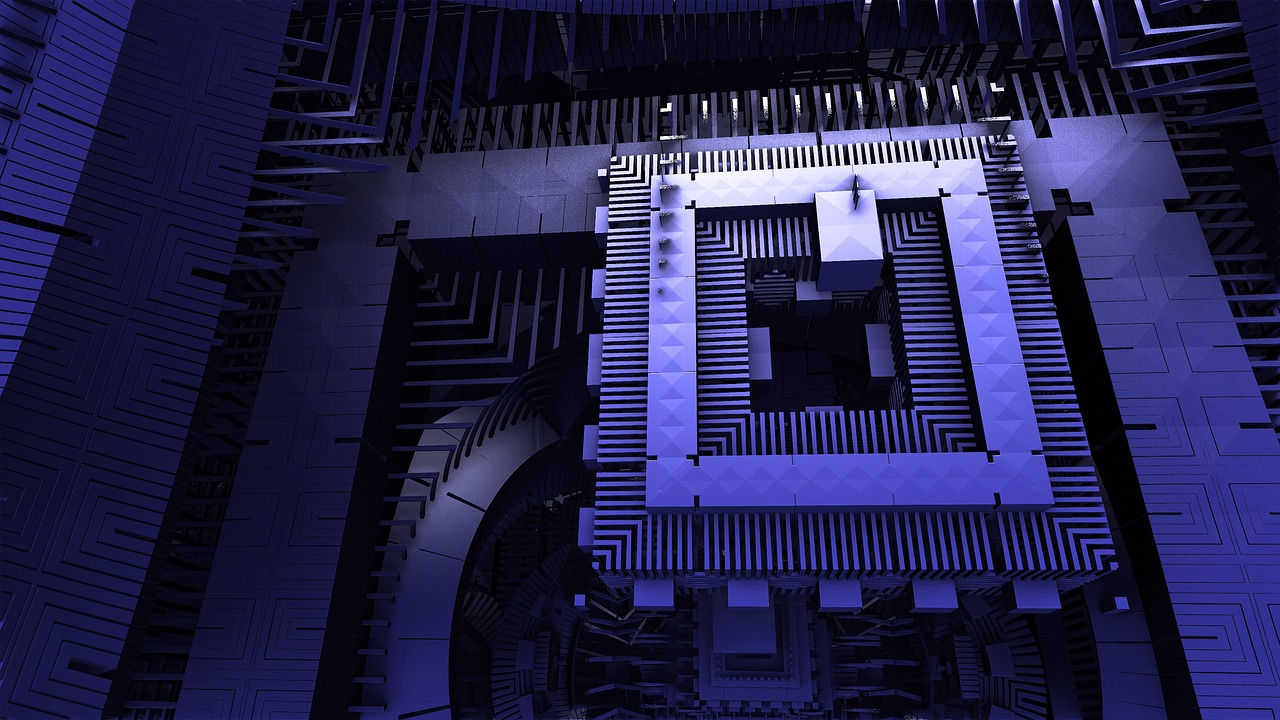
Photo by TheDigitalArtist on Pixabay.