The Strategic Value of Volatility in the NCAA Tournament
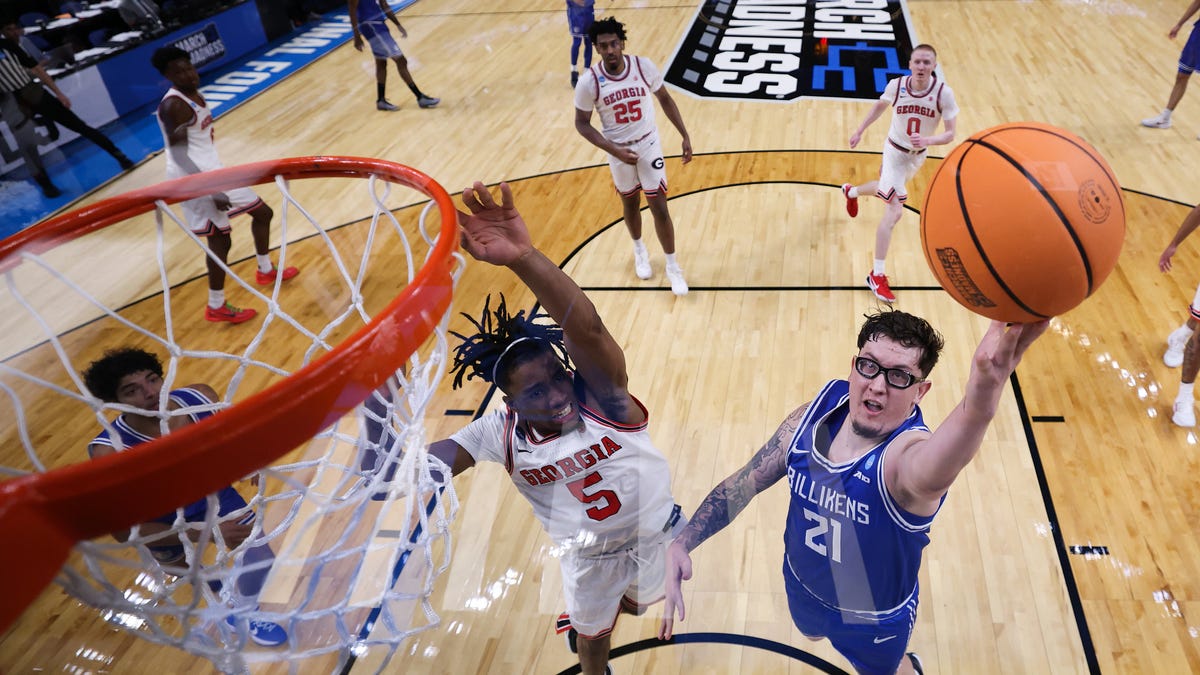
The first round of the 2026 NCAA men’s basketball tournament concluded with a series of high-stakes matchups that underscore a critical paradox: the volatility that makes the tournament a compelling cultural product also defines its financial and institutional risk landscape. The single-elimination format compresses 32 games into a 36-hour window, creating a dense media product that maximizes advertising inventory and drives the high engagement metrics necessary to justify multi-billion dollar media rights contracts. This inherent unpredictability—the ‘symphony of chaos’—is the core value proposition for broadcasters and advertisers, transforming a single game’s result into a pivotal moment that redefines institutional trajectories and player valuations.
Performance Leverage and Strategic Risk: The Case of UConn
UConn’s victory over Furman serves as a powerful illustration of performance leverage and strategic vulnerability in tournament play. The dominant performance by Tarris Reed Jr., who recorded 31 points and 27 rebounds (including 11 offensive rebounds), was a critical factor in compensating for the team’s poor perimeter shooting (5 of 25 from three-point range). Reed’s individual effort, placing him among a select few players in the last 50 years to achieve a 30-point, 20-rebound tournament game, highlights the outsized influence of individual talent in high-stakes environments. This performance not only secured the win but also dramatically increased Reed’s brand value and professional prospects within the Name, Image, and Likeness (NIL) framework, aligning individual financial incentives directly with on-court success.
However, this reliance on interior dominance introduces significant strategic risk. For UConn’s future matchups, particularly against a potential opponent like UCLA, the Huskies’ vulnerability from beyond the arc becomes an exploitable weakness. The potential unavailability of Silas Demary Jr. further concentrates the strategic burden on Reed and other key players, requiring a precise adjustment in offensive and defensive strategy to mitigate perimeter struggles while maximizing Reed’s interior advantage. This high-wire strategic calculus defines high-level tournament play, where a single weakness can be exploited by an opponent to end a season.
The Economics of Upsets: High Point and VCU
First-round upsets, such as High Point’s victory over Wisconsin and VCU’s comeback win against North Carolina, are central to the tournament’s economic model and cultural identity. For mid-major programs, a single upset provides disproportionate strategic leverage. A win against a power conference opponent significantly enhances recruiting narratives, attracts higher-caliber talent, and increases institutional prestige. This exposure translates directly into increased applications, alumni engagement, and potential donor support, creating a positive feedback loop that can elevate a mid-major program’s standing within the collegiate ecosystem for years.
Conversely, for power conference programs like Wisconsin and North Carolina, an early exit represents significant financial and reputational loss. The single-elimination format creates high-stakes risk for coaches, whose job security and contract extensions are often tied to tournament performance. A loss in the first round impacts a program’s recruiting narrative and financial projections, potentially hindering their ability to attract top talent in subsequent cycles. The recurrence of the ‘time-honored 12-over-5 upset’ highlights this managed risk for power programs, where a single game can negate a full season of success and threaten long-term strategic goals.
Market Volatility and Institutional Incentives
The NCAA tournament’s financial distribution model directly amplifies the strategic importance of each game, creating market volatility for all stakeholders. Revenue allocation based on conference performance means that an upset victory for a smaller conference team increases their conference’s share of the revenue pool. This structural mechanism creates a direct financial incentive for success among smaller programs and reinforces the competitive balance that drives media value. The high-stakes nature of the event transforms it into a market where individual players and programs can capture immense value in a short timeframe, as seen in the standout performances of High Point’s Flynn Clayman and VCU’s Phil Martelli Jr.
The first round serves as a critical inflection point for institutional strategy. The outcomes directly influence recruiting strategies, coaching decisions, and facility investments for the coming year. A dominant performance by a player like Tarris Reed Jr. validates a program’s recruiting strategy and attracts further talent, while an early exit necessitates a reevaluation of institutional priorities. This constant tension between performance leverage and institutional risk defines the tournament’s competitive landscape, where individual success and strategic failure are intertwined with broader market dynamics.