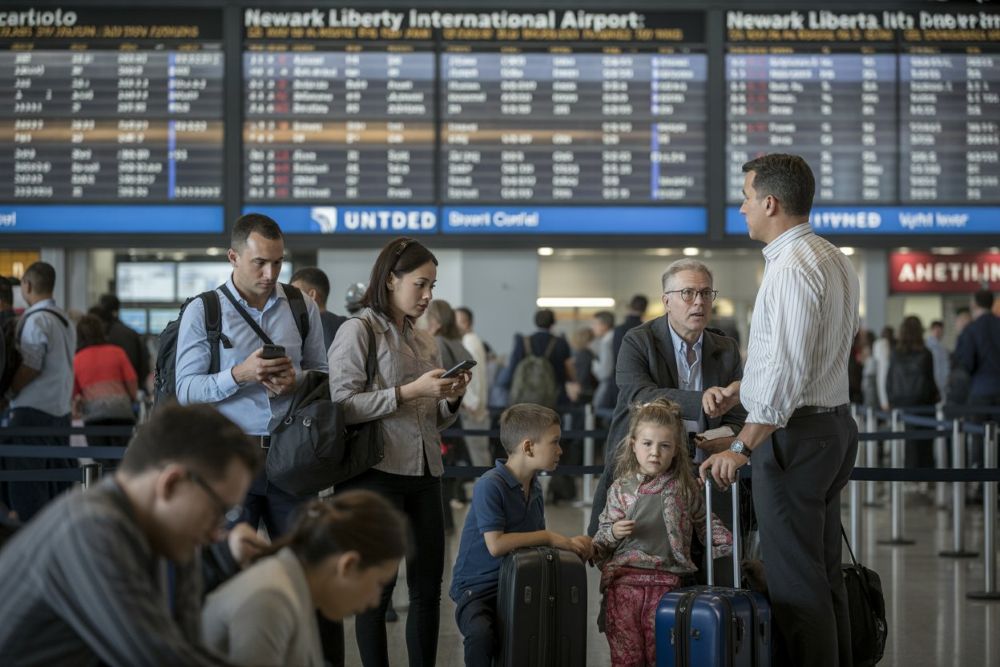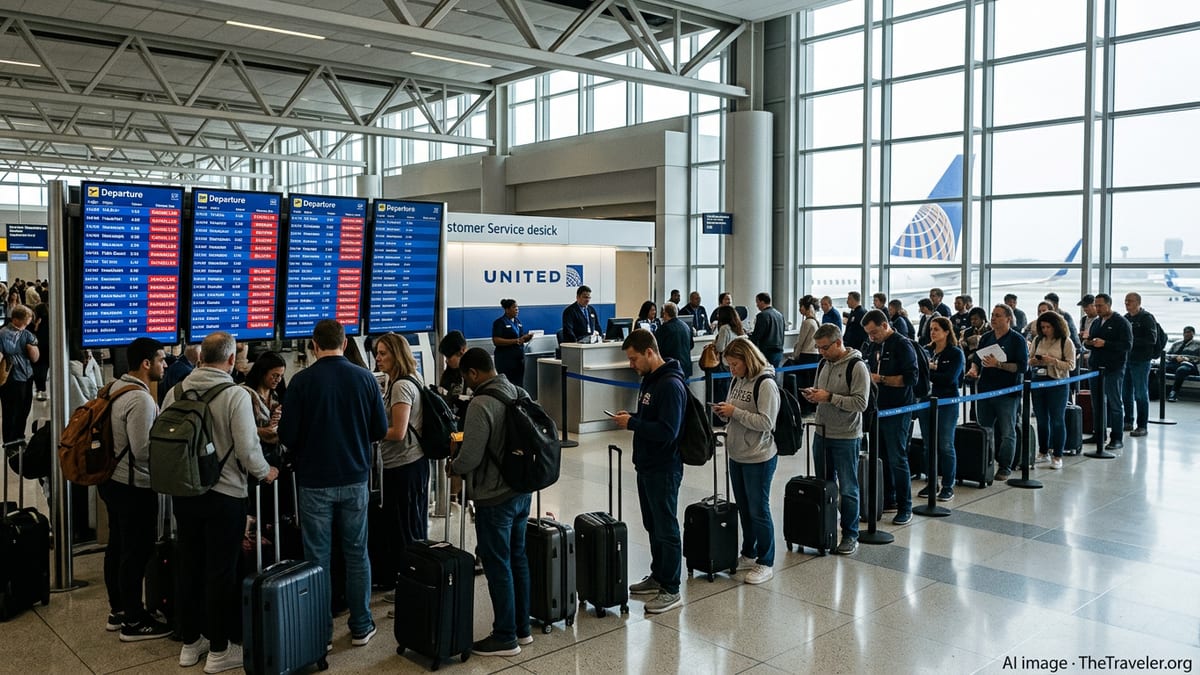
The operational disruptions at Newark Liberty International Airport (EWR) on March 10, 2026, function as a diagnostic for the systemic fragility inherent in high-utilization aviation nodes. The synchronized suspension of 14 flights by United Airlines, El Al, and Spirit Airlines—compounded by 103 delays—demonstrates how localized scheduling friction rapidly escalates into a multi-continental network crisis. For institutional stakeholders, these events highlight the precarious equilibrium between aggressive hub scheduling and the narrowing windows for operational recovery in a volatile geopolitical landscape.
The Entropy of Hub-and-Spoke Dominance
As the primary anchor at Newark, United Airlines faces acute exposure to terminal congestion. The documented 12 cancellations and 45 delays represent a disruption to 2% and 8% of its daily schedule, respectively, creating an operational vacuum that regional partners like Republic and Jazz are unequipped to mitigate. This imbalance necessitates a strategic triage, forcing the carrier to prioritize high-yield international recovery at the expense of domestic feeder efficiency. The resulting decay in connection integrity—particularly with Republic Airways facing an 11% delay rate—undermines the entire hub’s throughput.
This operational friction triggers expensive rebooking maneuvers through secondary hubs like Washington Dulles (IAD) and Chicago O’Hare (ORD). While these pivots offer short-term relief, they increase the total cost per passenger and erode the profitability of the Newark operation, signaling that the Northeast Corridor’s infrastructure may be reaching its threshold for elasticity.
Geopolitical Airspace Constraints and Risk Premiums
The suspension of services to Tel Aviv, Frankfurt, and Marrakech underscores the convergence of geopolitical risk and technical airspace management. Volatility in Middle Eastern corridors acts as a catalyst for route suspensions by El Al and United, forcing carriers to weigh insurance premiums and safety protocols against the revenue loss of cancellation. These disruptions are rarely isolated; a suspension of the Newark-Frankfurt rotation specifically compromises Star Alliance node integrity, disrupting business-critical flows to Central and Eastern Europe and forcing a reliance on partner capacity or less efficient European transit points.
Capital Efficiency and Grounding Costs
For low-cost carriers (LCCs) like Spirit Airlines, which rely on high aircraft utilization, service suspensions to cities such as Palm Beach or Atlanta represent a direct hit to capital efficiency. In a model optimized for minimal turnaround times, every hour an airframe remains static at EWR is unrecoverable revenue. Furthermore, the impact on international carriers like Air India and Icelandair suggests that Newark’s ground handling and air traffic control limitations have become a de facto tax on all operators, leading to crew duty-time expirations and unplanned logistics costs.
Institutional Resilience and Reputational Equity
The immediate reactive phase focuses on passenger flow, but the underlying challenge remains the structural capacity of the terminal environment. The data from March 7–10 suggests that Newark’s current density is unsustainable during periods of even moderate external pressure. For United, the reputational risk is significant; persistent volatility may shift corporate contracts toward competitors at JFK or Philadelphia. Long-term mitigation will likely require a reevaluation of slot utilization and a move toward multi-hub redundancy to safeguard against the recurring fragility of the Newark gateway.