The Strategic Friction of Player Autonomy and Contractual Vetoes
The 2026 NHL trade deadline illuminated the critical leverage held by elite players when movement clauses are exercised. The most significant illustration was Colton Parayko’s definitive veto of his structured trade from the St. Louis Blues to the Buffalo Sabres. Parayko invoked the full protection embedded in his 2021 eight-year, $52 million contract, effectively nullifying a deal that would have provided St. Louis with immediate roster flexibility.
This event underscores a core risk in long-term asset management: high-cap-hit contracts with movement restrictions can impede necessary transition periods. For the Blues, this failure forces them to retain a high-value veteran whose current injury status (sidelined with back spasms) significantly complicates his market valuation as the Friday 3 p.m. deadline approached. The veto creates a bottleneck, preventing the efficient liquidation of veteran assets for future capital.
Contractual Architecture: Parayko and Market Stagnation
Parayko’s refusal serves as a definitive case study on the conflict between team salary cap objectives and player autonomy. The agreed-upon framework between St. Louis and Buffalo, contingent on the waiver, collapsed, immediately shifting Buffalo’s focus to secondary defensive targets with limited time remaining. The intersection of Parayko’s physical durability issues and his contractual veto power has placed St. Louis in a precarious negotiating position, demanding creative solutions for a high-cost defenseman.
The Nicholas Roy Transaction: Conditional Value and Future Hedging
The transfer of Nicholas Roy from the Toronto Maple Leafs to the Colorado Avalanche exemplifies sophisticated asset management geared toward future-proofing. Toronto prioritized the acquisition of protected draft capital over immediate bottom-six stability, securing a conditional 2027 first-round pick.
The condition—top-10 protection—is a crucial hedge: if the Avalanche underperform and the pick falls outside the top ten, it converts to an unprotected 2028 first-rounder. This mechanism ensures Toronto receives premium draft capital regardless of Colorado’s short-term competitive decay or sustained success. Colorado gains a reliable center capable of bolstering their playoff run, sacrificing minimal mid-round capital (a low 2026 fifth-round pick).
Toronto’s Recalibration: Liquidity over Lineup Stability
The Maple Leafs’ rapid turnover of Roy suggests the front office viewed him primarily as a liquid asset for trade maximization. By securing a pathway to a future first-rounder, Toronto mitigates the impact of past “win-now” maneuvers on their prospect pool and maintains crucial salary cap maneuverability heading into the offseason.
Utah Mammoth: A Definitive Statement of Competitive Intent
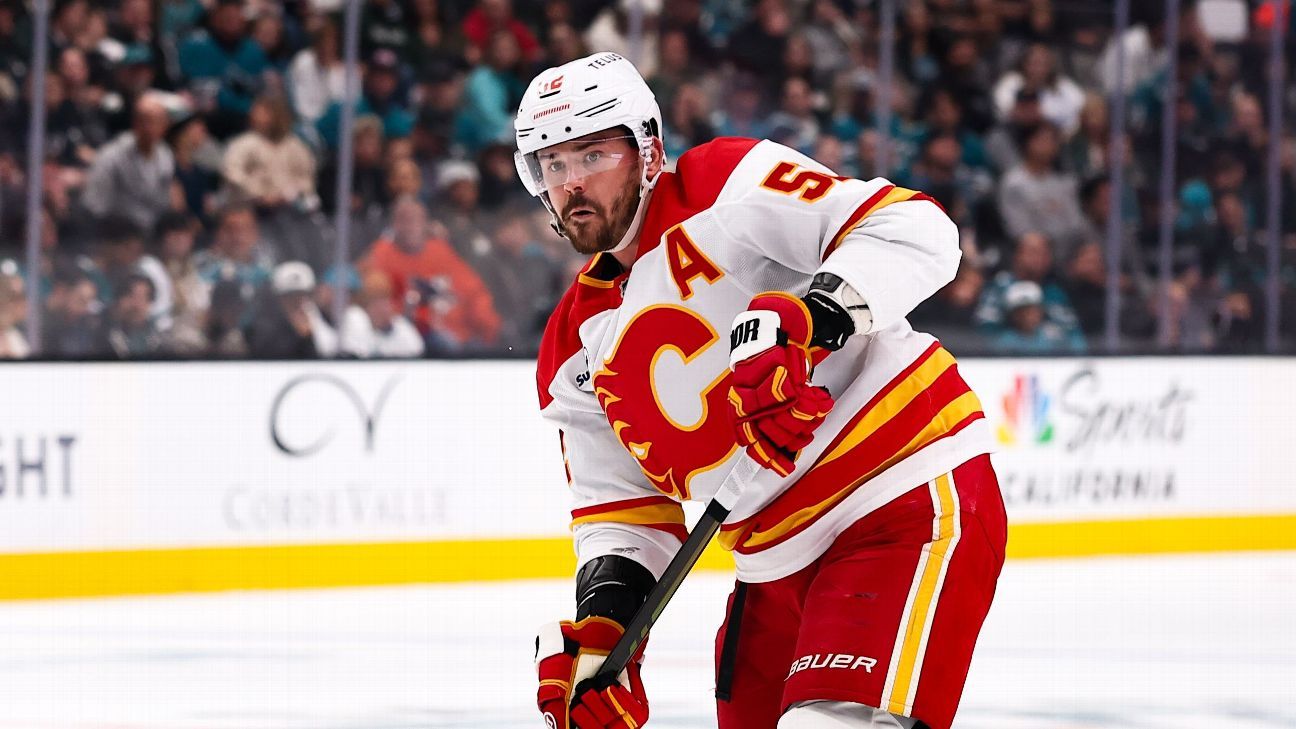
MacKenzie Weegar’s acquisition by the Utah Mammoth from Calgary signals the franchise’s decisive move from developmental phase to competitive contender status. Weegar’s established ability to anchor a blue line, eat significant minutes, and contribute across special teams immediately elevates Utah’s defensive structure, projecting to shift Sean Durzi into a secondary role.
Calgary’s Tactical Retreat and Rebuild Acceleration
For the Calgary Flames, moving a top-pairing defenseman like Weegar strongly indicates a strategy of accelerated roster deconstruction. This action clears substantial cap space and aligns the team’s asset timeline further into the future, focusing on prospects whose primes coincide with the team’s next contention window. This movement destabilizes the Western Conference defense market.
Market Inflation Driven by Elite Talent Movement
The deadline activity has seen significant inflation driven by high-profile moves, including the goaltending swap between Edmonton and Pittsburgh, and critically, the trades involving Quinn Hughes (Minnesota) and Artemi Panarin (Los Angeles Kings).
The Panarin acquisition by the Kings underscores their commitment to top-end scoring needed to compete in the Pacific Division. These transactions—where teams pay premiums for guaranteed elite performance—have established high price floors. Consequently, potential deals for remaining players like Robert Thomas or Nazem Kadri are now benchmarked against these inflated returns, pressuring remaining buyers to overpay or settle for lower-tier depth.
The Operational Pressure of the Hard Deadline
The March 6, 3 p.m. deadline imposes a definitive operational constraint, forcing GMs to finalize complex transactions involving cap compliance, medical sign-offs, and immigration logistics under extreme duress. The scarcity of impact talent remaining amplifies the leverage of selling teams, often resulting in “panic buying” where perceived weaknesses are addressed at inflated costs.
The public discourse, driven by insiders and analysts, further complicates the environment. The documented failure of the Parayko trade due to the veto creates reputational risk for St. Louis, potentially affecting subsequent negotiations, while media narratives pressure GMs to match perceived market winners established by moves involving Minnesota and L.A.
Conclusion: The Sustainable Path vs. The Current Window
The 2026 NHL Trade Deadline concludes as a study in contrasting organizational philosophies. Contenders like Colorado and Minnesota are aggressively mortgaging future assets to capitalize on immediate competitive windows. Conversely, asset-focused organizations like Toronto and Calgary are leveraging conditional picks to build sustainable, long-term competitive health. The final hours confirmed that roster management in the hard-cap era is defined by the complex calculus of present urgency against multi-year financial forecasting.