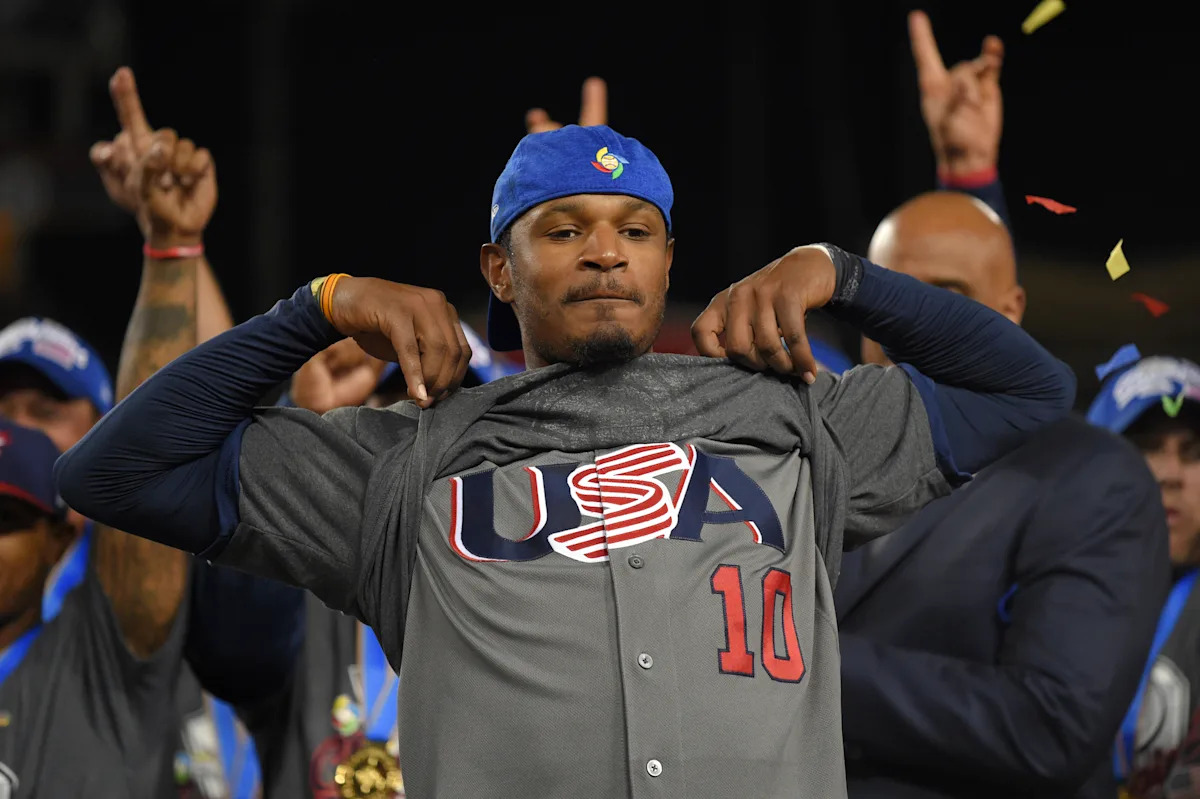
The 2026 World Baseball Classic (WBC) signifies a transformative era for international baseball, transitioning from a promotional exhibition into a high-stakes arena of institutional risk management. For Major League Baseball (MLB) franchises, the tournament represents a dual-edged sword: a peerless vehicle for global brand expansion and a significant logistical friction point regarding the preservation of multi-million dollar assets. The current landscape is defined by the tension between national sporting ambitions and the actuarial realities of player insurance and injury mitigation.
The Actuarial Bottleneck: Insurance and Capital Protection
The structural integrity of 2026 rosters is dictated less by scouting and more by the financial mechanisms of player insurance. The 2023 cycle established a precedent where elite talents like Francisco Lindor and Carlos Correa faced significant participation hurdles due to preexisting conditions or high-valuation contract structures. These insurance bottlenecks function as an unofficial veto, where the inability to secure coverage for massive long-term guarantees effectively bars high-value players from competition. This creates a tiered competitive environment, favoring nations with younger, pre-arbitration rosters or those with specific contract language that permits international play.
This systemic caution is retrospectively validated by the high-intensity nature of the tournament. The physical toll of high-leverage innings in March—weeks before the traditional MLB peak—forces a recalibration of value. Organizations now view the WBC through the lens of capital protection, where the opportunity cost of a tournament injury outweighs the marketing benefits of national representation. Consequently, national federations must pivot toward ‘roster depth’ strategies, relying on a broader talent pool to offset the absence of ‘Tier 1’ stars sidelined by administrative and financial constraints.
Tactical Fluidity: Team USA’s Defensive Architecture
Team USA’s projected strategy for 2026 emphasizes positional flexibility as a countermeasure to roster attrition. The anticipated presence of Gunnar Henderson (Baltimore Orioles) and Bobby Witt Jr. (Kansas City Royals) creates a tactical surplus at shortstop. Analytical models suggest that maximizing defensive range will likely involve Henderson transitioning to third base, a move that reflects the broader MLB trend of defensive versatility. This optimization prioritizes aggregate Run Saved (DRS) over traditional positional rigidity, allowing the coaching staff to field the most efficient offensive and defensive lineup simultaneously.
For the Baltimore Orioles, Henderson’s participation serves as a high-intensity developmental catalyst, albeit one that requires precise workload monitoring. The exposure of young core players like Henderson and Brice Turang to playoff-caliber environments during the spring can accelerate competitive maturity. However, the ‘soak it all in’ philosophy must be balanced against the disruption of spring training continuity. The strategic advantage of having a primary core in camp remains a significant variable for teams not heavily depleted by international call-ups, potentially impacting early-season divisional standings.
Commercial Logic and Global Market Saturation
The selection of Houston and Miami as primary hubs for the 2026 tournament is a data-driven decision aimed at maximizing commercial throughput. These venues provide established infrastructure and direct access to high-engagement demographics within the Caribbean and North American markets. The inclusion of exhibition games against MLB clubs like the San Francisco Giants acts as a necessary physiological ramp-up, bridging the gap between low-intensity spring training and the high-leverage environment of pool play against emerging threats like Brazil and Great Britain.
The sponsorship of Capital One further institutionalizes the tournament, providing the capital necessary to manage the escalating costs of international logistics and venue security. This financial backing ensures the sustainability of the WBC as it competes for broadcast windows in an increasingly crowded global sports calendar. The 2026 edition is positioned as a proof-of-concept for whether the ‘Ohtani Effect’—the 2023 surge in global viewership—can be converted into permanent market growth for the sport outside of traditional territories.
The Globalization of Variance and Talent Density
The 2023 tournament demonstrated that the talent gap in global baseball is narrowing, characterized by high-variance events such as the Czech Republic’s Ondřej Satoria striking out Shohei Ohtani. This variance is the primary driver of fan engagement but also a point of concern for ‘super-rosters’ like the United States and Japan. In a short-series format, the statistical advantage of MLB-heavy lineups can be mitigated by specific pitching matchups and the unpredictability of high-pressure environments. For 2026, the strategic imperative for established powers is to minimize this variance through superior depth and data-informed bullpen management, recognizing that the global floor of competitive baseball has risen significantly.