Postseason Trajectories and Metric Volatility
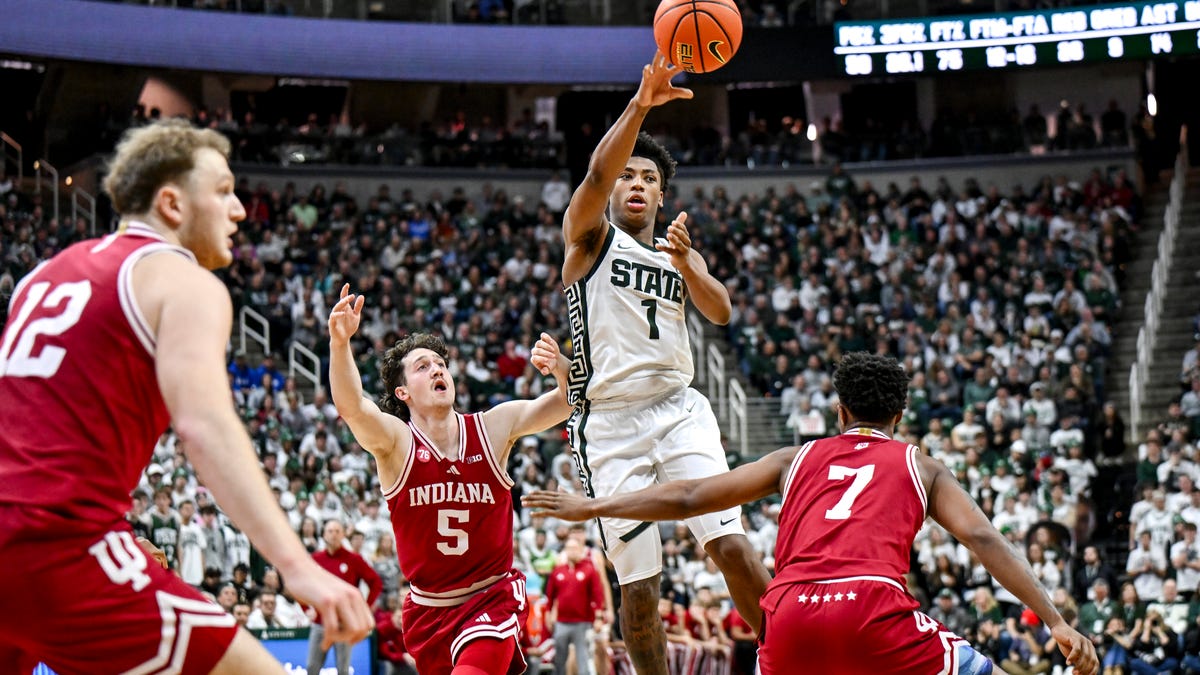
The March 1 clash between Michigan State and Indiana at Assembly Hall serves as a high-leverage inflection point for Big Ten postseason configuration. For the No. 13 Spartans, this fixture is an opportunity to validate their elite efficiency metrics following a signature road win at Purdue. Despite a No. 13 AP ranking, Michigan State’s No. 9 KenPom and No. 12 NET profiles suggest a roster performing at a Tier-1 national level, characterized by superior adjusted defensive efficiency.
Indiana enters this contest facing systemic pressure. A three-game losing streak has marginalized their conference standing, yet their No. 38 NET ranking indicates a competitive ceiling that belies their unranked status. This discrepancy creates a ‘trap game’ profile for analytical models, as the Hoosiers’ efficiency remains high enough to threaten top-tier opponents despite a lack of recent quadrant-one victories.
Tactical Regression and Rotation Dynamics
The primary narrative anchor for this rematch is Michigan State’s 81-60 victory on January 13. That 21-point margin was defined by the Spartans’ transition dominance and a defensive scheme that neutralized Indiana’s primary interior scoring. For Mike Woodson’s squad, reversing this deficit requires a radical recalibration of perimeter rotations and a stabilization of the rebounding margin, where Tom Izzo’s programs traditionally maintain a statistical edge.
Stability remains Michigan State’s greatest asset. Izzo’s 31-season tenure and 760 career wins provide a tactical continuity that often manifests as late-season peaking. Having secured four wins in their last five outings, the Spartans are currently demonstrating the ‘March surge’ characteristic of Izzo’s coaching philosophy, prioritizing high-possession discipline and physical rim protection.
Market Valuation and Betting Projections
Vegas markets have positioned Michigan State as a 2.5 to 3.5-point favorite, a line that significantly discounts the Spartans’ raw efficiency advantage in favor of the Assembly Hall home-court factor. On a neutral floor, analytical projections suggest the spread would expand to roughly -6.0. The 144.5 over/under total reflects an expectation of a high-intensity, physical defensive engagement rather than an offensive shootout.
Advanced simulations prioritize the ‘possession-by-possession’ efficiency of the Spartans’ backcourt against Indiana’s defensive lapses. With a money line of -161, the market assigns Michigan State a roughly 61% implied probability of victory, acknowledging that while Indiana is desperate for a ‘bubble-bursting’ win, the talent gap remains statistically significant.
Broadcasting Significance and Institutional Brand Value
The assignment of the Ian Eagle, Bill Raftery, and Tracy Wolfson lead commentary team for this CBS broadcast highlights the commercial weight of the matchup. This is not merely a conference game; it is a showcase of Big Ten ‘blue blood’ equity. The Spartan Media Network’s expansive reach further underscores the game’s status as a premier national media event, essential for both programs’ recruiting visibility and NIL valuation trajectories.
Bracketology and Selection Sunday Forecast
For Michigan State, a victory secures their status as a protected seed in the NCAA Tournament, offering geographical advantages in the opening rounds. For Indiana, currently sitting at 8-9 in conference play, this represents a final opportunity for a resume-defining win. A loss likely relegates the Hoosiers to a ‘must-win’ scenario in the Big Ten Tournament to maintain at-large eligibility, making the stakes at Assembly Hall effectively a postseason elimination game.