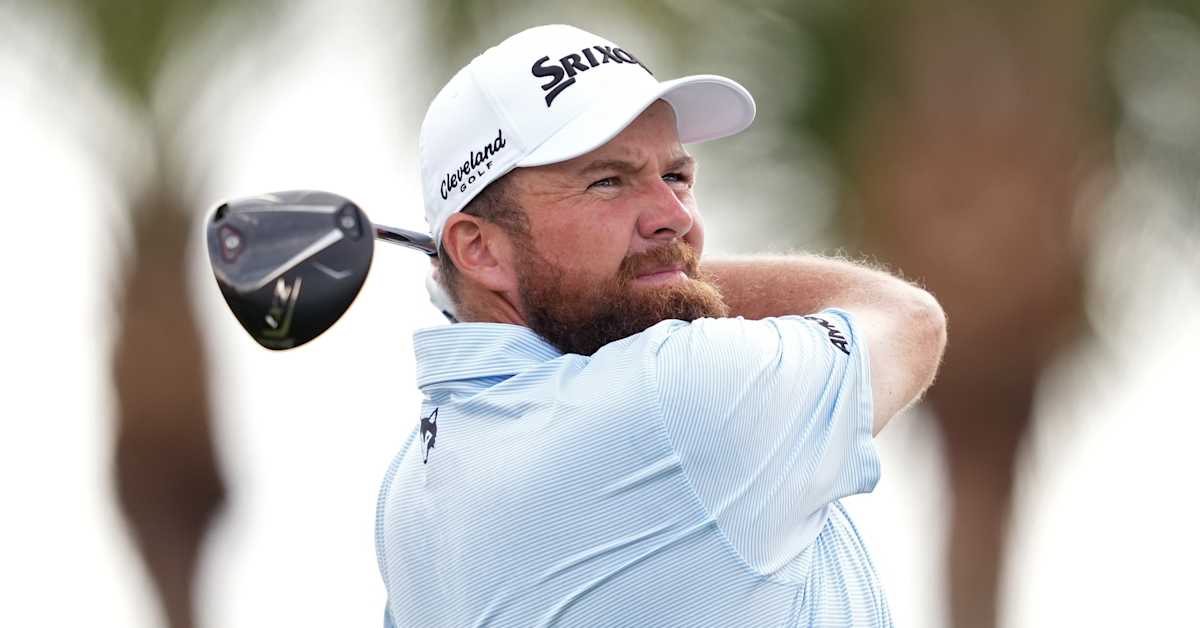
The 54-hole landscape at the Cognizant Classic in The Palm Beaches has transitioned into a strategic deadlock. Shane Lowry and Austin Smotherman share the lead at 13-under par, establishing a one-stroke buffer over the field. The third round was defined by polarized scoring trajectories: Lowry’s aggressive, record-matching surge contrasted against Smotherman’s disciplined defensive play.
Analytical Breakdown of the 63-Stroke Ceiling
Shane Lowry’s third-round 63 serves as a technical benchmark for navigating the structural complexities of PGA National. By securing his lowest career round at this venue, Lowry effectively exploited a window of favorable scoring conditions prior to the onset of meteorological volatility. His blemish-free card, highlighted by a five-under-par front nine, leveraged precision iron play to neutralize the course’s historical hazard density.
Lowry’s performance is bolstered by institutional familiarity. As a resident member of the nearby Bear’s Club, his comfort with the regional agronomy and wind patterns provides a distinct environmental advantage. This localized expertise exerts significant psychological pressure on Smotherman, a player seeking to validate his standing against a major champion on familiar turf.
Operational Agility and Risk Mitigation
Tournament officials implemented a proactive operational pivot, advancing tee times to mitigate the risk of inclement weather. This compression of the competitive window tested the players’ preparatory rhythms. For veteran competitors, this shift represented a manageable logistical variable; for the chasing pack, it necessitated a rapid calibration of aggression levels.
From a commercial standpoint, this logistical agility ensured the integrity of the 72-hole format, protecting the broadcast window and the interests of title sponsor Cognizant. The early conclusion of the third round also extended the recovery phase for the leaders, potentially favoring those with high-stamina profiles during the final-round pressure peaks.
Leaderboard Architecture and the FedExCup Calculus
Austin Smotherman’s 69 reflects a resilient defensive strategy. While Lowry relied on explosive momentum, Smotherman focused on high-percentage targets to avoid the catastrophic errors often induced by PGA National’s ‘Bear Trap’—the hazardous stretch of holes 15 through 17. His ability to sustain a share of the lead despite Lowry’s charge indicates a robust mental framework.
The competitive dynamic is further complicated by Nico Echavarria, positioned just one stroke back at 12-under. This proximity prevents a head-to-head match-play scenario, forcing the co-leaders to remain aggressive. Conversely, Séamus Power’s descent to 11 shots off the lead after a 73 illustrates the narrow margins for error; a single technical lapse can result in a total erosion of competitive leverage.
Institutional Legacy and Economic Impact
The Cognizant Classic remains a cornerstone of the Florida Swing, deeply intertwined with the legacy of Jack Nicklaus. For the leaders, the incentive extends beyond the prize purse to include the prestige of winning on a Nicklaus-designed masterpiece. This institutional weight, combined with vital FedExCup points, dictates a high-risk, high-reward calculus for the final 18 holes.
For the title sponsor, the alignment with a high-performance, data-driven leaderboard maximizes brand exposure within the professional golf hierarchy. As the tournament reaches its conclusion, the intersection of technical execution, environmental constraints, and postseason stakes ensures a high-leverage finale at PGA National.