Hearts’ Rise Forces Strategic Reassessment in Scottish Premiership
The traditional competitive structure of the Scottish Premiership is under significant pressure following the unexpected performance of Hearts. The source notes that Hearts’ position at the top of the table has created a high-stakes environment for the established duopoly of Rangers and Celtic. This disruption challenges the long-standing financial and competitive equilibrium, forcing both clubs to reassess their strategic priorities and operational models in response to a genuine threat to their dominance.
Hearts is characterized as being “impossibly stubborn at the top,” refusing to conform to the “old order” expectations. This highlights the systemic nature of the challenge. The traditional model relies on the consistent financial and competitive superiority of Rangers and Celtic, which secures lucrative European qualification spots and media revenue distribution. Hearts’ sustained challenge introduces a new variable that destabilizes this predictable revenue stream and threatens the established power dynamic.
Strategic Responses and Stakeholder Pressure
The high-stakes environment created by the title race disruption is directly linked to significant financial and operational decisions at the club level. The source highlights the actions taken by Rangers owner Andrew Cavenagh, who initiated a comprehensive overhaul of the club’s leadership structure. Cavenagh removed a manager, a chief executive, and a sporting director, demonstrating a high-leverage response to perceived underperformance and stakeholder dissatisfaction. This restructuring, coupled with the investment of “millions” in new talent, represents a significant capital outlay aimed at restoring competitive advantage.
The source implies that this investment was made in direct response to fan pressure, as Cavenagh acted “as the fans hoped he would.” This creates a direct link between stakeholder sentiment, financial risk, and strategic decision-making. The investment places immense pressure on the new leadership to deliver immediate results, making the outcome of key matches like the Old Firm derby critical for validating the owner’s strategic choices. This pressure is compounded by the fact that both clubs are positioned behind Hearts, making direct competition for points against each other less impactful than closing the gap on the leader.
The source also details the differing levels of fan frustration between the two clubs. Celtic fans are described as an “angrier and more frustrated crew right now” with “more targets to aim at than Rangers have.” This disparity in sentiment impacts the operational environment for both clubs. For Celtic, the pressure from the fanbase creates a more volatile situation, potentially influencing management stability and long-term planning. The source suggests that if Celtic loses, the “wrath will descend,” indicating a high risk of reputational damage and further operational disruption.
Tactical Mind Games and Competitive Repercussions
The pre-match build-up to the derby revealed a shift in strategic communication, moving away from the predictable, risk-averse rhetoric that had become standard in recent years. The source notes that “managerial mind games have not featured for quite some time,” replaced by a “soundboard of cliches and politician-like answers.” This suggests a period of strategic conservatism where managers prioritized stability over psychological warfare.
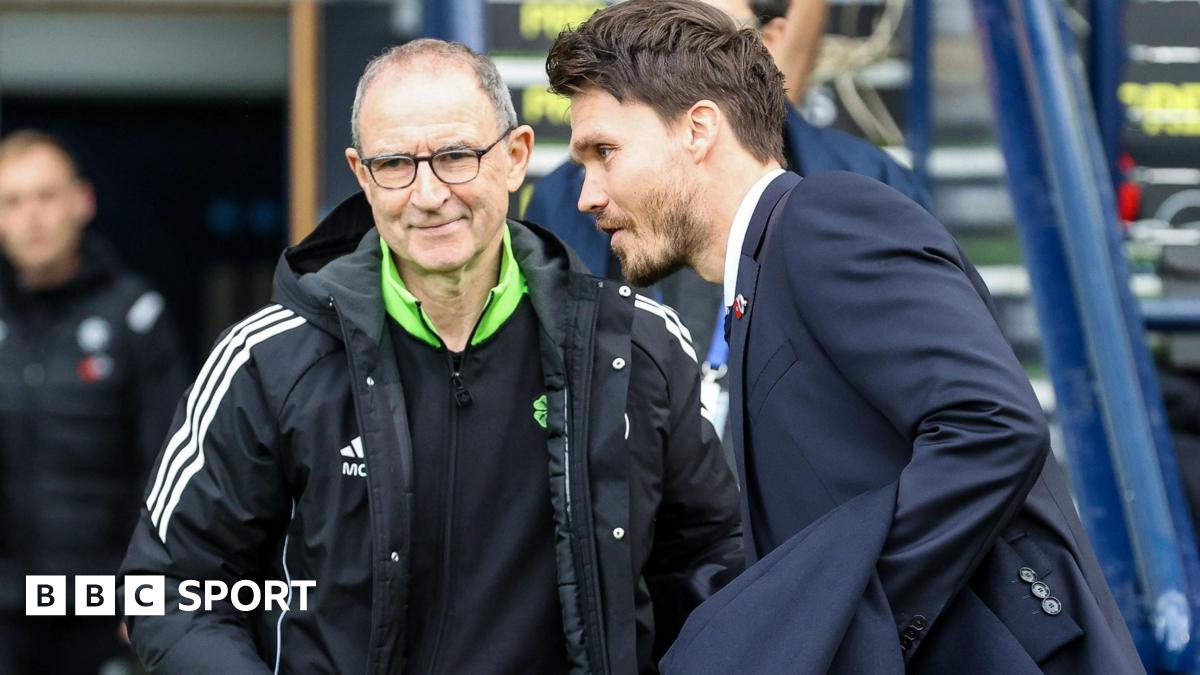
However, Rangers head coach Danny Röhl deviated from this norm by aiming “digs at Celtic” during his pre-match news conference. This calculated strategic move sought to gain a psychological advantage in a high-pressure environment. The source notes Celtic manager Martin O’Neill responded with “genuine surprise,” indicating that Röhl’s approach was unexpected and potentially disruptive to Celtic’s preparation. This return to aggressive pre-match rhetoric highlights the increased stakes and the willingness of managers to leverage non-traditional tactics to gain an edge.
The match itself provided immediate consequences for the title race dynamics. The source confirms that Rangers secured a 1-0 victory, with Youssef Chermiti scoring a spectacular overhead kick in the eighth minute. This early goal and eventual win significantly altered the immediate competitive landscape. For Rangers, the victory provides crucial momentum and validates the strategic changes implemented by Cavenagh, including the investment in new players like Chermiti and Andreas Skov Olsen, who assisted the goal.
For Celtic, the loss exacerbates the pressure described in the source. The defeat not only surrenders three points to a direct rival but also widens the gap between Celtic and the league leaders, Hearts. The source notes that Celtic were already two points further back than Rangers with a game in hand, meaning the loss increases the difficulty of catching Hearts. The “double jeopardy” mentioned in the source—losing to a rival while simultaneously falling further behind the leader—compounds the strategic damage for Celtic.
Long-Term Structural Implications of a Multi-Contender Race
The source alludes to a potential “four-way Scottish Premiership title race,” representing a significant structural shift in the league’s competitive balance. The traditional duopoly has historically dominated the league, creating a predictable financial model based on guaranteed European qualification for both clubs. The emergence of Hearts and potentially other clubs into the title race challenges this model by introducing genuine uncertainty and competition for top spots.
This increased competition has long-term implications for media rights and revenue distribution. A more competitive league with multiple contenders increases the value proposition for broadcasters and sponsors. However, it also creates financial risk for Rangers and Celtic, who can no longer rely on guaranteed top-two finishes. The source’s description of the match as a “must-win” highlights the immediate pressure to secure European qualification, which provides essential revenue streams for both clubs. The strategic decisions made by Cavenagh—overhauling leadership and investing millions—are a direct response to this changing competitive landscape, suggesting that the “old order” is under threat and forcing a recalibration of investment strategies to maintain dominance.