
The 2026 college football season has launched within a restructured competitive hierarchy, headlined by Indiana’s unprecedented position as defending national champion. This shift from historical blue-blood dominance to a fragmented power structure is immediately tested as the Hoosiers transition from seasonal outlier to a program managing the institutional burdens of a championship pedigree. Their opening match against North Texas serves as a baseline for measuring the sustainability of this new status quo.
Managerial Succession and Roster Volatility
The debut of Morgan Scalley as Utah’s head coach offers a significant case study in internal succession. A 66-14 victory over Idaho validates Utah’s commitment to cultural continuity, contrasting with the high-variance models seen elsewhere in the Power Four. This operational efficiency suggests that Utah’s structural foundations remain insulated from the disruptive effects of leadership transitions.
In contrast, Alabama’s tactical evolution under Kalen DeBoer emphasizes high-frequency human capital turnover. By starting freshman Keelon Russell—the program’s third starting quarterback in three years—Alabama is prioritizing high-ceiling talent over veteran stability. This strategy reflects an aggressive reliance on elite recruiting and the transfer portal to maintain performance levels in a post-Saban landscape, treating the quarterback position as a high-stakes capital investment.
Economic Disruption and Competitive ROI
UMass’s 37-21 upset of Rutgers represents a significant failure of Return on Investment (ROI) for the Scarlet Knights. In the modern scheduling economy, Power Four programs pay substantial premiums for non-conference games intended to build momentum; a loss of this magnitude devalues the program’s immediate media leverage. For UMass, this victory—their first over a Power Four opponent since 2012—provides critical reputational capital that could influence future conference realignment negotiations.
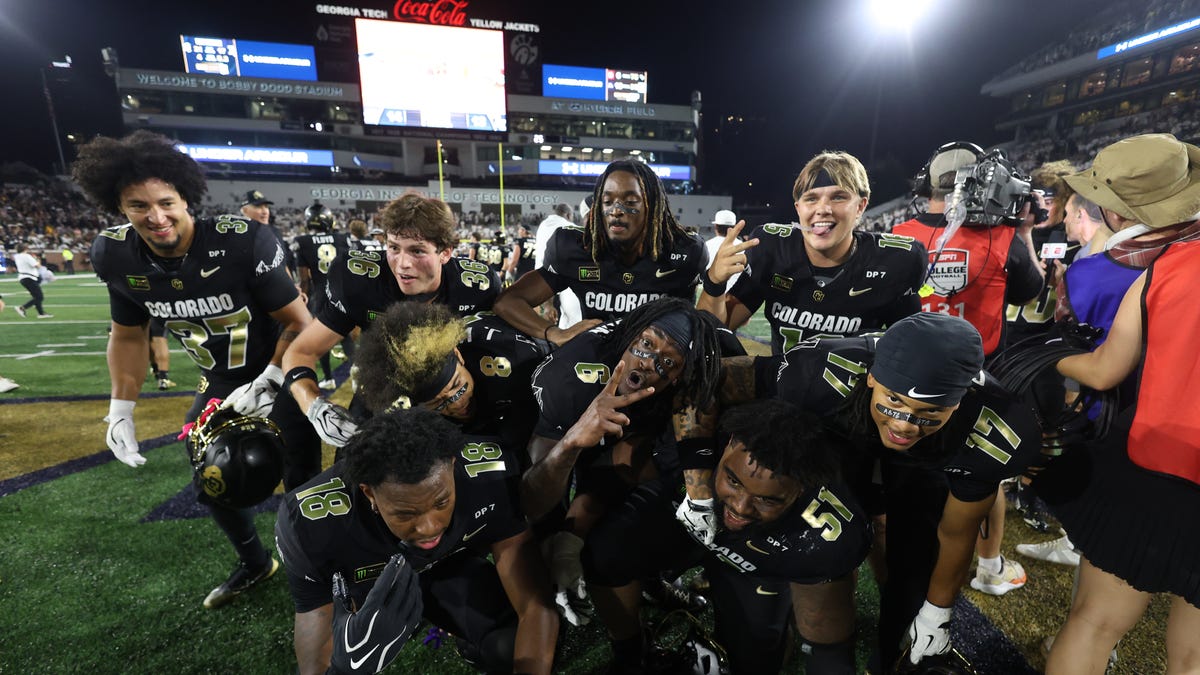
Similarly, Colorado’s narrow 14-13 win over Georgia Tech, secured via a last-second blocked field goal, underscores the volatility of the ‘Coach Prime’ model. While the result preserves upward momentum, the lack of offensive synchronization suggests that rosters heavily reliant on high-profile transfers face significant challenges in achieving tactical cohesion. The thin margin between victory and failure here highlights how individual plays disproportionately dictate the financial and narrative standing of transfer-heavy programs.
Logistical Friction and Realignment Realities
The ACC matchup between Miami and Stanford serves as a primary indicator of the physiological and logistical costs of geographic expansion. Miami’s cross-country transit introduces complexities in athlete recovery and performance optimization that were non-existent in the regional era. Programs are now forced to reallocate budgets toward sports science and advanced travel logistics to mitigate the ‘distance tax’ inherent in the current conference structures.
Stanford’s 1-0 start provides them with a ‘game-speed’ advantage over a debuting Miami squad. This contest functions as a barometer for how travel-induced fatigue impacts competitive balance. Success in this era will likely be defined by which programs best manage the intersection of elite athletics and transcontinental logistics.
Strategic Strength-of-Schedule (SOS) Metrics
Oregon’s decision to open against Boise State reflects a calculated move to optimize Strength-of-Schedule (SOS) data points for the playoff selection committee. Unlike the lopsided ‘buy games’ scheduled by Texas or Georgia, Oregon is prioritizing early-season resumes over guaranteed win margins. While blowouts like UCF’s 73-6 win over Bethune-Cookman serve as high-intensity practices to evaluate depth, they offer diminishing returns in a committee-driven postseason era.
The Week 1 schedule, structured as a five-day media marathon from September 3 to September 7, is designed to maximize viewership inventory during the Labor Day weekend. This staggered approach, including Sunday matchups like the Apple Cup, ensures a continuous narrative flow, allowing programs like Missouri and Wake Forest to establish their early-season identities in uncontested broadcast windows.

Photo by Pexels on Pixabay.