
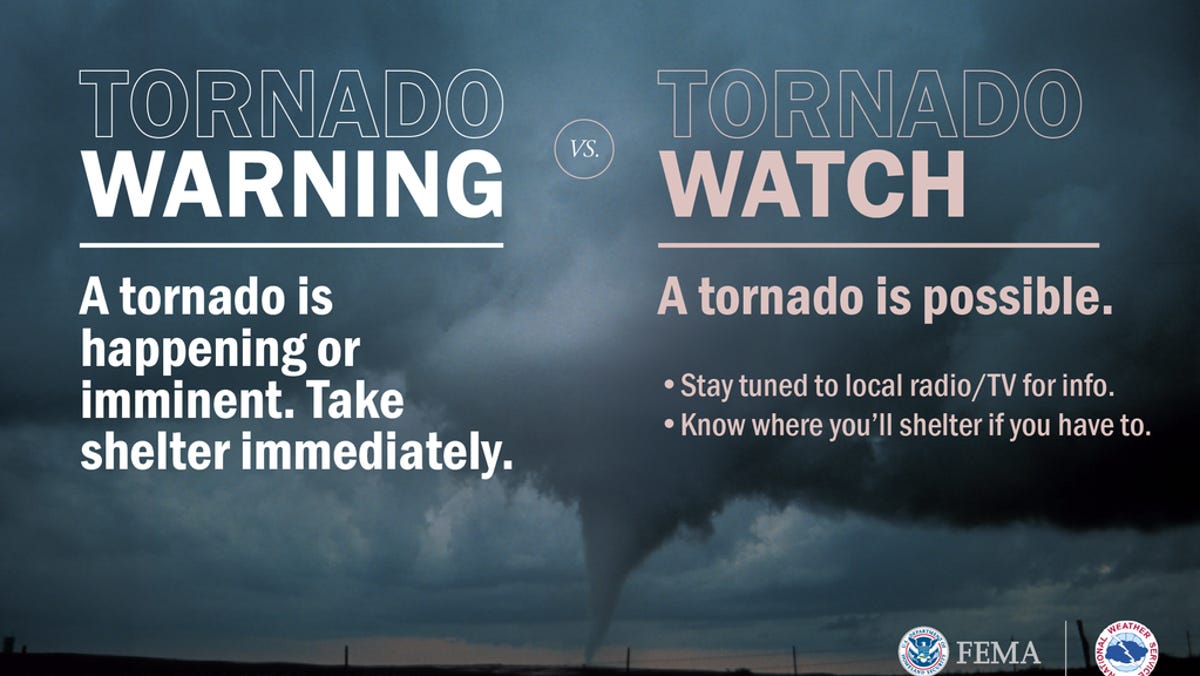
NWS Alert Hierarchies: Operational Thresholds for Severe Weather
The National Weather Service (NWS) employs a bifurcated alert system designed to modulate institutional and public responses. A tornado watch, issued by the Storm Prediction Center, serves as a logistical precursor, indicating atmospheric conditions conducive to cyclogenesis over a broad region. This phase allows emergency management and utilities to enter a state of heightened readiness without necessitating immediate civil disruption.
Conversely, a tornado warning signals a tactical shift to life-safety protocols. This escalation is triggered by radar-indicated rotation or ground verification, requiring an instantaneous transition from monitoring to active sheltering. This hierarchy ensures that resource deployment remains proportionate to the immediate risk to infrastructure and human life.
Decentralized Warning Infrastructure: Dane County’s Siren Strategy
Dane County maintains a robust network of 144 outdoor warning sirens, providing an analog fail-safe for individuals outside digital communication ranges. The operational criteria for activation include confirmed tornadoes or severe thunderstorms carrying the ‘destructive’ tag—defined by winds exceeding 80 mph or baseball-sized hail. By aligning sirens with these specific data-driven metrics, the county maintains the psychological impact of the signal while minimizing public desensitization.
Strategic Deviations in Drill Protocols
During statewide drills, Dane County intentionally bypasses siren activation. This policy prioritizes the testing of internal safety plans and private notification systems over mechanical hardware. By withholding the siren during non-emergency simulations, the county preserves the alarm’s integrity as a high-stakes directive for immediate action. Routine mechanical reliability is instead verified through scheduled monthly tests on the first Wednesday of each month.
Utility Grid Resilience: Xcel Energy’s Pre-emptive Mobilization
In the utility sector, Xcel Energy has transitioned toward proactive grid management. By pre-positioning repair crews throughout northwestern Wisconsin and Michigan’s Upper Peninsula ahead of forecasted volatility, the company aims to reduce outage durations significantly. This capital-intensive strategy requires precise coordination between meteorological forecasting and labor logistics to balance mobilization costs against the operational necessity of rapid restoration.
To augment physical restoration, digital tools like SMS-based outage tracking provide a real-time data intake mechanism. This allows the utility to prioritize critical infrastructure repairs based on localized impact reports. However, the inherent vulnerability of the distribution grid during high-wind events necessitates a shared responsibility model, where consumers are urged to maintain independent emergency kits and avoid downed power lines.
Year-Round Meteorological Vulnerability
While the primary severe weather season spans April to September, Wisconsin’s historical data confirms tornado activity in every month. This year-round risk profile forces a shift from seasonal preparedness to a permanent state of institutional monitoring. The integration of NWS data with municipal siren networks and utility logistics forms a multi-layered defense system designed to filter meteorological noise and focus response efforts on high-impact atmospheric events.

Photo by Jonas_Fehre on Pixabay.