
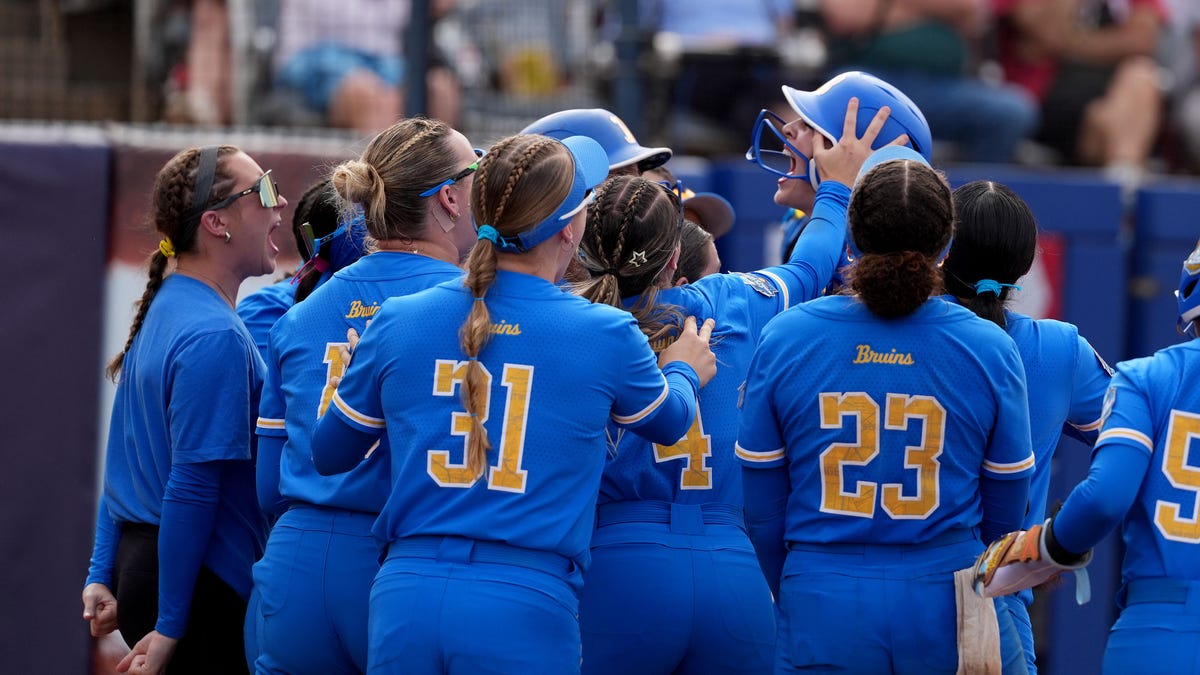
The 2026 Women’s College World Series (WCWS) reached a strategic nexus at Devon Park, where UCLA and Arkansas faced a high-stakes elimination scenario. This matchup, dictated by the volatility of the double-elimination format, forced a reconciliation between regular-season metrics and immediate survival. For UCLA (52-9), the contest served as a corrective measure following an opening-round operational lapse against Alabama.
Pitching Logistics and Cumulative Attrition
The tactical landscape was fundamentally skewed by preceding workloads. Arkansas’ grueling 10-inning loss to Nebraska imposed a severe physical tax on their rotation. The subsequent reliance on Burnham, Timmerman, and Herron revealed a critical lack of depth when confronted with UCLA’s elite batting order. This ‘mechanical fatigue’ in the circle allowed the Bruins to exploit specific pitching vulnerabilities that the Razorbacks’ coaching staff could not mitigate through standard substitution patterns.
UCLA’s nine-run second-inning explosion served as a case study in systemic defensive collapse. By converting six hits and three home runs into a definitive lead, the Bruins bypassed the traditional late-game volatility of Oklahoma City. The duration of this frame suggests that the strategic window for Arkansas to stabilize their defense closed well before the third out was recorded, highlighting the ‘momentum-based cascading’ effect common in elimination play.
Governance, Run-Rule Thresholds, and Resource Conservation
The institutional mechanics of NCAA softball—specifically the eight-run mercy rule—dictated mid-game management. While UCLA surpassed this margin early, the requirement to complete five innings created a unique delay. This interval forced coaches to pivot from aggressive postures to ‘defensive containment,’ a necessary shift for preserving primary starters like Megan Grant and Jordan Woolery for subsequent rounds. Early-round efficiency has thus become a primary competitive advantage in the modern WCWS ecosystem.
Media Infrastructure and Commercial Valuation
The broadcast distribution across ESPN2 and streaming platforms like ESPN+ and Fubo reflects the heightened commercial valuation of collegiate softball. Positioning high-leverage elimination games in prime-time slots maximizes viewer engagement and institutional branding. This visibility is essential for the financial health of programs, driving recruitment and alumni investment. The centralized infrastructure of Devon Park further enhances this ecosystem, providing a consistent, high-fidelity backdrop for the NCAA’s flagship event.
Institutional Resilience and Postseason Trajectory
UCLA’s rebound from their 6-3 loss to Alabama underscores the programmatic resilience of a 52-9 season. In contrast, Arkansas’ struggle to contain the Bruins—despite a robust 46-12 record—highlights the difficulty of maintaining performance under rapid-fire scheduling. As the tournament progresses toward the May 30 weekend, the survival of UCLA introduces a formidable obstacle in the losers’ bracket, while Arkansas’ exit serves as a reminder of the compounding consequences of a single loss in elite athletics.

Photo by bonanza1973 on Pixabay.