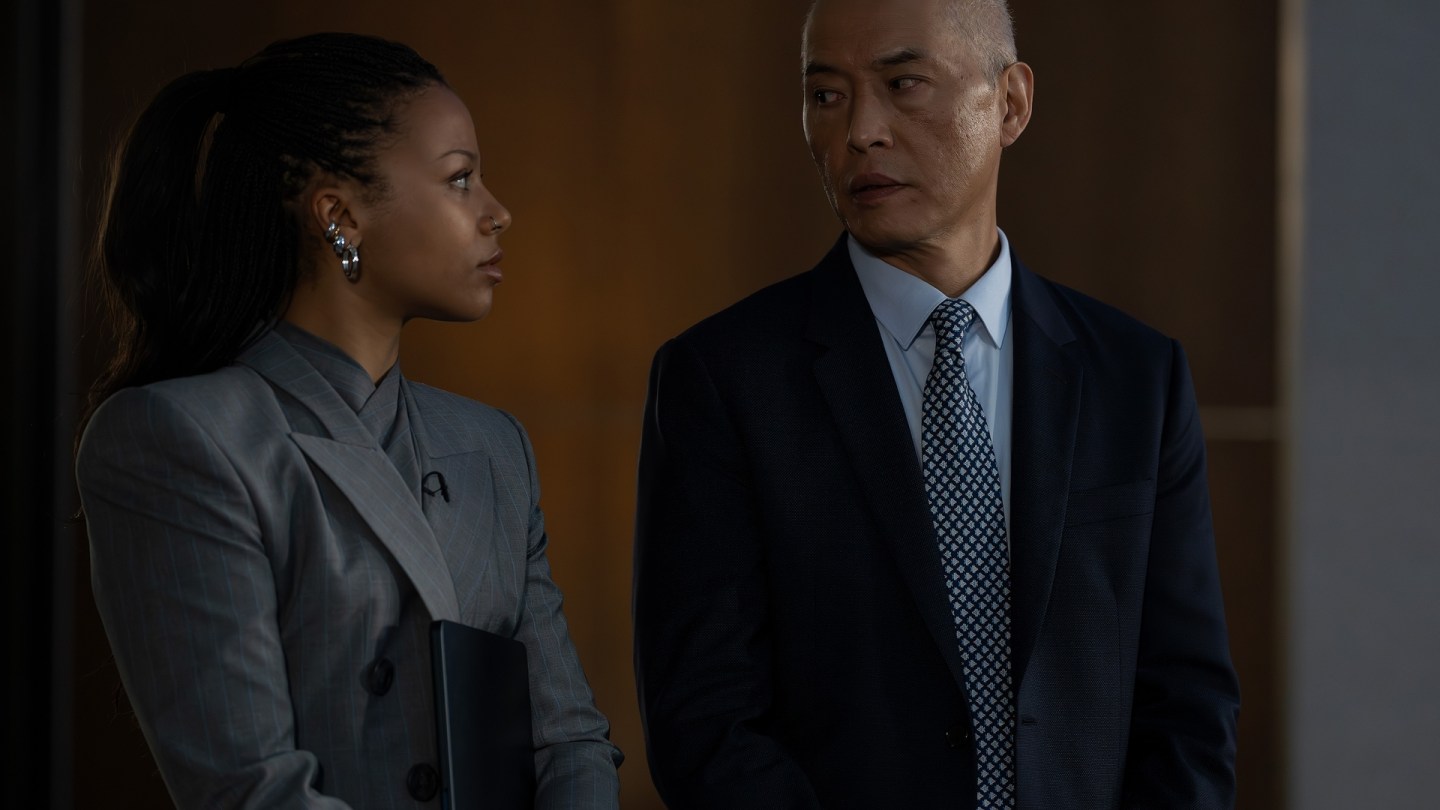
Strategic Decapitation: The Immediate Vacuum at SternTao
Eric Tao’s forced exit, precipitated by blackmail in Industry S4E6 (“Dear Henry”), constitutes a decisive decapitation of SternTao’s leadership structure. This is not a standard personnel transition but the sudden removal of the firm’s foundational capital anchor, instantly invalidating established power hierarchies. The immediate imperative shifts from offensive market positioning (the ongoing attack on Tender) to emergency governance restructuring and capital preservation.
This disruption forces junior principals, particularly Harper Stern, into executive responsibility prematurely. The precedent set by actor Ken Leung—indicating a readiness for substantial character evolution—foreshadows a deliberate narrative path toward decentralizing authority. Tao’s absence exposes SternTao to amplified execution risk concerning the ongoing short strategy against Tender, as operational continuity now proceeds without its primary architect.
Inflection Point: Execution Risk on the Tender Short
Harper Stern’s public disclosure regarding Tender’s alleged international “flim-flam operation” was a high-leverage maneuver requiring significant institutional backing. Tao’s removal eradicates the reputational insulation his seniority previously provided, leaving Stern directly exposed to aggressive counter-litigation or regulatory scrutiny from Tender’s defense apparatus.
The resulting market stock plummet triggers an immediate liquidity event. More critically, it imposes an unquantifiable systemic risk premium on SternTao’s valuation, as boutique finance entities rely heavily on leadership stability to attract and retain institutional capital. Internal fissures, exemplified by Yasmin’s suspicion of Harper’s actions, further compromise the cohesion necessary to manage this level of dual crisis (external attack + internal leadership failure).
Capital Flight and Ecosystem Recalibration
The swiftness of Tao’s departure signals governance unpredictability, a critical deterrent for institutional capital allocators. For a nascent fund competing against bulge-bracket institutions, this necessitates an urgent, fundamental reassessment of its capital base and future fundraising viability. The firm must prove its operational efficacy and intellectual capital are decoupled from Tao’s personal influence.
The thematic implication—that the ruthlessness required for success in high finance leads directly to operational liability (echoing the Samuel Johnson reference)—manifests as a direct organizational threat. Competitors will pivot analysis from the merits of SternTao’s Tender playbook to the fragility of the attacker, creating openings for talent poaching and exploitation of market dislocations during SternTao’s forced retrenchment.
The Crucible of Crisis Management
The narrative emphasizes operational reality mirroring production methods: constant, unannounced strategic shocks demand reactive execution. For Harper Stern, this forces maturation into a leader under duress. Her capacity to consolidate authority amid fragmented governance will determine whether SternTao survives as a resilient entity or fragments under creditor pressure.
The long-term identity of the firm hinges on this transition. If survival is achieved, the structure will be forged in crisis, potentially leading to greater internal robustness. Conversely, the undisclosed nature of the blackmail suggests lingering compliance vulnerabilities that necessitate a resource-intensive defensive posture, permanently elevating the operational cost structure.
Yasmin’s Pivotal Role in Governance Realignment
Yasmin’s alignment becomes a critical determinant of SternTao’s immediate regulatory exposure. Her interpretation of the Tender disclosure relative to Tao’s downfall—as either a strategic alliance or evidence of shared operational recklessness—will influence market perception. The collapse of the Tao-centric command structure mandates a rapid, potentially contentious, consolidation of authority, likely centering on Harper Stern as the successor figure tasked with navigating this existential test case for boutique finance operations.