Asymmetric Momentum: A Case Study in Statistical Extremes
The series finale at Wrigley Field on Thursday, April 23, serves as a high-leverage intersection for two clubs experiencing extreme variance. The Philadelphia Phillies (8-16) enter the contest burdened by an eight-game losing streak and a broader 2-12 slide. Conversely, the Chicago Cubs have leveraged an eight-game winning streak fueled by an offense averaging 7.0 runs per game. This matchup presents a quintessential conflict between established momentum and the underlying probability of statistical correction.
Offensive Atrophy and wOBA Suppression
Philadelphia’s descent is primarily a function of a systemic collapse in run production. Over their last eight appearances, the lineup has managed a meager 16 runs, resulting in a league-worst Weighted On-Base Average (wOBA) during that span. This failure to generate quality contact has created a negative feedback loop; the institutional pressure of the skid has noticeably compromised plate discipline, leading to increased volatility in high-leverage plate appearances. Without a reversal in their offensive profile, the Phillies risk further isolation in the divisional standings.
Pitching Analysis: Sanchez as the Regression-Resistant Stopper
To arrest this trajectory, Philadelphia relies on Cristopher Sanchez. His 1.59 ERA is bolstered by a 2.21 xFIP, suggesting that his performance is rooted in sustainable mechanical execution rather than defensive luck. Sanchez represents the Phillies’ last successful data point, having secured the team’s most recent victory against these same Cubs. As a ‘stopper,’ his ability to induce ground balls and limit hard contact is the Phillies’ primary path to neutralizing Chicago’s aggressive offensive schemes.
The Cubs’ Platoon Advantage Against Left-Handed Delivery
Despite Sanchez’s elite peripherals, the Cubs possess a structural counter-advantage. Chicago currently ranks second in the league in wOBA against left-handed pitching (LHP). This proficiency indicates a deliberate organizational focus on lineup optimization and platoon-split exploitation. Sanchez must navigate a roster statistically predisposed to punish left-handed delivery, making his command of the zone the game’s most critical variable.
Edward Cabrera: Analyzing the Peripherals-to-Results Gap
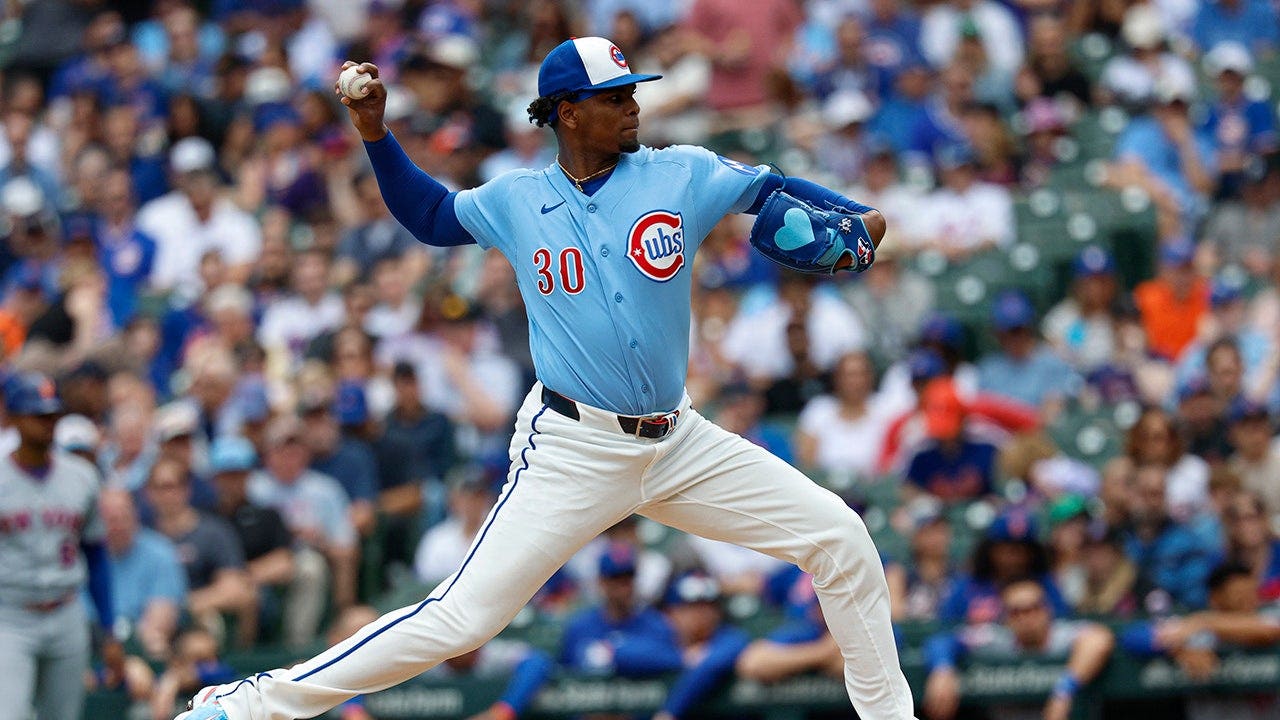
The Cubs counter with Edward Cabrera, whose 2.38 ERA appears dominant on the surface. However, sabermetric indicators suggest significant fragility. Cabrera’s 4.32 xFIP and 4.24 xERA reveal a pitcher overachieving relative to his underlying performance metrics. This divergence suggests an imminent regression toward the mean. If the Phillies’ hitters can exhibit patience and force Cabrera into deep counts, they may exploit the vulnerability hidden beneath his primary stats.
Defensive Volatility and Operational Pressure
Philadelphia’s pitching staff has allowed an average of seven runs per game during the current slide, removing any margin for error. This defensive volatility has forced managerial decisions into a reactive state, where bullpen usage and tactical substitutions are dictated by crisis management rather than long-term strategy. In contrast, the Cubs’ management can operate with conservative stability, relying on their winning margin to mitigate risk.
Market Sentiment and Concluding Strategic Outlook
Betting markets currently position the Cubs as favorites at +107, a valuation that prioritizes recent momentum and platoon advantages over Sanchez’s superior individual peripherals. Ultimately, the outcome hinges on whether Sanchez can sustain his elite execution against a top-tier LHP-hitting lineup, or if the Phillies’ offensive paralysis continues to nullify their pitching advantages. For the Phillies, this is an essential reset; for the Cubs, it is an opportunity to cement their early-season dominance.