The February 2026 blizzard has transcended standard meteorological classifications, evolving into a definitive stress test for New Jersey’s regional infrastructure. Marking a thirty-year variance event, snowfall totals in Bergen County exceeding 30 inches have pushed municipal services to a critical inflection point, necessitating an immediate reassessment of emergency resource allocation and long-term utility hardening.
Governor Mikie Sherrill’s designation of the storm as “incredibly dangerous” underscores the convergence of high-velocity gusts and heavy, wet precipitation—a combination historically linked to systemic structural failures. This ‘bomb cyclone’ profile imposes hazards that move beyond simple accumulation, targeting the mechanical integrity of the power grid and the viability of primary transit corridors like the I-95.
Logistical Paralysis in High-Density Corridors
The concentration of peak snowfall in the Bergen-Essex axis—specifically the 30.7 inches in Lyndhurst and 30.2 inches in Carlstadt—represents a temporary cessation of economic activity within the nation’s most vital logistics hubs. In Essex County, the 27.2-inch accumulation at Newark Liberty International Airport (EWR) effectively severed a critical aviation node, demonstrating the limitations of current de-icing technologies when faced with extreme precipitation rates.
Urban environments in Hudson County, including Hoboken and Kearny, face acute challenges where narrow street widths and limited staging areas preclude traditional snow removal. Travel bans in these sectors are tactical necessities to prevent the immobilization of emergency response vehicles within high-density residential zones.
Institutional Risk Mitigation and Academic Continuity
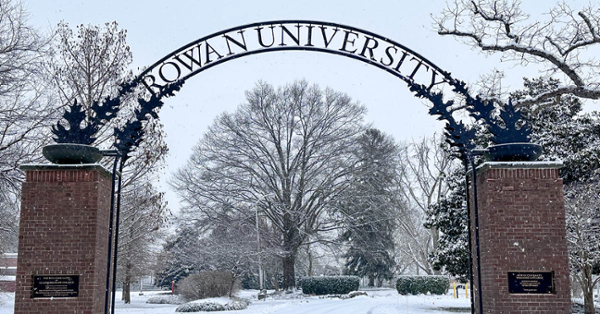
Rowan University’s comprehensive suspension of operations across its Glassboro, Shreiber, and Cooper campuses illustrates a sophisticated approach to institutional risk management. By prioritizing the reduction of commuter volume, the administration facilitated state-level clearing efforts while maintaining essential life-safety functions at on-campus Wellness Centers.
The transition to virtual instruction for specialized medical and veterinary schools underscores the evolving model of ‘zero-downtime’ professional education. However, this shift highlights a secondary vulnerability: the dependence on residential digital infrastructure during utility-threatening weather events. The coordination between deans at the Shreiber School of Veterinary Medicine and the Virtua Health School of Osteopathic Medicine serves as a benchmark for decentralized yet aligned crisis governance.
Executive Governance and Global Divergence
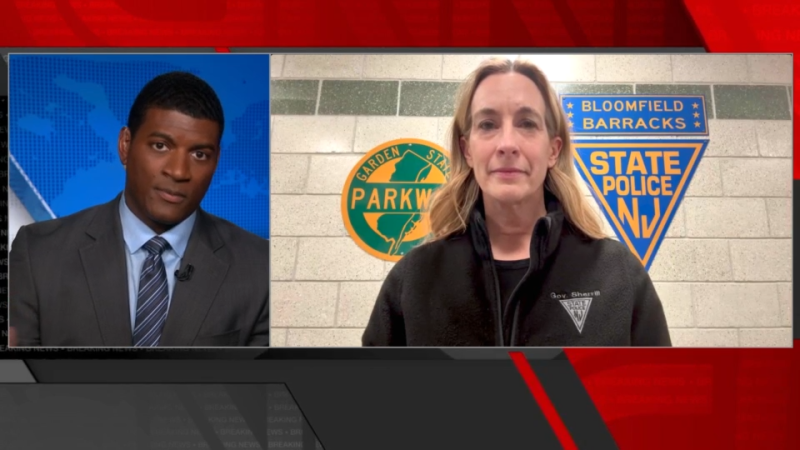
Governor Sherrill’s utilization of emergency declarations provides the legal framework to bypass standard procurement protocols, enabling rapid-response resource mobilization. This centralized authority is vital for synchronizing the efforts of the National Weather Service and state police into a unified defensive posture. Yet, the 2026 blizzard occurs within a volatile geopolitical vacuum.
Simultaneous international crises—specifically military operations in Puerto Vallarta following the death of a major cartel leader and the domestic scrutiny of FBI Director Kash Patel—complicate the federal support landscape. The diversion of federal attention to Mexican security instability places the burden of recovery squarely on state-level self-sufficiency, suggesting that future disaster preparedness must prioritize regional autonomy over federal reliance.
Post-Event Recovery and Infrastructure Hardening
As the storm subsides, the focus shifts to the economic recovery of entities like NJ Transit, where service suspensions represent significant revenue losses compounded by the cost of inspecting thousands of miles of ice-loaded catenary wires. The 30-inch threshold recorded in Leonia and Bogota will likely necessitate a recalibration of municipal budgets, shifting focus toward high-capacity thermal melting systems and reinforced building codes for older industrial sectors.