Strategic Infrastructure Decentralization
The First Presidency of The Church of Jesus Christ of Latter-day Saints is executing a deliberate strategy to refine its global physical footprint. By formalizing development milestones for the San Luis Potosí Mexico, Santos Brazil, Caldwell Idaho, and Greenville South Carolina temples, the institution is shifting from a model of centralized, long-distance travel to one of localized, high-accessibility worship.
Operational Integration in Latin America
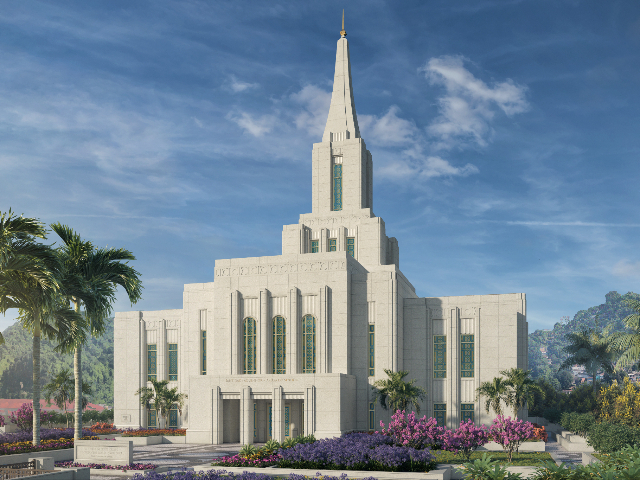
The San Luis Potosí Mexico Temple represents a critical investment in the Church’s most populous international region. With the open house slated for September 2026, the facility serves as a flagship for operational completion within the Latin American ecclesiastical sector. As one of 27 temples currently in the Mexican pipeline, this site is engineered to mitigate historical administrative friction, ensuring long-term membership retention in a high-growth zone.
Demographic Alignment in South Carolina
In the United States, the 18,850-square-foot Greenville Temple addresses a significant service gap. With 47,000 members across 90 congregations, the Upstate region previously relied solely on the 1999 Columbia facility. This 8.8-acre development functions as a logistical anchor, designed to lower the barriers to participation for dispersed member populations, thereby increasing ordinance throughput and community engagement.
Operational Efficiency in Idaho
The Caldwell, Idaho, project serves as a case study in high-density management. Recognizing Idaho’s 480,000-strong membership across 1,300 congregations, the Church is utilizing this 82,000-square-foot site to alleviate operational pressure on the Boise and Meridian temples. The integration of ancillary meetinghouses on the 19.2-acre site optimizes land utility, allowing for a hybrid model of ecclesiastical and administrative consolidation.
Economic and Institutional Maturity
These capital projects reflect a sophisticated model of centralized resource allocation aimed at producing high-value, durable real estate assets. For the Church, these temples serve as permanent infrastructure that stabilizes regional member commitment while effectively scaling institutional reach. By maintaining a rigorous, standardized development cycle, the Church ensures that its global expansion remains resilient to regional economic and regulatory volatility.