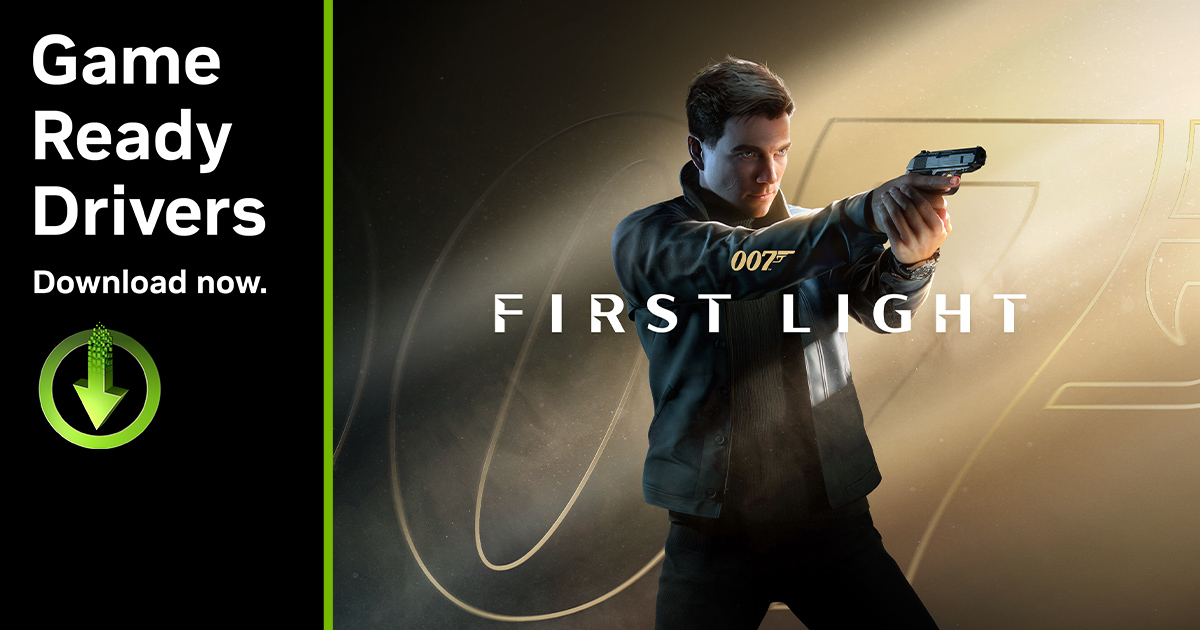
NVIDIA’s Driver Update Elevates ‘007 First Light’ Experience
NVIDIA has released a new GeForce Game Ready Driver engineered for optimal performance in the upcoming title, ‘007 First Light.’ This update integrates support for DLSS 4.5, emphasizing NVIDIA’s strategy to leverage its AI-powered upscaling technology in major game releases.
The driver’s availability aligns with ‘007 First Light’s’ May 27th launch, positioning NVIDIA’s hardware as crucial for players seeking peak visual fidelity and frame rates. This strategic timing reinforces the value of the GeForce ecosystem for high-end gaming enthusiasts.
Beyond ‘007 First Light,’ the driver also supports titles like LEGO® Batman™: Legacy of the Dark Knight, EA SPORTS™ F1® 25: 2026 Season Pack, and World of Tanks: HEAT, demonstrating NVIDIA’s commitment to comprehensive driver support across its user base.
DLSS integration across these diverse titles highlights a significant industry trend: AI rendering technologies are becoming foundational, not merely optional enhancements. For NVIDIA, this translates to a sustained competitive advantage by driving adoption of its hardware, essential for these advanced features.
Additionally, the update adds support for 40 new G-SYNC Compatible gaming displays, further solidifying NVIDIA’s commitment to a fluid and responsive gaming experience through extensive monitor optimization and compatibility.
‘007 First Light’ Explores Bond’s Formative Years
‘007 First Light’ centers on a young, resourceful James Bond during his MI6 training, presenting a reimagined origin story. The narrative focus on his pre-00 status offers a fresh, nostalgic perspective on the iconic franchise.
Developed by IO Interactive, known for its stealth gameplay in the ‘Hitman’ series, the game blends tactical espionage with explosive Bond action, aiming for a comprehensive player experience.
Missions span diverse global locations with iconic vehicles and a cinematic narrative, mirroring the globetrotting nature of the Bond cinematic universe and enhancing player immersion.
IO Interactive’s expertise in intricate level design and player agency from the ‘Hitman’ series provides a strong foundation for ‘007 First Light’s’ sophisticated mechanics and aesthetic.
The game’s premise of a pre-007 Bond explores his character development, offering a novel interpretation of his origins that could appeal to both new and long-time fans.
Actor Patrick Gibson’s portrayal of Bond is central, supported by new takes on established characters like M and Q, suggesting a dynamic, character-driven narrative.
Innovative Tutorial Design Mirrors Media Convergence
The tutorial for ‘007 First Light’ is structured as an interactive training montage, transforming an onboarding process into an engaging narrative sequence that emulates classic action movie scenes.
This accelerated, immersive learning curve allows players to organically acquire game mechanics while experiencing Bond’s progression as a trainee agent.
This design choice exemplifies the blurring lines between video games and film, integrating cinematic storytelling within interactive gameplay for a more cohesive experience.
The game’s approach to blending narrative and mechanics represents a maturation in game design, drawing inspiration from linear media storytelling techniques.
This convergence suggests a future where interactive entertainment increasingly adopts cinematic presentation, and linear media may incorporate game-inspired narrative structures.
The training montage serves an educational purpose while reinforcing the game’s theme of Bond’s early development through engaging gameplay.
Strategic Imperatives: DLSS and Ecosystem Dominance
NVIDIA’s emphasis on DLSS 4.5 in ‘007 First Light’ and other titles reinforces its strategy of market leadership through technological innovation and ecosystem control. Promoting DLSS incentivizes investment in NVIDIA hardware, optimized for these AI-enhanced features.
This creates a feedback loop: increased DLSS adoption drives demand for compatible NVIDIA GPUs, strengthening its competitive advantage against rivals without similar proprietary technologies.
Widespread DLSS integration across genres and player demographics, from AAA titles to indie games, aims to establish it as an industry standard, increasing switching costs for consumers considering alternative platforms.
The expansion of G-SYNC Compatible displays further demonstrates NVIDIA’s intent to manage the entire gaming experience, ensuring optimal performance from GPU to monitor and enhancing customer loyalty.
This integrated ecosystem strategy offers a differentiated value proposition beyond raw processing power, focusing on the overall quality and fluidity of the gaming experience.
Proactive driver optimization for key game launches, such as ‘007 First Light,’ generates buzz and highlights the performance benefits of NVIDIA hardware at critical market junctures.
Competitive Dynamics and Future Industry Trajectories
NVIDIA’s performance advantages from DLSS and its integrated ecosystem are critical in a competitive GPU market, pressuring rivals to develop comparable solutions or forge strategic partnerships.
The success of ‘007 First Light’ and its reliance on DLSS 4.5 could set a precedent, solidifying AI-driven rendering’s importance and challenging competitors on visual fidelity and performance benchmarks.
The narrative and tutorial design trends exemplified by ‘007 First Light’ signal a broader convergence of gaming and film, potentially leading to new cross-promotional opportunities and business models.
Widespread adoption of DLSS may influence game development pipelines, encouraging studios to optimize games for specific hardware features and shaping the technical direction of game creation.
NVIDIA’s strategic decisions in ecosystem optimization impact consumer choices, developer strategies, and the gaming industry’s overall trajectory, shifting focus towards holistic premium gaming experiences.
The ongoing evolution of the gaming industry depends on the interplay between hardware, software, and media consumption. NVIDIA’s strategy positions it to capitalize on these transformations.
Stakeholder Value and Market Positioning
For consumers, optimized drivers and DLSS support deliver enhanced gaming experiences with higher frame rates and improved visuals, democratizing high-fidelity gaming.
Developers benefit from proactive driver support, reducing technical issues and ensuring optimal performance on a large segment of the market, encouraging adoption of advanced rendering techniques.
NVIDIA solidifies its dominant GPU market position by leveraging innovation and its ecosystem to foster customer loyalty and attract new users, reinforcing brand value.
Publishers and rights holders, such as those behind ‘007 First Light,’ can achieve stronger sales and sustained interest in IP through increased player engagement driven by optimal performance.
The gaming industry experiences continuous innovation driven by the hardware-software symbiotic relationship. NVIDIA’s focus on AI rendering and ecosystem integration influences competitive dynamics and technological direction.
The strategic alignment of game releases, driver updates, and hardware capabilities, as seen with ‘007 First Light,’ is crucial for market positioning, attracting new customers by demonstrating tangible performance benefits.
Ecosystem Ripple Effects on Gaming and Entertainment
The increasing sophistication of game engines and cinematic storytelling integration in titles like ‘007 First Light’ will likely accelerate the convergence of gaming and traditional media, leading to more prevalent interactive narratives.
The reliance on DLSS points to AI’s growing role in content creation and rendering across digital media, potentially lowering barriers to high-quality visual production.
For esports, consistent performance and high frame rates are paramount. NVIDIA’s driver optimization and G-SYNC compatibility directly support competitive integrity and visual fluidity.
The successful implementation of advanced rendering techniques in games like ‘007 First Light’ can influence VR/AR development, where demand for sophisticated graphics and AI rendering will intensify.
Economic impacts extend to hardware manufacturing, where continuous innovation is driven by graphically intensive demands, fostering broader technological advancements.
NVIDIA’s platform optimization for key game releases creates a ripple effect across the entertainment ecosystem, shaping content creation, consumption, and experience for a global audience.