Statistical Deadlock and the Fragmentation of the Electorate
The California gubernatorial primary has reached its final week in a state of statistical equilibrium, signaling a volatile and undecided electorate. Current data from the UC Berkeley Institute of Governmental Studies places Xavier Becerra, former Secretary of Health and Human Services, at 25% among likely voters. This marginal lead reflects a broader institutional shift following the decision of established figures like Vice President Kamala Harris and Senator Alex Padilla to forgo the race. In the absence of a pre-ordained successor, the Democratic base remains divided between administrative continuity and issue-driven mobilization.
Strategic Positioning: Media Capital vs. Private Activism
The competitive landscape is defined by the convergence of diverse political archetypes. Steve Hilton, leveraging a national media profile as a former strategist and commentator, has consolidated 21% of the likely vote, suggesting a robust unification of the Republican base around a high-visibility communicator. Simultaneously, billionaire environmentalist Tom Steyer holds 19%, representing the potent intersection of private capital and progressive activism. Under California’s nonpartisan blanket primary system, the six-point spread between these three candidates creates a high-stakes environment where minor shifts in late-deciding cohorts will dictate which two visions for the world’s fifth-largest economy advance to the general election.
The Paradox of Capital: Record Expenditure vs. Low Engagement
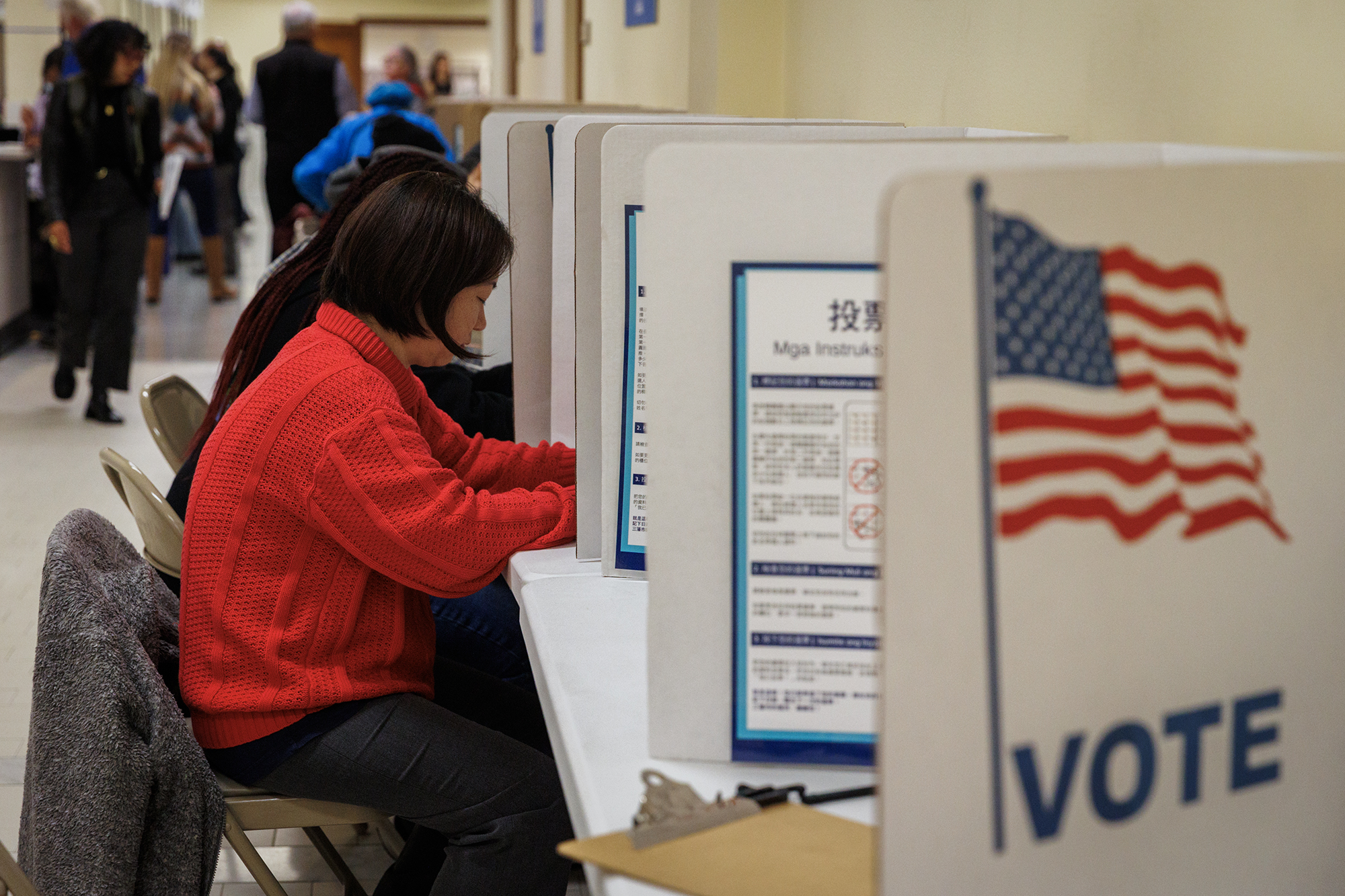
A significant decoupling has emerged between financial input and civic output. Despite unprecedented campaign expenditures, 92% of California voters have yet to return their ballots one week before the election. This data point suggests a pervasive sense of voter fatigue or a strategic delay as the electorate navigates a field reshaped by the abrupt withdrawal of former Representative Eric Swalwell. The inefficiency of traditional political advertising in this cycle benefits candidates with high baseline name recognition, allowing Becerra and Hilton to maintain positioning without the proportional conversion of paid media into early returns.
Institutional Vacuums and Localized Priorities
The race also features candidates like Riverside County Sheriff Chad Bianco, whose focus on public safety and local governance highlights the tension between state-level policy and municipal realities. While Bianco trails the leading trio, his presence—and that of other secondary candidates—serves to further dilute the vote share, increasing the unpredictability of the top-two outcome. This fragmentation is the direct result of a primary devoid of a singular, unifying figure, forcing voters to choose between Becerra’s extensive administrative portfolio, Hilton’s media-centric populism, and Steyer’s advocacy-led platform.
Projected Implications for Governance
The primary’s outcome will pivot California’s regulatory trajectory. A Becerra advancement would likely signal institutional stability in healthcare and federal-state relations, while a Hilton or Steyer victory would represent a disruption of the status quo in ideological directions ranging from fiscal conservatism to aggressive environmental regulation. As campaigns pivot toward intensive mobilization of the massive undecided pool, the operational efficiency of get-out-the-vote (GOTV) infrastructures will serve as the final arbiter in this highly contested transition of power.