
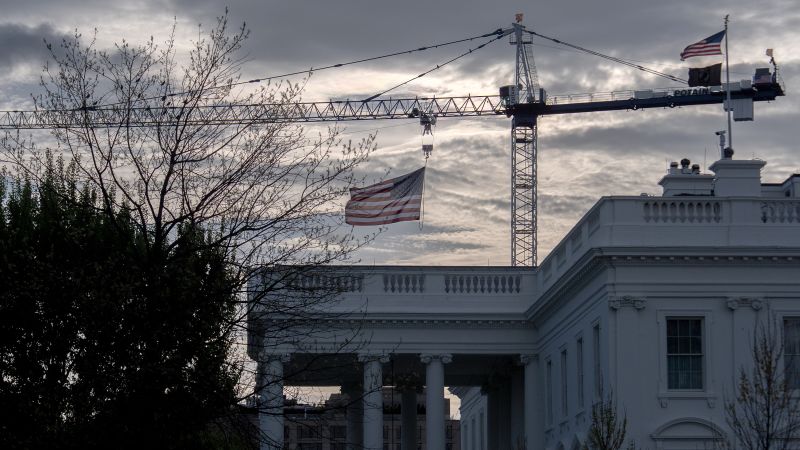
Judicial Scrutiny Intensifies on White House Ballroom Construction
A federal judge has rejected President Donald Trump’s assertion that the construction of a new White House ballroom constitutes a national security imperative. Senior U.S. District Judge Richard Leon’s ruling on Thursday signals a critical juncture in the legal challenge to executive branch construction projects lacking explicit congressional appropriation.
The dispute centers on the Trump administration’s attempt to use a national security claim to bypass prior judicial objections to the ballroom’s construction. Judge Leon, previously ruling the project unlawful due to a lack of express congressional approval, had permitted work on an integrated bunker beneath the proposed structure.
The administration argued that the entire ballroom project was intrinsically linked to national security objectives. Judge Leon forcefully dismissed this interpretation, characterizing the administration’s stance as an “incredible, if not disingenuous” misreading of his prior order.
Executive Authority vs. Congressional Prerogative in Construction
This judicial rebuke challenges the executive branch’s expansive interpretation of its authority, particularly its use of national security justifications to circumvent standard legislative and budgetary processes. The ruling highlights the persistent tension between presidential prerogative and Congress’s constitutional role in appropriating funds for federal projects, even those within the executive mansion.
The administration’s reliance on the national security argument, now deemed “disingenuous” by the court, suggests a strategic attempt to shield executive actions from judicial review. Such an approach, if successful, could precedent future administrations to broaden the scope of national security claims, potentially impacting governmental transparency and accountability.
The legal challenge implies that capital allocated to such projects, even for presidential use, remains subject to established legal frameworks and oversight from other government branches. The judge’s stance indicates a readiness to scrutinize the substance of national security claims rather than accept them as fact, particularly when they appear to be a pretext for circumventing statutory requirements.
Strategic Implications for Executive Projects
Repeated legal challenges to the White House ballroom project reveal a potential strategic vulnerability for the executive branch when its initiatives conflict with established legal or congressional mandates. The administration’s insistence on the project’s national security relevance, despite judicial skepticism, indicates a high-stakes gamble to assert executive control over presidential infrastructure.
This legal entanglement may influence how future executive branch projects are conceived and implemented, possibly leading to increased caution in invoking broad national security justifications without clear, demonstrable links. It also exposes the administration to criticism regarding resource allocation and project prioritization amid other national concerns.
The ruling underscores the importance of clear legislative authorization for significant capital expenditures, even within the sensitive environment of the White House. The strategy to integrate a sophisticated bunker with a public-facing ballroom, and then claim the entire endeavor as a national security necessity, demonstrates an aggressive project management approach now curtailed by judicial review.
Capital Allocation and Governance in Federal Projects
The financial implications of this ruling are significant, potentially halting or delaying capital deployment for a project deemed critical by the administration. The legal battle itself incurs costs, including legal fees and potential project delays that escalate overall expenditure.
Furthermore, the ruling raises questions about governance mechanisms within the executive branch concerning large-scale construction. The perceived need to resort to national security claims suggests a potential bottleneck in securing approval through traditional channels or a deliberate strategy to bypass them.
This situation highlights a broader debate on the balance of power and oversight in federal construction. The executive’s ability to unilaterally initiate and advance projects, even on its own grounds, is subject to checks and balances, as demonstrated by Judge Leon’s intervention.
Judicial Precedent and Future Executive Actions
Judge Leon’s rejection of the national security claim sets a significant precedent for how such justifications will be viewed in future legal challenges. It signals that courts will likely demand concrete evidence linking construction projects to genuine national security threats, rather than accepting generalized assertions.
This judicial stance could compel future administrations to be more transparent and rigorous in their project justifications, potentially leading to greater adherence to established procedures. The judiciary’s critical examination of such claims acts as a vital check on potential executive overreach.
Ultimately, the White House ballroom saga illustrates the complex interplay between executive power, legislative authority, and judicial review, underscoring the enduring importance of constitutional checks and balances.
The Role of National Security in Executive Decision-Making
The repeated invocation of national security as a justification for contentious decisions suggests a pattern of leveraging this rationale to overcome opposition or procedural hurdles. This strategy, while potentially effective in high-stakes scenarios, risks diluting the genuine meaning of national security and inviting skepticism.
The administration’s argument that the entire ballroom project, including above-ground components, was integral to national security objectives represents an aggressive interpretation. It implies a functional link between a presidential venue and the nation’s defense posture, a connection the court found unsubstantiated.
This approach exposes the administration to accusations of employing national security as a convenient, albeit legally tenuous, shield for projects possibly driven by other considerations, such as prestige. The judge’s characterization of the argument as “incredible” points to a judicial assessment that the claim stretched credulity, undermining its legitimacy.
Impact on Public Trust and Institutional Integrity
Legal battles over White House construction can erode public trust in the executive branch, especially when justifications appear disingenuous. Such controversies can fuel perceptions of unchecked power and disregard for financial accountability.
The judiciary’s intervention, as seen in Judge Leon’s rulings, reinforces institutional integrity by upholding the rule of law. However, repeated clashes between the executive and judiciary over such matters can create an atmosphere of conflict, potentially distracting from pressing national issues.
The strategic decision to push forward with a project under a contested justification highlights the administration’s willingness to engage in protracted legal battles, possibly to demonstrate resolve but risking alienation and perceptions of overreach.
Capital Investment and Strategic Priorities
Capital investment in projects like the White House ballroom, even if approved, reflects strategic priorities. When such investments become mired in legal disputes, questions arise about the efficiency of capital allocation and project planning foresight within the executive branch.
The administration’s insistence on proceeding with ballroom construction, despite judicial opposition, suggests a high strategic priority for this initiative. The attempt to integrate the bunker with the ballroom and classify the entire undertaking as a national security necessity indicates a sophisticated, though ultimately unsuccessful, attempt at unified justification.
This situation prompts an examination of how executive administrations prioritize and fund infrastructure projects. Reliance on national security claims, when traditional approval avenues might be more appropriate, suggests calculated risk-taking in project execution.
Evolving Landscape of Executive Authority and Oversight
Judge Leon’s ruling is a significant development in the discourse surrounding the limits of executive authority, particularly for construction and infrastructure projects within the White House. It reinforces that claims of national security, while critical, must be substantiated and not serve as a blanket exemption from legal and congressional oversight.
The precedent established by this case could influence how future administrations approach similar projects, potentially leading to greater adherence to established procedures and more transparent justifications. The judiciary’s critical examination of such claims acts as a vital check on potential executive overreach.
Ultimately, the White House ballroom saga illustrates the complex relationship between executive power, legislative authority, and judicial review, underscoring the enduring importance of constitutional checks and balances.

Photo by ptrabattoni on Pixabay.