
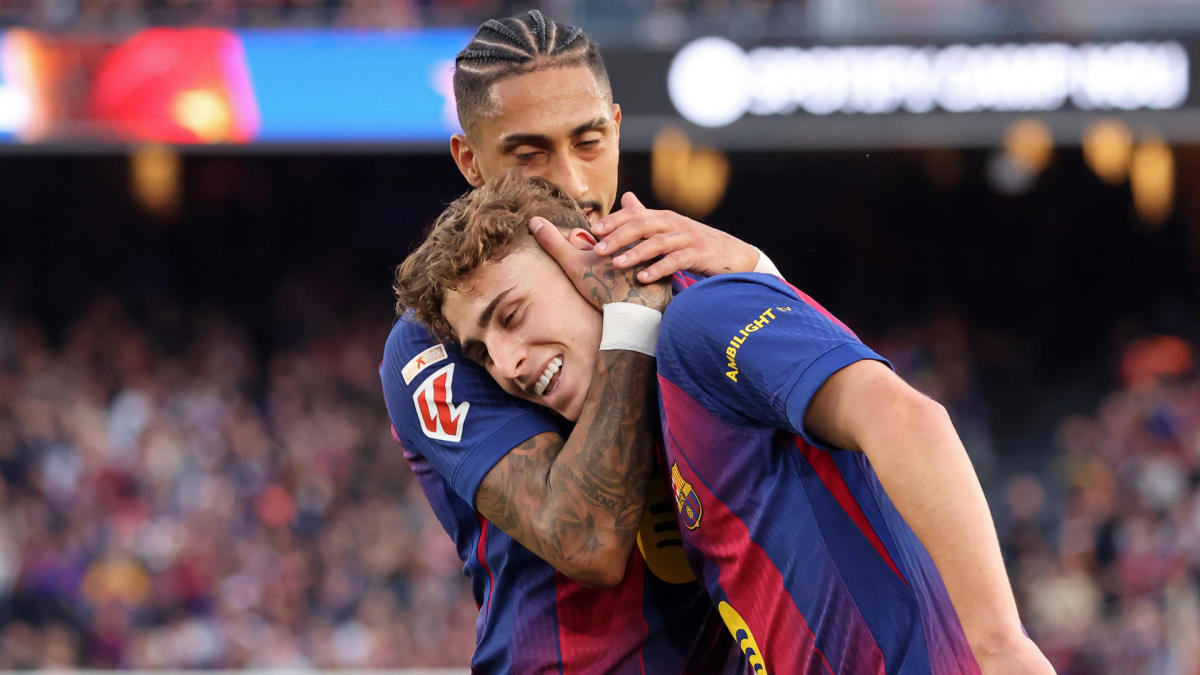
FC Barcelona enters a decisive Matchday 26 fixture against Villarreal at the Spotify Camp Nou, needing maximum points to defend their slim one-point La Liga advantage over Real Madrid. Manager Hansi Flick has implemented significant personnel and philosophical adjustments.
Defensive Recalibration and Personnel Integration
The most immediate tactical shift is the reinstatement of Alejandro Balde at left-back, displacing Joao Cancelo. This move indicates a tactical preference for Balde’s natural width and pace against Villarreal’s setup. The central defensive pairing sees Pau Cubarsi maintaining his integration alongside Eric Garcia, necessitated by Gerard Martin’s suspension, while Jules Kounde anchors the right flank.
Midfield Synergy Over Pedri’s Risk Profile
Flick’s decision regarding the midfield highlights a risk-averse approach concerning player fitness, particularly with Frenkie de Jong still absent. Pedri is held in reserve, suggesting prioritization for later fixtures. The selected trident—Marc Bernal, Dani Olmo, and Fermin Lopez—emphasizes immediate energy, positional discipline, and high-tempo pressing capacity. This configuration places significant tempo-control responsibility on Bernal and Lopez to compensate for the deep distribution expertise of De Jong.
Torres as Central Focal Point
The primary offensive alteration sees Ferran Torres assume the striker role, replacing Robert Lewandowski. This substitution implies a strategic pivot toward Torres’s movement profile, potentially designed to exploit defensive spaces differently than Lewandowski’s traditional central dominance. This workload management for Lewandowski underscores Flick’s utilization of squad depth during the title push.
Cultural Shift: Decentralizing Authority
Beyond tactical personnel, Flick announced a foundational cultural adjustment: abandoning minute-by-minute monitoring of training punctuality. He delegated enforcement of timeliness standards to the team captains. This is a calculated move toward fostering internal accountability, shifting from external, managerial micro-management to peer-enforced standards.
The reported immediate success—zero late arrivals since the change—validates this delegation, suggesting that peer accountability carries greater operational weight for the younger squad members. This structural shift reduces the cognitive load on Flick, allowing greater concentration on tactical preparation, but it carries the inherent risk of needing to reassert centralized control should standards lapse.
Competitive Context and Performance Metrics
Securing victory against a high-performing Villarreal side, despite the ten-point gap, is critical for maintaining the psychological edge over rivals. The performance of the rotated players, particularly Torres centrally and the Bernal-led midfield trio, will provide vital data points for Flick on squad flexibility should further workload management be required for key veterans later in the season.
The continuity provided by Joan Garcia in goal offers an essential anchor as outfield configurations are deliberately altered. The utilization of youth, exemplified by Cubarsi’s continued presence, reinforces a dual strategy: immediate title defense coupled with long-term squad development under the new management structure.
Photo by inguaribile_viaggiatore on Pixabay.