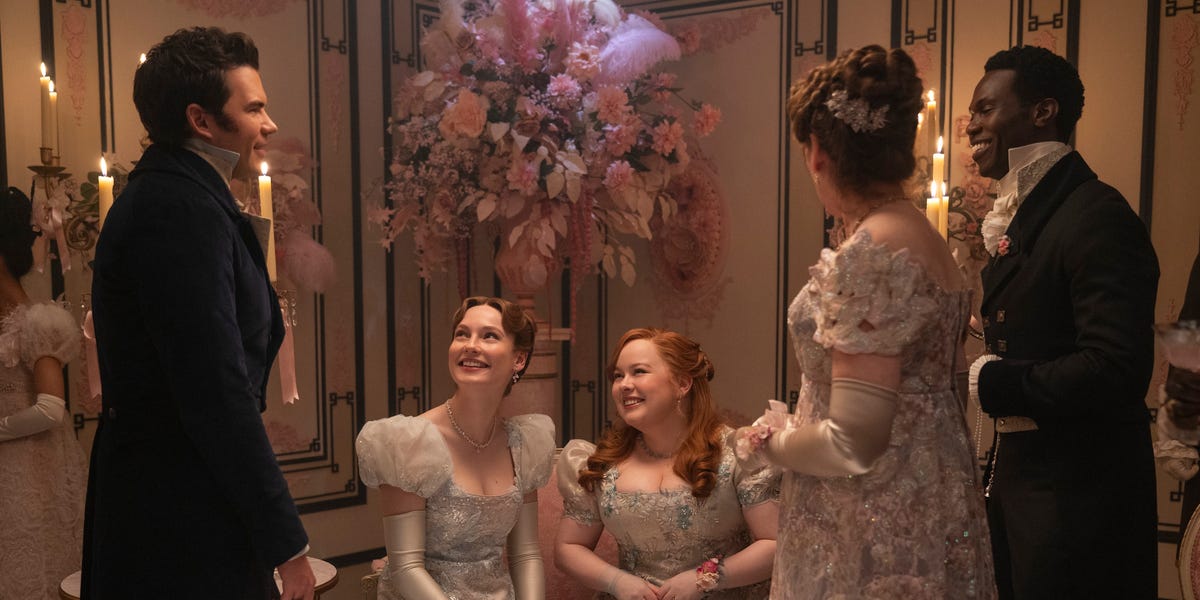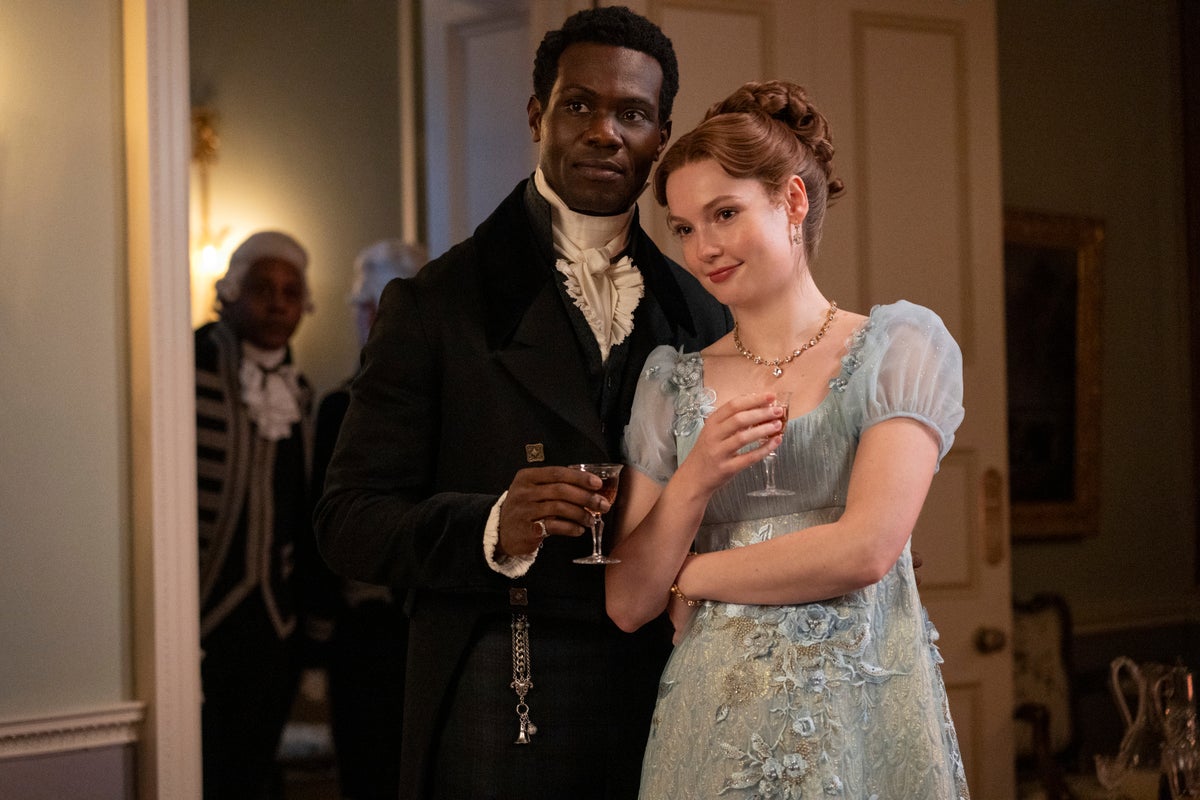
The conclusion of Netflix’s Bridgerton Season 4 featured a formal dedication, “In loving memory of Nicholas Braimbridge; Tony Cooper,” signaling institutional acknowledgment of specialized craftspeople foundational to high-budget narrative execution.
Valuing Specialized Craftsmanship: Braimbridge’s Artistic Impact
Nicholas Braimbridge, a scenic artist on both Bridgerton and Queen Charlotte, represents the capital-intensive artistic expertise required for period drama world-building. His reported description as “hugely talented” and an “integral part of the art department” highlights the deep reliance on specific artisan skill sets within the show’s creative ecosystem.
The tribute gains specific context from a GoFundMe campaign initiated by Art Director Alison Gartshore, noting Braimbridge’s passing in May 2025. This timing places his absence directly within the production lifecycle of the season, impacting departmental continuity during critical finishing phases.
Furthermore, the mention that Braimbridge is survived by two teenage daughters implicitly raises awareness regarding the personal and financial exposure faced by specialized contract production staff integral to high-revenue intellectual property.
Logistical Backbone: Cooper’s Franchise Tenure
Tony Cooper’s role as a driver across both Bridgerton productions speaks directly to the logistical complexity of managing talent and equipment on large-scale international shoots. Cooper’s extensive career, including work on Harry Potter films and The Crown, positions him as a cohort of veteran logistical personnel whose institutional knowledge is crucial for operational fluidity.
The consistent employment across multiple high-profile franchises suggests a proven reliability that studios prioritize, making the loss of such personnel a disruption to established, efficient logistical chains.
Corporate Acknowledgment and Risk Distribution
The public tribute, strategically placed before the finale, functions as corporate validation, influencing internal morale and external perceptions of workforce valuation. For Netflix, maintaining positive ties with the production infrastructure—including specialized artists and essential support staff—is crucial for securing future talent pipelines.
The linkage between the art department leadership initiating informal support (GoFundMe) and formal public memorialization suggests a dual structure for addressing crew welfare, contrasting immediate internal gaps with broader corporate safety nets. This highlights a structural tension regarding comprehensive long-term provisions for non-principal crew.
Aesthetic Success as Measurable Value
Braimbridge’s craft directly influences the immersive quality and perceived authenticity that drive audience engagement for Bridgerton. The aesthetic success of the franchise is predicated on meticulous, unseen environmental construction; thus, his expertise translates directly into measurable content value for the platform.
Memorializing such individuals validates the economic model where specialized, non-star talent underpins the entire visual spectacle, even if compensation structures may not fully reflect that inherent value.
Industry Standards and Duty of Care
The visibility of these tributes prompts implicit scrutiny regarding the duty of care expected for long-term, specialized contractors concerning occupational health and benefit continuity. While circumstances are undisclosed, public memorialization often precedes internal reviews of safety protocols in high-pressure production environments.
For future projects, the recognition of Braimbridge and Cooper serves as a tangible benchmark for the human capital required to sustain elaborate fictional worlds, potentially influencing future budgeting for crew welfare funds or insurance mandates.
Operational Continuity and Tacit Knowledge Transfer
The successful completion of the season post-departure implies that management effectively absorbed the impact of losing key personnel with specialized knowledge, suggesting robust contingency planning. However, the institutional memory held by Braimbridge and Cooper must now be formally documented or transferred, potentially causing transitional inefficiencies.
This situation underscores the fragility of production models heavily reliant on the tacit knowledge accumulated through years of collaboration on multi-year, complex projects.
Stakeholder Visibility and Brand Narrative
Netflix benefits from the positive cultural resonance generated by sincere tributes, reinforcing a brand image that values its extended creative family. This visibility also subjects the organization to scrutiny regarding employment classification transparency and the robustness of support systems for crew members outside traditional full-time contracts.
The timing of the tribute during peak finale consumption maximizes exposure, transforming a private loss into a public narrative moment that affirms the collective effort behind the production.
Competitive Positioning and Talent Acquisition
In premium streaming, production design quality remains a key differentiator. The ability to consistently attract and retain top-tier specialists in set construction directly correlates with a studio’s capacity to execute ambitious, high-fidelity period pieces efficiently.
The tribute acts as a subtle communication to the wider production community regarding institutional culture, impacting future recruitment leverage. Cooper’s cross-franchise work confirms that logistical excellence is a transferable asset, cementing transportation coordinators as key strategic hires for scaling location-heavy productions.