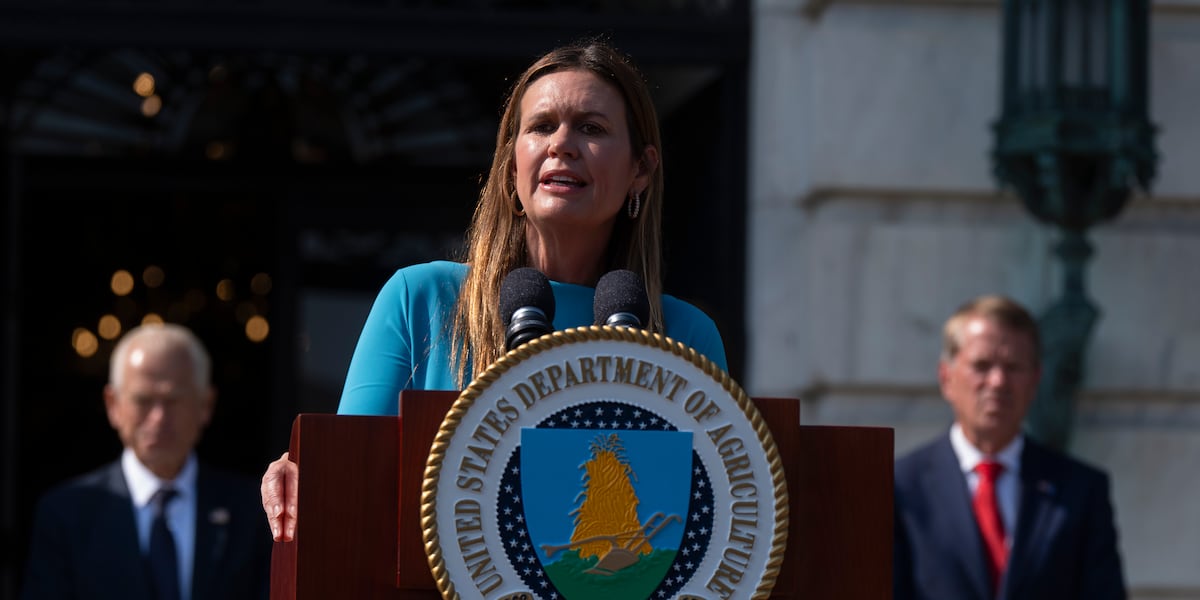
Governor Sarah Huckabee Sanders has formally executed a proclamation designating June 2026 as ‘Fidelity Month’ in Arkansas. Signed on May 27, this administrative action establishes a specific civic framework prioritizing faith, liberty, and patriotism. The move represents a strategic deployment of executive influence to reinforce traditional institutional structures and signal a shift in the state’s cultural and moral messaging.
Strategic Counter-Programming and Executive Intent
The proclamation functions as an instrument of cultural agenda-setting. By anchoring the initiative in the nation’s founding values, the administration attempts to ground contemporary governance in historical precedents of moral responsibility. Governor Sanders’ explicit endorsement of the term “counter-programming” confirms a deliberate competitive strategy. This positioning suggests that state-level executives are increasingly utilizing proclamations not merely as symbolic gestures, but as tools for ideological consolidation within the public square.
The Institutional Theory of Human Flourishing
Central to the executive text is the assertion that fidelity to God, family, community, and country is the prerequisite for “human flourishing.” This framework posits that individual well-being is geographically and socially contingent upon the strength of traditional institutions. By categorizing these four pillars as essential to a “well-ordered society,” the state shifts the focus from individualistic social models to a structural model where stability is derived from shared moral foundations and communal obligations.
Delegated Implementation via Non-Governmental Intermediaries
A distinctive operational feature of Fidelity Month is the reliance on community and faith leaders for implementation. This delegation acknowledges the state’s limited reach in fostering private virtue and highlights a reliance on non-governmental social networks. By empowering these stakeholders to lead the initiative, the administration seeks to decentralize the promotion of civic responsibility, utilizing existing religious and civic infrastructure to amplify its cultural directive.
Historical Legitimacy and the Washingtonian Precedent
To establish institutional continuity, the proclamation invokes George Washington’s Farewell Address, specifically the premise that virtue and morality are the “necessary spring of popular government.” This rhetorical strategy frames the 2026 initiative as a restoration of foundational American principles rather than a novel policy shift. Linking modern executive action to the Federalist era provides a layer of historical legitimacy intended to transcend immediate political cycles and reinforce the necessity of moral cohesion for republican survival.
Media Strategy and Categorical Clarity
The rollout of Fidelity Month has utilized targeted communication channels, including the distribution of content via partisan digital outlets to reach specific constituent demographics. However, this has prompted inquiries from local media regarding the initiative’s relationship with established observances like Pride Month. The Governor’s office has yet to clarify if Fidelity Month is intended as a categorical replacement or a parallel designation, leaving the operational scope of state-sponsored events to be defined as 2026 approaches.
Conclusion: The Economics of Social Stability
From a policy perspective, the emphasis on a “well-ordered society” suggests a long-term interest in social capital. The administration’s focus on responsibility and commitment aims to reduce social volatility, which is often a precursor to economic resilience and reduced state dependency. Whether this proclamation translates into measurable social change will depend on the degree to which localized institutions adopt the Governor’s vision of fidelity as a core civic duty.