A judicially authorized search warrant executed by federal agents at the Washington, D.C., residence of Representative Ilhan Omar has dramatically escalated a multi-faceted federal criminal inquiry, placing her congressional tenure under intense legal and political scrutiny. This unprecedented pre-dawn enforcement action targets allegations concerning both family immigration documentation and irregularities in commercial asset disclosures, underscoring the profound institutional friction when federal law enforcement pursues a sitting member of Congress.
Such an intervention, particularly against a sitting lawmaker, necessitates substantive judicial oversight and stringent adherence to evidentiary standards, reflecting a high threshold for probable cause. The Department of Justice, in a statement to MS NOW, confirmed the action as an authorized warrant execution in an ongoing criminal investigation. Rep. Omar, describing the 6:00 AM entry after late-night legislative travel, stated the incident prompted her immediate security reassessment and permanent relocation, framing the aggressive tactics as an intimidation measure rather than routine evidence collection.
Immigration Inquiries & Grand Jury Escalation
At the core of the federal investigation are allegations of potential fraud within family immigration documents. Federal naturalization processes impose exacting, long-term compliance standards, rendering historical representations of familial relationships and administrative declarations legally actionable even decades later. Any perceived discrepancy in foundational administrative filings can trigger intensive federal document reviews and serious legal consequences.
Rep. Omar, a naturalized U.S. citizen born in Somalia, has consistently and formally rejected any assertion of wrongdoing, expressing personal confidence in the procedural legitimacy of her family’s immigration history. However, federal immigration inquiries demand comprehensive historical paper trails, encompassing foreign birth records, civil registry filings, and consecutive declarations made to entry authorities, often spanning decades. Any material inconsistencies within this long administrative chain create significant legal vulnerabilities.
Crucially, the issuance of grand jury subpoenas signals a significant procedural escalation, shifting the inquiry from preliminary administrative reviews to formal prosecutorial examination. Under federal criminal procedure, a grand jury wields expansive investigatory authority, compelling sworn testimony and securing institutional records under legal penalty. This move indicates the Department of Justice is rigorously testing the factual merits of the documentation claims against strict legal thresholds for criminal fraud, moving beyond discretionary administrative enforcement.
Electoral Timing & DOJ Guidelines Under Scrutiny
The execution of high-visibility search warrants against elected officials mere weeks before national elections inherently generates profound political implications. Rep. Omar highlighted that the federal action occurred shortly before the November 3 midterm elections, a critical juncture determining control of both the House and Senate. Such procedural timing of overt law enforcement steps during sensitive political windows invariably triggers intense scrutiny, raising questions about political interference and the independence of the justice system.
While Rep. Omar, serving a historically progressive constituency in Minneapolis, Minnesota, is widely projected to retain her seat, the timing of this law enforcement operation during an active general election campaign exposes a critical structural tension between autonomous investigative timelines and democratic electoral cycles. This creates a challenging narrative for both the lawmaker and the Department of Justice.
Notably, federal law enforcement guidelines typically mandate operational restraint concerning public investigative steps immediately preceding elections to avoid perceptions of political influence. The judicial authorization of this search therefore indicates investigators presented compelling probable cause to an independent federal magistrate, arguing immediate execution was warranted. This procedural intersection, merging standard prosecutorial timelines with high-stakes midterm electoral pressures, inevitably creates profound reputational challenges that extend beyond conventional legislative defense strategies, irrespective of guilt or innocence.
Executive Rhetoric & DOJ Independence Questioned
The broader context of this federal investigation is inextricably linked to long-standing political friction between Rep. Ilhan Omar and former President Donald Trump. Trump has repeatedly targeted the progressive lawmaker in public speeches, openly advocating for prosecutorial actions against political opponents and amplifying claims regarding her personal background. On prior occasions, Trump publicly alleged Omar engaged in marriage fraud and questioned her legal standing in the country, often inciting crowd chants demanding her removal.
These public statements have significantly fueled claims from defense advocates that the intense scrutiny represents a politicized application of federal power. Rep. Omar, describing the pre-dawn raid as an ‘intimidation measure’ rather than a routine evidentiary collection, cited aggressive execution tactics by agents at both property entrances. This highly charged political environment profoundly complicates the institutional presumption that Department of Justice actions are insulated from external executive and partisan pressures, demanding heightened scrutiny of procedural integrity.
The friction between federal oversight mandates and pervasive partisan rhetoric places extraordinary demands on institutional transparency and accountability. Law enforcement agencies must demonstrably establish clear procedural separation between political attacks originating on campaign stages and evidentiary thresholds legally adjudicated before federal courts. When prominent public figures confront simultaneous rhetorical hostility and high-stakes judicial procedures, the legitimacy of institutional outcomes relies entirely on the unimpeachable, verifiable integrity of the judicial filings and the investigation process itself.
Financial Disclosures, Business Ventures, and Campaign Finance Scrutiny
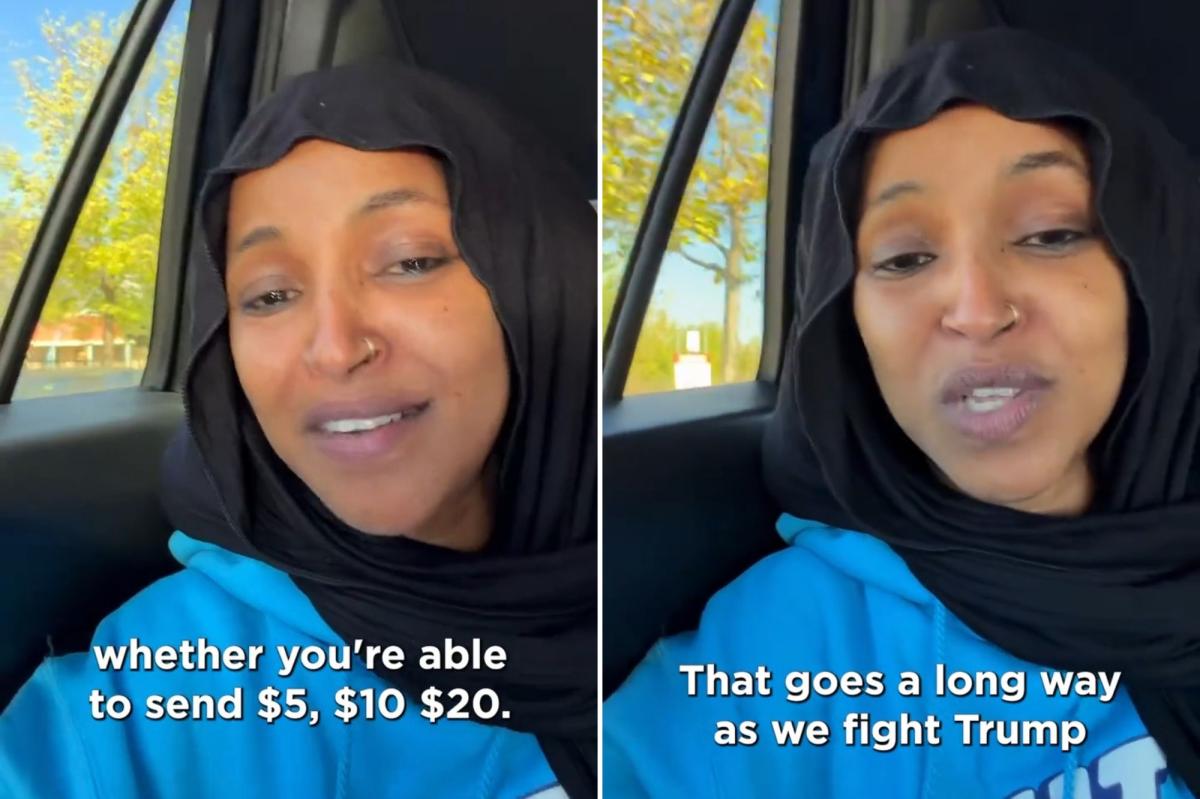
Beyond immigration, the federal inquiry encompasses the financial activities associated with Rep. Omar’s campaign infrastructure and personal asset disclosures, subjecting them to intense public and administrative scrutiny. Immediately following the raid, Omar issued a direct video appeal to grassroots supporters, soliciting contributions while describing her household as operating on a ‘paycheck-to-paycheck’ basis. This public assertion prompted rigorous comparative analysis against her mandatory federal financial disclosures.
Public records reveal significant, multi-year statistical volatility in joint financial filings by the congresswoman and her husband, political consultant Tim Mynett. Prior disclosures showed asset valuations in the millions, which subsequent annual filings dramatically adjusted downward to nominal levels. Omar’s official representatives attributed this variance to an ‘accounting error,’ asserting corrections were made to accurately reflect financial realities. However, such substantial retrospective adjustments intrinsically draw heightened interest from ethics regulators and financial compliance specialists.
Mandatory congressional disclosures are fundamental to ensuring continuous transparency regarding secondary assets, commercial interests, and spousal holdings, designed explicitly to prevent conflicts of interest and illicit enrichment. The drastic contraction in declared net worth thus invites administrative examination to determine whether original representations were inaccurate, whether subsequent valuation shifts reflected legitimate structural capital movements, or if there were attempts to obscure assets or income.
The financial inquiry further extends into the operational structures of commercial enterprises connected to Mynett. Earlier reporting highlighted that Omar’s political campaign directed substantial professional fees to Mynett’s political consulting entity for advisory services—a commercial relationship that drew continuous media analysis even prior to their marriage. In addition to political consulting, two other business entities tied to Mynett—a direct-to-consumer wine distributor and a venture capital partnership—have also reportedly faced federal review.
Federal scrutiny of these affiliated entities primarily targets corporate asset valuation methodologies. In venture capital partnerships and privately held firms, valuation figures directly influence reported capital bases, debt limits, tax obligations, and potential collateral. Discrepancies between public reporting declarations and internal corporate books can create significant administrative and criminal liabilities if values are deliberately overstated for financial leverage or understated to minimize public asset visibility or tax burdens.
The financial health and regulatory compliance of spousal corporate assets represent sensitive governance vulnerabilities for sitting members of Congress. Federal investigators examining systemic fraud often scrutinize whether commercial structures operate as genuine, arms-length entities or serve as conduits for unverified capital transfers, illicit transactions, or conflicts of interest. Consequently, corporate accounting records, client billing files, and tax documentation become standard evidentiary baselines for assessing statutory and ethical compliance.
Fundraising Under Scrutiny & Regulatory Pressure
The tactical deployment of digital fundraising appeals immediately following federal law enforcement interventions represents a well-established political paradigm. Campaigns routinely activate grassroots donor networks by framing such actions as aggressive institutional overreach, thereby generating immediate operational capital and demonstrating public support. In this specific instance, the juxtaposition of Rep. Omar’s public claims of ‘paycheck-to-paycheck’ living with urgent appeals for ’emergency cash’ drew sharp criticism from conservative media outlets, including The Post, which published critical assessments advising against contributions.
Direct-to-donor political solicitations operate under stringent Federal Election Commission (FEC) reporting rules, which demand meticulous separation between personal funds, campaign accounts, and legal defense trusts. When a federal officeholder solicits contributions while under active judicial scrutiny, the allocation of these funds—whether for legal defense or candidate operational accounts—must adhere to precise statutory guardrails to prevent commingling or improper use. The conspicuous divergence between public statements alleging personal financial stress and historical corporate asset valuations exacerbates already complex public relations and regulatory challenges.
Media criticism has sharply focused on the perceived credibility gap between simultaneous claims of personal insolvency and the documented high-level corporate entrepreneurship within the lawmaker’s immediate family. Conservative commentators have characterized these financial appeals as symptomatic of broader regional controversies involving municipal and non-profit governance in Minnesota. This intricate intersection of rapid digital fundraising, high-stakes federal inquiries, and public disclosure corrections profoundly underscores the inherent institutional friction and evolving regulatory challenges characterizing modern congressional ethics administration.
Institutional Consequences for Congressional Ethics
The concurrent federal investigations into family immigration documentation and corporate financial structures vividly illustrate the inherent administrative and ethical fragility surrounding prominent political figures. When federal agencies deploy the formidable tools of grand jury processes and search warrants against a sitting member of the federal legislature, the systemic impact reverberates far beyond individual legal jeopardy. Regardless of the ultimate legal outcomes, the mere presence of active federal probes fundamentally reshapes legislative leverage, influences committee assignments, and strains the public execution of institutional duties, creating a cloud of uncertainty.
The eventual resolution of these multi-pronged inquiries hinges entirely on the documentary findings and testimonial evidence presented before grand juries and federal judicial panels. Should the grand jury identify actionable discrepancies in historic naturalization filings or material misrepresentations in commercial valuations, formal indictments could fundamentally alter the operational trajectory of Rep. Omar’s congressional tenure and potentially trigger ethics proceedings. Conversely, if the rigorous federal review concludes without findings of criminal intent or material fraud, these inquiries will nonetheless stand as a prominent, instructive case study at the fraught intersection of executive power, national security, and congressional administrative oversight.
For the Department of Justice, maintaining unimpeachable procedural discipline and demonstrating absolute independence remains paramount to preserving public credibility throughout such sensitive, high-profile investigations potentially involving public corruption. Every investigative step, from the precise timing of warrant executions to the specificity of subpoena demands, faces intense scrutiny from both legal professionals and the broader electorate. As this complex judicial process unfolds, the delicate balance between lawful accountability and perceived political independence will remain the defining institutional question governing these ongoing proceedings and their lasting impact on congressional governance.