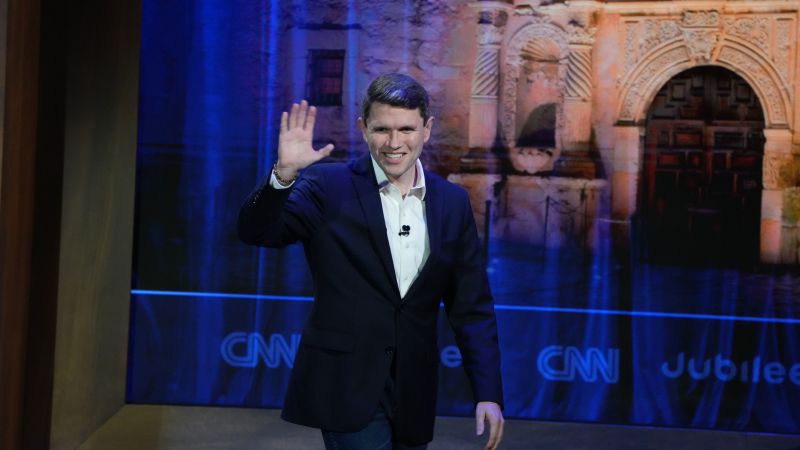
The United States Senate contest in Texas has entered an acute strategic phase as Democratic nominee James Talarico participated in a joint town hall hosted by CNN and Jubilee. Confronting undecided and conservative constituents, Talarico fielded pointed inquiries regarding Israel’s military campaign in Gaza, foreign assistance funding, and constitutional protections for reproductive rights. This unscripted engagement underscores the targeted calculations required to flip a Sun Belt battleground critical to determining the balance of power in the upper chamber.
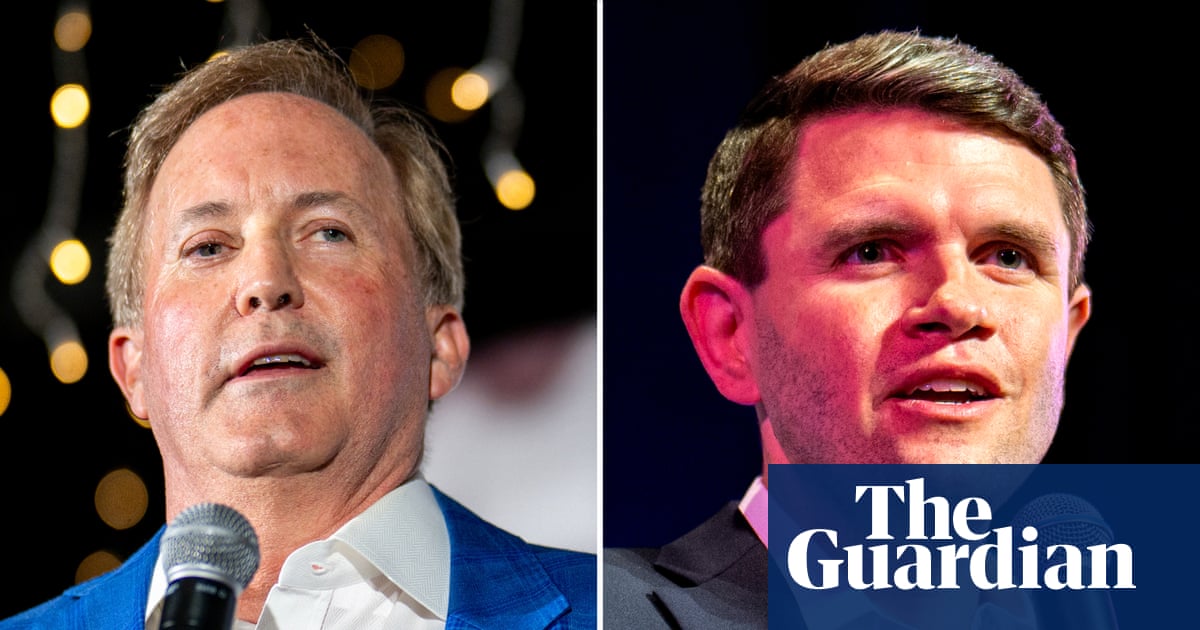
Polling metrics preceding the broadcast demonstrate a contracting margin: while Talarico retains a statistical advantage, Republican nominee Ken Paxton has narrowed the deficit. For the national Democratic apparatus, which requires a net gain of four seats to secure the Senate majority, Texas represents a foundational offensive target. Paxton’s consolidated institutional base among statewide conservatives elevates the electoral necessity for Talarico to capture independent and center-right voting blocs across suburban corridors.
Theological Discourse as Cultural Counter-Strategy
Religious orthodoxy took precedence when a small business owner challenged Talarico regarding prior remarks designating God as nonbinary. Characterizing his past characterization as provocative, Talarico mounted a doctrinal defense, arguing that human linguistics and biological taxonomies are fundamentally insufficient to delineate divine nature. Drawing from his background as a former seminary student, he argued that this premise aligns with broad theological scholarship rather than secular modernism.
To reinforce this premise, Talarico cited an eclectic ideological coalition, referencing the writings of the late Pope Benedict alongside statements from conservative activist Charlie Kirk concerning the limits of human attribution to the divine. Invoking his spiritual inspirations and the preceding three popes, Talarico deployed institutional ecclesiastical doctrine to deflect conventional cultural attacks. This framework is designed to counter secular characterizations and establish moral credibility with churchgoing voters who typically support conservative candidates.
Navigating Moral and Statutory Divides on Abortion
The town hall highlighted the structural friction between progressive jurisprudence and traditional religious voters during an exchange with Jodi Hunt, a single-issue Catholic participant. Hunt pressed Talarico on his capacity to represent conservative Christian constituencies while maintaining an unyielding pro-choice platform, framing her defense of embryonic life around the biblical prohibition against killing.
Talarico conceded that ethical conclusions on reproductive healthcare frequently diverge among citizens of faith, while emphasizing that scriptural texts do not explicitly dictate statutory prohibitions on the mechanics of abortion. This dialogue crystallized the candidate’s core challenge: articulating a coherent moral defense of reproductive access without alienating either the secular progressive base or anti-abortion swing voters whose support is essential to an upset in Texas.
Ideological Non-Alignment and Partisan Differentiation
To broaden his general-election coalition, Talarico cultivated explicit distance from the national Democratic establishment. Speaking directly to skeptical center-right attendees, he deployed a populist defense of state sovereignty, stating an absolute willingness to break with his party hierarchy whenever national platforms undermine Texas interests. Metaphorically noting that his religious faith and athletic loyalties are already settled, Talarico insisted that party apparatuses would never command unconditional deference.
This rhetoric serves as a direct insulation mechanism against attacks tethering his candidacy to federal party vulnerabilities. Talarico advocated for decoupling legislative action from polarizing culture-war rhetoric, asserting that political disagreements should not function as weapons to punish ideological adversaries, but rather as starting points for structural consensus. In a state that has historically rejected standard Democratic platforms, this deliberate independence forms the operational cornerstone of his viability against Paxton.