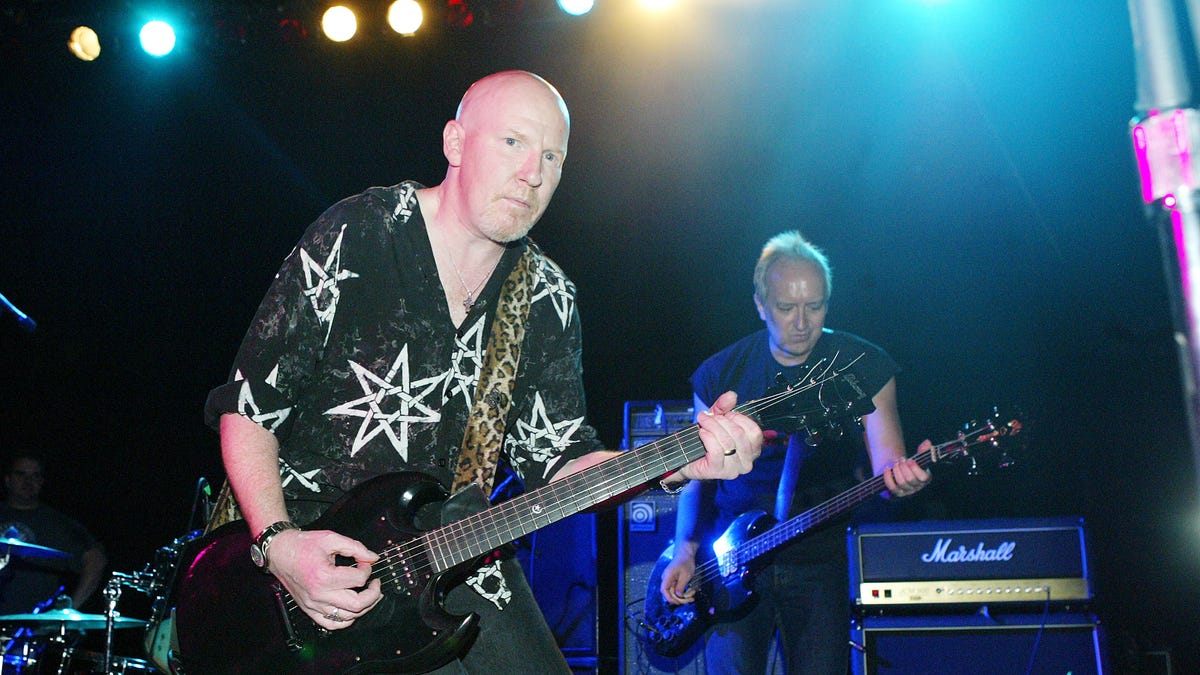
Strategic Dissolution: The Passing of a Punk Architect
The death of Eugene Richard O’Connor—professionally identified as Cheetah Chrome—at age 71, represents more than the loss of a performer; it signifies a critical inflection point in the preservation of punk rock’s foundational intellectual capital. As the primary sonic architect for the Dead Boys and Rocket from the Tombs, Chrome did not merely contribute to a subculture; he engineered the disruptive aesthetic and technical parameters that enabled punk to penetrate and eventually reshape global music markets.
His passing, confirmed by bandmates on September 13, triggers a necessary re-evaluation of the ‘Cleveland Blueprint’—the raw, industrial-adjacent sound that preceded the commercial explosion of the genre in larger metropolitan hubs. The industry’s description of Chrome as a ‘one-man hurricane’ underscores a performance model defined by high-intensity output, which remains a key metric for authenticity in alternative music production.
Incubator Dynamics: The Cleveland Blueprint
Chrome’s career originated in Cleveland, Ohio, a city that functioned as a vital, high-pressure incubator for proto-punk development. His 1974 tenure with Rocket from the Tombs established a technical framework characterized by aggressive dissonance and unrefined speed—elements that would be refined and leveraged by more visible entities in New York and London. This period reflects an early form of disruption where localized experimentation challenged established arena-rock monopolies.
The strategic transition from the experimentalism of Rocket from the Tombs to the targeted branding of the Dead Boys illustrates a sophisticated evolution in market positioning. Alongside collaborators like Stiv Bators, Chrome distilled raw sonic energy into a potent, marketable product capable of competing within the burgeoning underground economy of the late 1970s.
Technical Framework: Young, Loud and Snotty
The 1977 release of Young, Loud and Snotty served as the institutionalization of the Dead Boys’ methodology. This record provided a stylistic template that prioritized distortion and speed over traditional blues-based virtuosity, effectively lowering the barrier to entry for future artists while simultaneously raising the standard for emotional intensity.
Analytically, Chrome’s ‘feral guitar riffs’ functioned as the band’s primary competitive advantage. By eschewing polished production for a high-energy, low-fidelity approach, Chrome provided the sonic leverage necessary to distinguish the Dead Boys from their contemporaries, securing a permanent position in the rock canon through structural innovation rather than technical conformity.
Nashville: Professionalizing the Veteran Legacy
Chrome’s eventual relocation to Nashville represents a broader industry trend: the migration of veteran talent to hubs with robust infrastructure for legacy management. In Nashville, Chrome transitioned from a radical innovator to a professional stakeholder, leveraging his cultural capital to oversee archival projects and collaborative ventures.
This move highlights the professionalization of punk; as the genre matured, its founding members became valuable assets for their historical authenticity. Chrome’s Nashville era served as a bridge between 1970s radicalism and the modern music industry’s focus on long-term brand preservation and intellectual property management.
Operational Realities and Downstream Influence
The tribute from global figures like Duff McKagan (Guns N’ Roses) illustrates the high return on investment of Chrome’s early innovations. His work provided the foundational DNA for multi-platinum alternative and hard rock movements, demonstrating how subcultural disruption can yield significant long-term influence across diverse market segments.
The ‘Dead Boys family’ now faces the operational challenge of managing the band’s legacy in a post-architect landscape. The use of direct-to-fan communication via social media for the announcement reflects a modern strategic necessity: controlling the narrative to maintain brand integrity. As the music industry evolves, the structural foundations laid by Cheetah Chrome will continue to provide the framework for future generations of musical disruptors.