
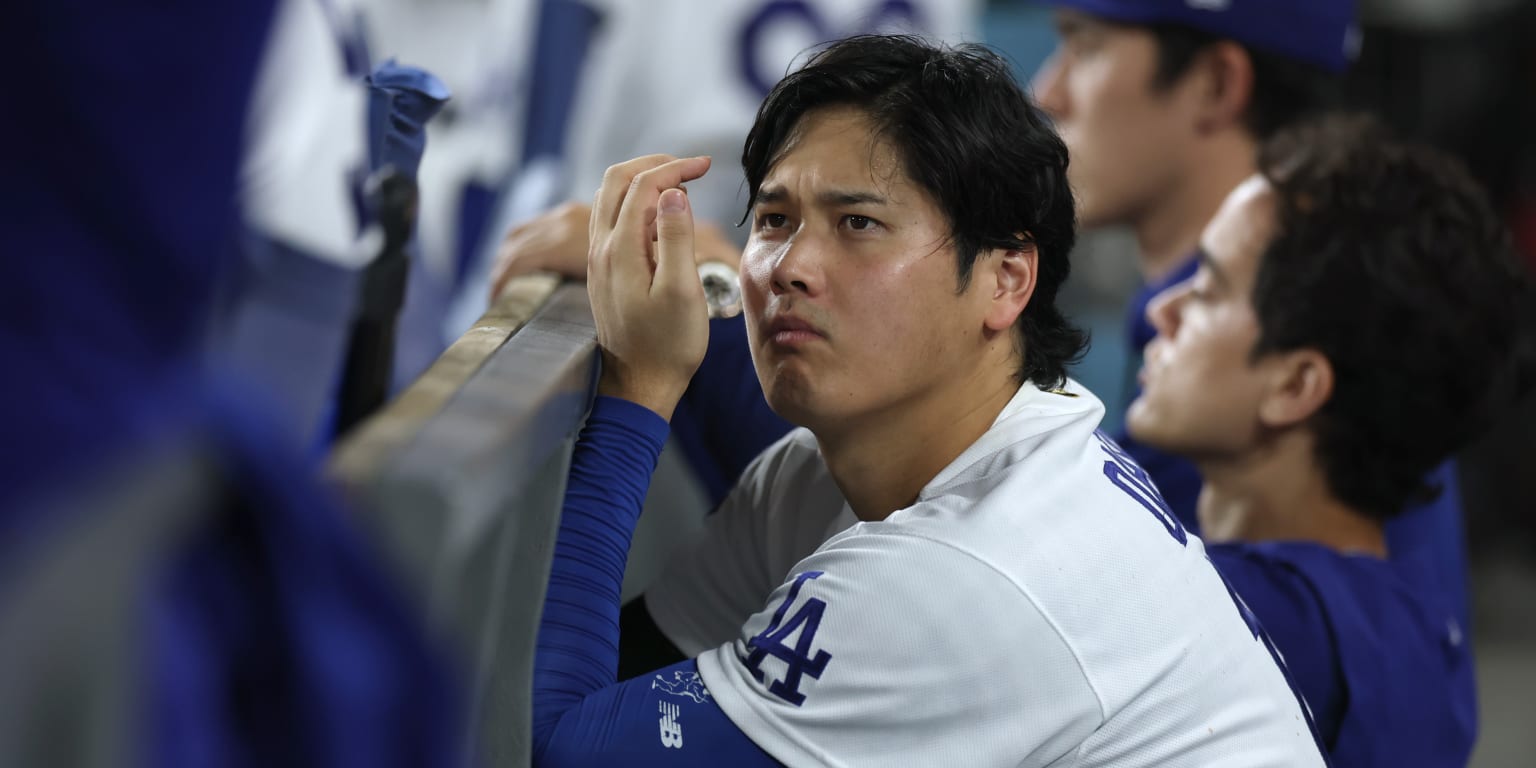
The Los Angeles Dodgers are navigating a high-stakes intersection of asset preservation and competitive necessity. The convergence of right biceps inflammation, cervical strain, and left knee instability has shifted the organizational discourse from routine maintenance to the formal consideration of an Injured List (IL) stint for Shohei Ohtani.
Roster Economics and the IL Threshold
Manager Dave Roberts’ transition from optimism to a “hopeful but not confident” stance signals a shift in the internal risk-reward calculus. Maintaining Ohtani on the active roster while he is functionally unavailable imposes an escalating opportunity cost, effectively forcing the Dodgers to operate with a short bench. An IL designation is no longer merely a medical necessity but a strategic tool for roster optimization, allowing the team to backfill his spot during high-leverage series against opponents like the Washington Nationals.
Kinetic Chain Disruption and Mechanical Integrity
The synergy of Ohtani’s injuries—targeting the primary decelerator (biceps), rotational axis (neck), and foundational pivot (left knee)—represents a systemic failure of the kinetic chain. For a high-velocity hitter, any compromise in lead-knee stability necessitates mechanical compensations that diminish bat speed and barrel control. This is reflected in Ohtani’s recent regression to a .279 average; while statistically competent, the performance indicates a loss of the elite mechanical integrity required for his typical production levels.
Pitching Regression and Postseason Rotational Hierarchy
The most acute strategic casualty of these lingering pathologies is the collapse of Ohtani’s pitching timeline. Initially viewed as a secondary concern, these injuries now threaten his availability as a high-leverage arm in October. The delay in his throwing program forces the Dodgers to abandon a hybrid pitching structure and revert to a traditional rotation, neutralizing the unique competitive advantage of a two-way superstar. Furthermore, the postponement of rehabilitation milestones creates significant carry-over risk for his 2025 workload management.
Managerial Communication and Clubhouse Stability
The organization’s public emphasis on Ohtani’s “jovial” dugout presence serves as a stabilization tactic to mitigate external speculation and maintain clubhouse morale. However, the disparity between his outward demeanor and his lack of participation in baseball activities underscores the severity of his physical constraints. The diagnostic “light work” sessions serve as the final gatekeeper; if rotational movements continue to trigger inflammation, the operational path toward the IL becomes the only logical conclusion to preserve his long-term health and the team’s postseason ceiling.