Prediction Markets: A New Financial Frontier in Professional Tennis
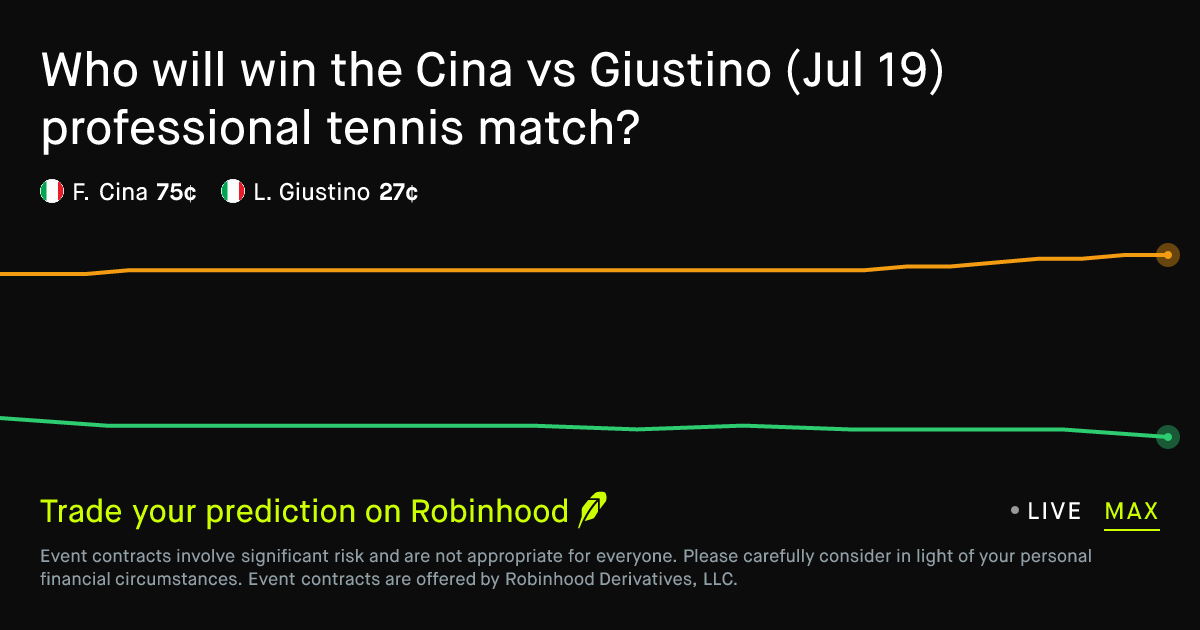
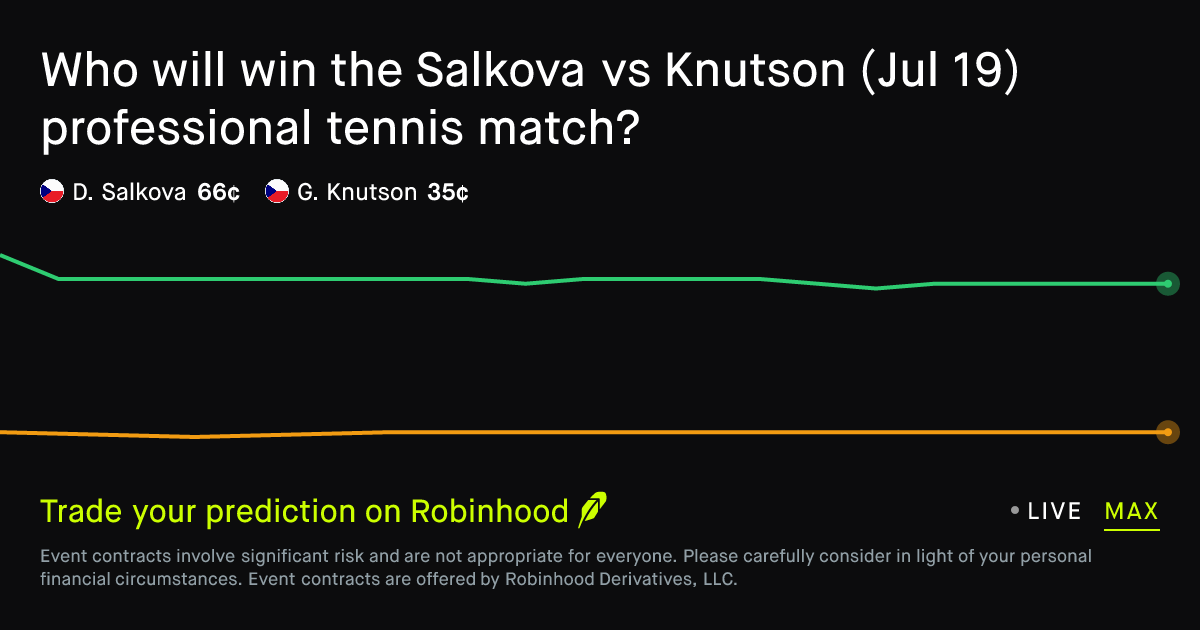
The emergence of prediction markets for professional tennis, exemplified by contests such as Seidel vs. Snigur, Salkova vs. Knutson, and Cina vs. Giustino, signifies a sophisticated evolution in how public sentiment and perceived probabilities surrounding sporting events are monetized. Platforms like Kalshi host these markets, functioning as advanced mechanisms for participants to trade contracts based on specific outcomes, reflecting a broader trend towards the financialization of event-based forecasting. This model offers a distinct alternative to traditional sports betting, emphasizing dynamic price discovery, liquidity, and participant-driven valuation, akin to a financial exchange rather than a fixed-odds wager.
Market Mechanics and Operational Integrity
Central to these prediction markets is a robust operational framework designed for clarity, fairness, and the management of event-specific contingencies. Contract resolution is precisely tied to the designated professional tennis match, specifically “after a ball has been played.” This granular trigger is critical for market integrity, establishing an unambiguous commencement point that safeguards both the platform and participants from disputes related to last-minute cancellations or non-starts.
Further reinforcing market integrity, explicit rules address scenarios such as player injury, walkovers, forfeitures, or any pre-match cancellation. In such instances, the market resolves to a fair price, ensuring equitable capital adjustment or return rather than tying funds to a non-event. The flexibility to keep markets open and resolve postponed or delayed matches within a two-week window demonstrates a sophisticated understanding of real-world sports logistics, minimizing trader disruption and maintaining market continuity.
Pricing Dynamics and Aggregating Collective Intelligence
The pricing of contracts within these prediction markets offers real-time, aggregated insights into perceived probabilities for each outcome. For example, a contract priced at 26¢ for Ella Seidel and 71¢ for Daria Snigur directly implies a 26% and 71% winning chance, respectively, based on market participant consensus. These prices act as dynamic signals, distilling diverse information—public sentiment, statistical analyses, and expert opinions—into a single, tradable value.
The sum of implied probabilities often provides further market insight: sums slightly less than 100% (e.g., 97% for Seidel vs. Snigur) typically reflect platform operational fees, bid-ask spreads, or inherent market friction. Conversely, sums exceeding 100% (e.g., 101% for Salkova vs. Knutson, 102% for Cina vs. Giustino) can indicate real-time market volatility, temporary inefficiencies, or wider spreads in less liquid trading pairs. These nuances underscore the dynamic, continuously adjusting nature of these markets.
A key differentiator is the ability for participants to “close your position before” resolution. This feature highlights the markets’ liquid nature, enabling sophisticated risk management, profit-taking, and complex trading strategies such as hedging or arbitrage, thereby elevating prediction markets beyond simple wagers to a more advanced financial instrument.
Regulatory Posture and Strategic Autonomy
Kalshi’s explicit disclaimer—stating it is “not affiliated, associated, authorized, endorsed by, or in any way officially connected with the Governing League”—is a critical strategic and regulatory declaration. This clause meticulously delineates the platform’s independence from official sports organizations, proactively addressing potential concerns regarding intellectual property, data rights, and event integrity. Crucially, this non-affiliation positions prediction markets as regulated financial derivatives for event outcomes (e.g., regulated by the CFTC in the U.S.), distinct from traditional sports gambling which typically operates under different, often more stringent, licensing frameworks.
By maintaining a clear separation, platforms like Kalshi navigate legal complexities by operating as information aggregation tools rather than direct extensions of the sports entertainment industry. This strategic autonomy is vital for managing stakeholder expectations and mitigating legal exposure, underpinning the platform’s intent to function as a financial market for event outcomes, leveraging public data and collective intelligence.
Stakeholder Impact and Evolving Sports Engagement
The growth of prediction markets for professional sports carries multifaceted implications for various stakeholders. For platforms, it represents a scalable business model, capitalizing on public interest to generate trading volume and associated fees. Participants gain a novel, financially incentivized avenue for engagement, combining the thrill of sports with the principles of financial trading. The potential for a $1 payout per correct contract encourages informed decision-making and active participation, fostering a community of traders focused on forecasting accuracy.
For professional sports leagues and athletes, the existence of these markets, even without official endorsement, introduces new dynamics. While not directly affiliated, these markets inherently draw attention to specific matches and players, potentially increasing visibility and fan engagement through an alternative, analytical lens. However, this lack of official connection also means leagues do not directly benefit economically from this activity, nor do they exercise direct oversight. This raises broader questions about data ownership, commercial rights, and the use of league intellectual property, though trademarks are acknowledged as belonging to their respective owners.
Competitive Landscape and Systemic Impact
Prediction markets operate within a dynamic ecosystem of information and financial services, offering a distinct value proposition. They compete not only with traditional sportsbooks, differentiating through dynamic pricing and liquidity, but also with broader financial derivatives markets, by focusing on event-specific outcomes. Their 24-hour trading window, with minimal exceptions, highlights a global and continuous market, mirroring modern financial exchanges and catering to an international audience with constant opportunities for participation.
Fundamentally, prediction markets differentiate themselves by harnessing the collective wisdom of crowds for forecasting. Their pricing mechanisms are often cited as highly efficient predictors of future events, driven by financial incentives for accuracy. This positions them as valuable tools beyond mere entertainment or speculation, serving as dynamic instruments for data analytics and forecasting across diverse sectors. Ultimately, these markets represent a significant development at the intersection of finance, technology, and sports, challenging traditional engagement models and highlighting the enduring human interest in valuing and monetizing future outcomes as economic assets. Their continued operation points to a robust, institutionally strategic model navigating complex relationships between innovation, entertainment, and regulation, with a growing systemic relevance in how information is valued and disseminated.