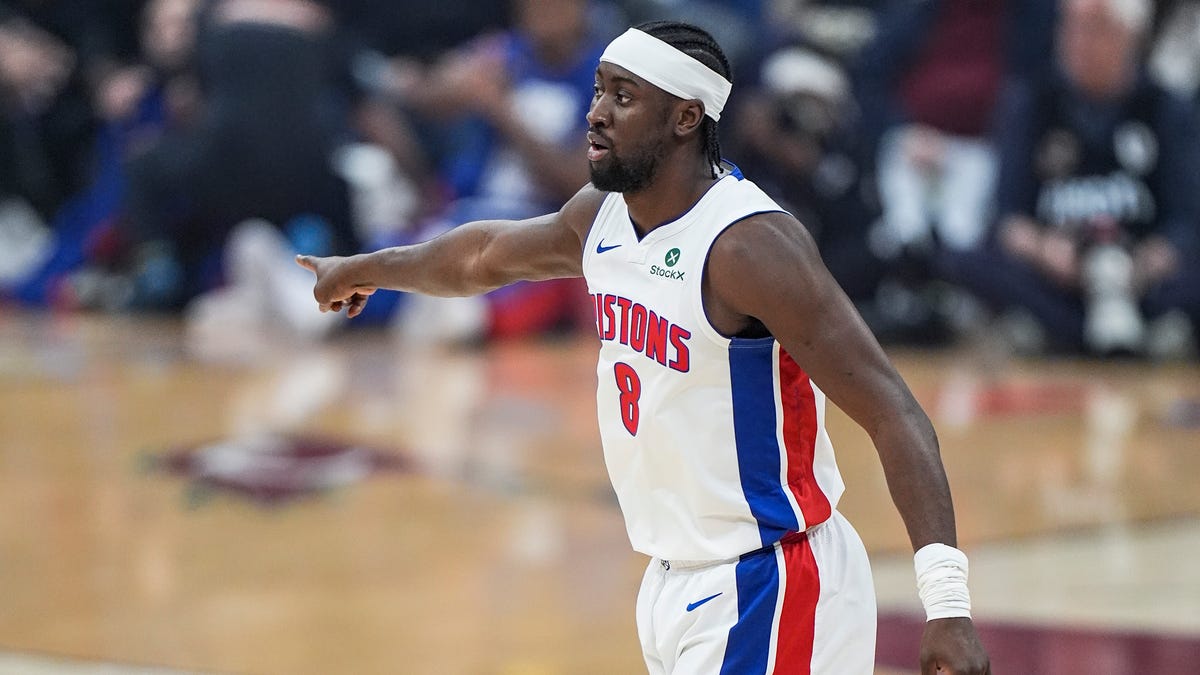
Pistons Execute Strategic Roster Reshuffle for Financial Flexibility
The Detroit Pistons have initiated a significant roster adjustment, trading Caris LeVert and two future second-round draft picks to the Milwaukee Bucks. This transaction injects forwards Taurean Prince and Gary Harris into the Pistons’ lineup. The move is strategically designed to generate substantial salary cap relief and enhance the team’s financial maneuverability within the Eastern Conference.
This trade directly addresses the Pistons’ need for financial flexibility, creating an estimated $7.2 million in salary cap space. Crucially, it also generates a $7.2 million trade exception, valid for one year. This exception provides Detroit with a distinct window to pursue further acquisitions or re-sign key players without immediately impacting their cap sheet, underscoring the team’s intent to optimize its financial architecture for future roster development.
Financial Implications and Strategic Leverage
The financial architecture of the deal centers on salary management. Caris LeVert’s expiring contract, valued at approximately $14.8 million, was a primary driver for the Pistons’ decision to move him, facilitating significant immediate savings. In contrast, Taurean Prince and Gary Harris, both on expiring contracts valued at roughly $3.8 million each, represent lower immediate financial commitments while offering valuable veteran presence and on-court contributions.
The acquisition of a $7.2 million trade exception is a critical asset. It allows the Pistons to absorb a player’s contract of that value in a future transaction without impacting their immediate cap space. This mechanism is particularly potent during the offseason, enabling teams to acquire talent that might otherwise be financially prohibitive. The one-year expiration of this exception imposes a strategic deadline, compelling the Pistons to identify and execute their next roster move efficiently.
Player Personnel Dynamics and Competitive Positioning
The exchange of players signifies a recalibration of the Pistons’ roster composition. Caris LeVert provided scoring and playmaking, averaging 7.4 points and 2.7 assists in 19.2 minutes per game last season. His departure, after one season on a two-year contract signed in 2025, signals a shift in strategic priorities. Taurean Prince brings defensive versatility and veteran experience. Gary Harris adds shooting prowess and defensive capability, drawing on a career that began in 2014, and provides a connection to Michigan’s basketball heritage.
Market Impact and Future Opportunities
This trade by the Pistons is indicative of a broader trend in the NBA where teams increasingly leverage financial flexibility to gain a competitive edge. By shedding salary and acquiring assets like trade exceptions, Detroit positions itself to be an active participant in the offseason market. This could involve targeting free agents, executing further trades, or retaining their own emerging talent.
The Pistons’ strategy of creating salary space and reshaping their roster aims to augment their existing core. The acquisition of Prince and Harris provides depth and specific skill sets that can complement existing stars. The success of this strategy will hinge on the Pistons’ ability to effectively deploy their newfound financial flexibility in the coming months.
League-Wide Strategic Recalibrations
The Pistons’ proactive approach to roster management, particularly their willingness to trade established players for future flexibility, reflects the dynamic nature of the NBA’s competitive balance. Teams constantly seek advantages through player development, strategic trades, or astute free agency signings. This trade demonstrates Detroit’s commitment to optimizing its resources to sustain and enhance its position in a highly competitive Eastern Conference.
The Milwaukee Bucks, conversely, are likely pursuing their own strategic objectives. The acquisition of LeVert’s contract may align with their long-term plans or provide a player whose skill set better fits their current system. Understanding the full strategic implications for both franchises requires ongoing observation of their subsequent moves.
Historical Context of Player Movement and Cap Management
The Pistons’ current strategy echoes historical patterns of NBA franchises that have successfully navigated salary cap constraints to build sustained success. Teams prioritizing long-term financial health and strategic asset accumulation often find themselves in a stronger position. The use of trade exceptions has been a hallmark of shrewd front-office management, enabling teams to acquire impact players without sacrificing future flexibility.
The league’s evolving economic landscape, with increasing player salaries and complex collective bargaining agreements, necessitates sophisticated cap management. The Pistons’ decision to prioritize cap space over LeVert’s immediate contribution suggests a long-term vision that values flexibility. This approach is not without risk, as the value of a trade exception is contingent on identifying and acquiring the right player within its limited timeframe.
Stakeholder Implications and Performance Leverage
For the Detroit Pistons organization, this trade represents a calculated risk aimed at maximizing future performance leverage. By creating financial room, they signal to their fanbase and potential free agents their ambition to remain competitive and make impactful additions. The success of this strategy will ultimately be measured by the team’s ability to translate this financial flexibility into on-court success and sustained competitiveness.
For Caris LeVert, the move to Milwaukee offers a potential change of scenery and a chance to redefine his role. For Taurean Prince and Gary Harris, joining a Pistons team built on recent success suggests an opportunity to contribute to a growing contender. The performance of these players will be closely scrutinized as the Pistons aim to build upon their recent achievements.
The Evolving Eastern Conference Landscape
The Pistons’ strategic maneuvers are occurring within an increasingly competitive Eastern Conference. This heightened level of competition underscores the imperative for teams to continually adapt and improve. This trade can be viewed as a proactive measure to ensure the Pistons remain at the forefront of this evolving landscape.
By shedding salary and acquiring players who can contribute immediately, the Pistons signal their intent to contend. The acquisition of Prince and Harris provides depth and experience crucial for the demanding NBA season. The long-term impact of this trade will depend on how effectively the Pistons utilize the financial flexibility and integrate these new players into the team’s existing structure.
Broader Industry Implications of Roster Optimization
The Pistons’ trade exemplifies a broader trend in professional sports where roster optimization and financial strategy are intrinsically linked. Teams increasingly employ data analytics and sophisticated financial modeling to make informed decisions about player acquisition and retention. This trade is not just about player movement but also about the strategic deployment of financial capital.
The acquisition of a trade exception is a testament to the intricate financial mechanisms available to NBA franchises, allowing teams to be opportunistic and acquire talent not readily available through traditional channels. The Pistons’ successful execution of this strategy could influence how other teams approach their own roster construction and financial planning.
The Role of Scouting and Player Development
While the trade focuses on immediate roster adjustments and financial flexibility, the long-term success of the Pistons will also depend on their continued investment in scouting and player development. The acquisition of Gary Harris, a former collegiate star, suggests an appreciation for established talent, but the team’s ability to identify and nurture emerging players remains crucial.
The Pistons’ strategic vision likely encompasses both immediate roster enhancements and the cultivation of future talent. The two second-round picks traded away represent potential future assets, underscoring the delicate balance between present competitiveness and future potential that all successful franchises must manage. The effective integration of new players alongside their existing young core will be a key determinant of their sustained success.
Media Narrative and Fan Perception
Trades of this nature significantly influence the media narrative and shape fan perception. The Pistons’ move to acquire proven NBA talent while simultaneously creating financial flexibility is likely to be viewed positively, signaling a commitment to contention. The narrative will evolve based on the team’s performance and subsequent offseason acquisitions.
The inclusion of Gary Harris, a former Michigan State star, adds a layer of local interest and narrative appeal for Pistons fans. This connection can foster greater engagement and support within the Michigan sports ecosystem. The media’s role in framing these transactions is crucial in shaping public opinion and setting expectations for the team’s future performance.
Long-Term Ecosystem Leverage
The Pistons’ strategic decision to generate salary cap space and acquire assets like a trade exception is fundamentally about increasing their long-term ecosystem leverage. By optimizing their financial position, they enhance their ability to attract and retain top-tier talent, negotiate favorable contracts, and remain competitive over multiple seasons. This proactive approach is essential in a league where team trajectories can shift rapidly.
The acquisition of Taurean Prince and Gary Harris, while not headline-grabbing moves, represent calculated additions that can bolster team depth and provide specific skill sets. The true leverage will be realized if these players contribute to on-court success and if the created cap space is utilized effectively to acquire further impact players, solidifying the Pistons’ position as a perennial contender in the Eastern Conference.