
Strategic Utility vs. Operational Friction
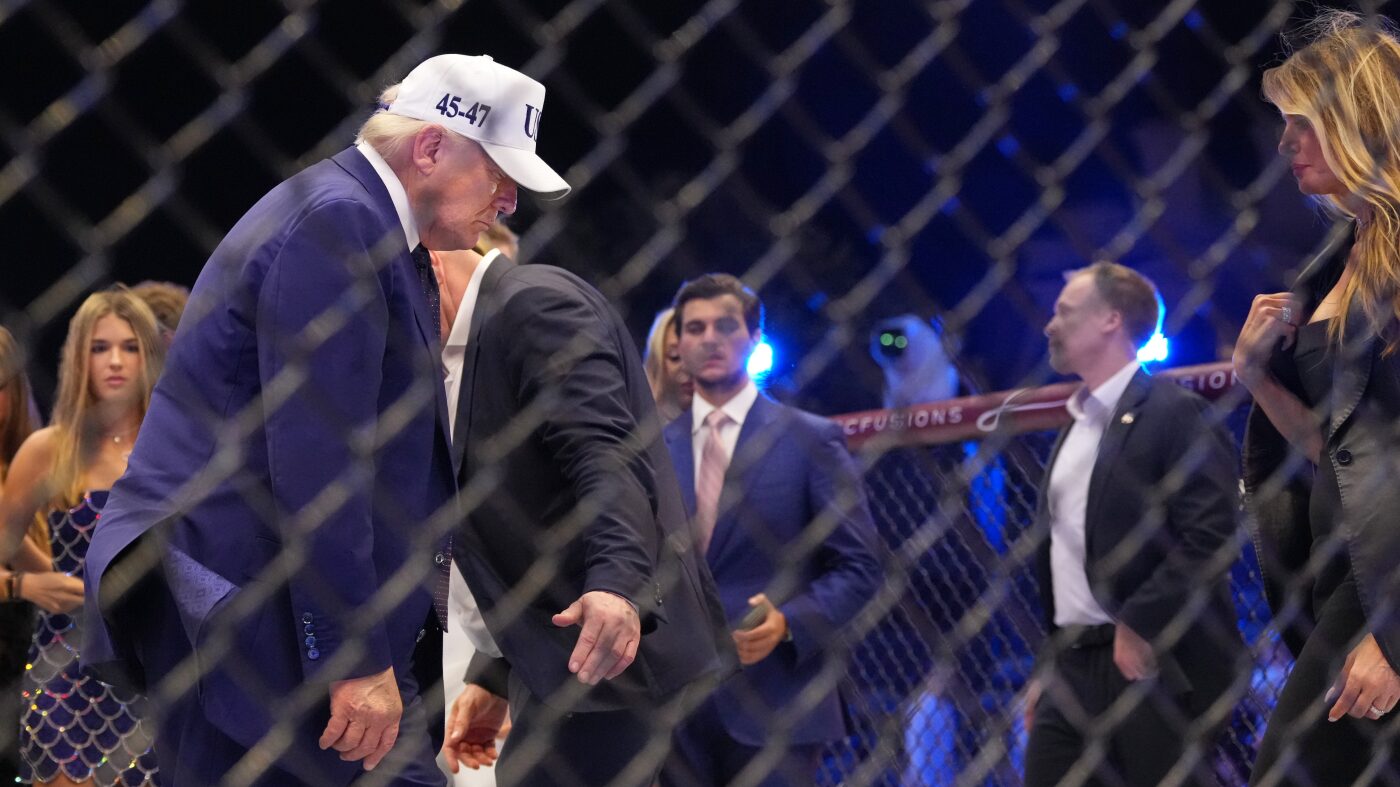
UFC CEO Dana White’s characterization of the White House fight night as a ‘one-of-one’ success signals a deliberate strategic pivot. While the event surpassed internal benchmarks for commercial performance, the ‘never again’ directive suggests that the immediate revenue gains were outweighed by the sheer resource intensity of non-traditional venue adaptation. This outcome highlights the friction between high-impact novelty and the scalable efficiency of standardized arena operations.
The event, featuring Justin Gaethje’s victory and high-level interactions with the executive branch, was framed as a singular spectacle. By labeling it as such, the UFC preserves the event’s historical cachet while signaling to stakeholders that the organization prioritizes its established, high-margin logistical model over the complex variables inherent in government-facility integration.
The Logistics of Institutional Adaptation
Executing a premier combat sports event within a historical government site necessitated an unprecedented level of inter-agency coordination. Beyond the visible setup of the Octagon, the UFC had to navigate stringent federal security protocols, specialized broadcast infrastructure, and restricted crowd management. This operational feat demonstrated the UFC’s organizational agility but exposed the prohibitive costs and resource allocation required for such an environment.
Furthermore, the experiential aspect—including West Wing tours for an all-male fighter roster—introduced a civic layer to the professional engagement. While this provided unique content and athlete branding opportunities, the logistical overhead and security clearances required for such access remain incompatible with the UFC’s high-frequency event schedule, further validating the ‘one-of-one’ designation.
Commercial Leverage and Direct-to-Consumer Growth
From a financial perspective, the White House engagement served as a high-leverage catalyst for the UFC’s digital ecosystem. The reported surge in streaming service subscriptions and merchandise sales confirms that politically charged, exclusive content can effectively drive direct-to-consumer conversions. This validated the UFC’s ability to monetize attention-driven spectacles outside traditional sports distribution models.
This performance underscores the UFC’s significant market leverage. By successfully converting a politically polarized event into tangible financial growth, the organization demonstrated the resilience of its core product. However, the decision to avoid repetition indicates that these gains are viewed as a tactical windfall rather than a sustainable long-term revenue stream for the brand.
Risk Mitigation and Global Brand Neutrality
The ‘never again’ stance reflects a calculated effort to preserve long-term brand equity. Deep political entanglement, while lucrative in the short term, presents significant risks to a global entity seeking broad demographic appeal. For the UFC, maintaining a degree of institutional independence is crucial for navigating diverse international markets and maintaining relationships with a wide array of sponsors and media partners.
By limiting such engagements, White is practicing proactive risk mitigation. The strategy prioritizes brand neutrality over the volatility of political cycles, ensuring the UFC remains accessible to fans regardless of ideological alignment. This approach recognizes that the unique cultural and political climate of the event provided a benefit that might not be replicable without incurring greater reputational costs in the future.
Institutional Boundaries and Media Control
The media’s framing of the event as ‘the America we needed to see’ highlights the challenge of narrative control when sports intersect with national politics. For the UFC, the event was a commercial vehicle; for the media, it was a cultural symbol. This divergence of interpretation underscores why the organization seeks to return to environments where it can more effectively control its own messaging and brand identity.
Ultimately, this ‘one-of-one’ event serves as a case study in institutional boundaries. It defines the point where commercial opportunity meets operational and strategic limits. By setting a clear precedent against repetition, the UFC reaffirms its commitment to a global sports-first identity, ensuring that its future trajectory is determined by athletic competition rather than political spectacle.

Photo by tixonov_valentin on Pixabay.