Guardians’ Strategic Ascent Challenges Yankees’ Dominance
The Cleveland Guardians have established themselves as formidable challengers to the New York Yankees, significantly impacting the American League playoff narrative. This series underscores Cleveland’s championship ambitions, presenting a more critical juncture for them than for the storied Yankees.
The Guardians’ current trajectory is characterized by exceeding expectations, a consistent pattern where they leverage strategic player development to secure divisional leads over preseason favorites. Their AL Central position highlights a roster built on internal growth and consistent performance, a sustainable model for competitive success.
Elite Player Development Fuels Cleveland’s Competitive Edge
Cleveland’s rise is anchored by a cadre of elite young talent, featuring a quartet of players aged 25 and under driving their offensive output. This strategy of cultivating internal prospects over reliance on high-cost free agents signifies a long-term organizational focus on maximizing player value through robust development pipelines.
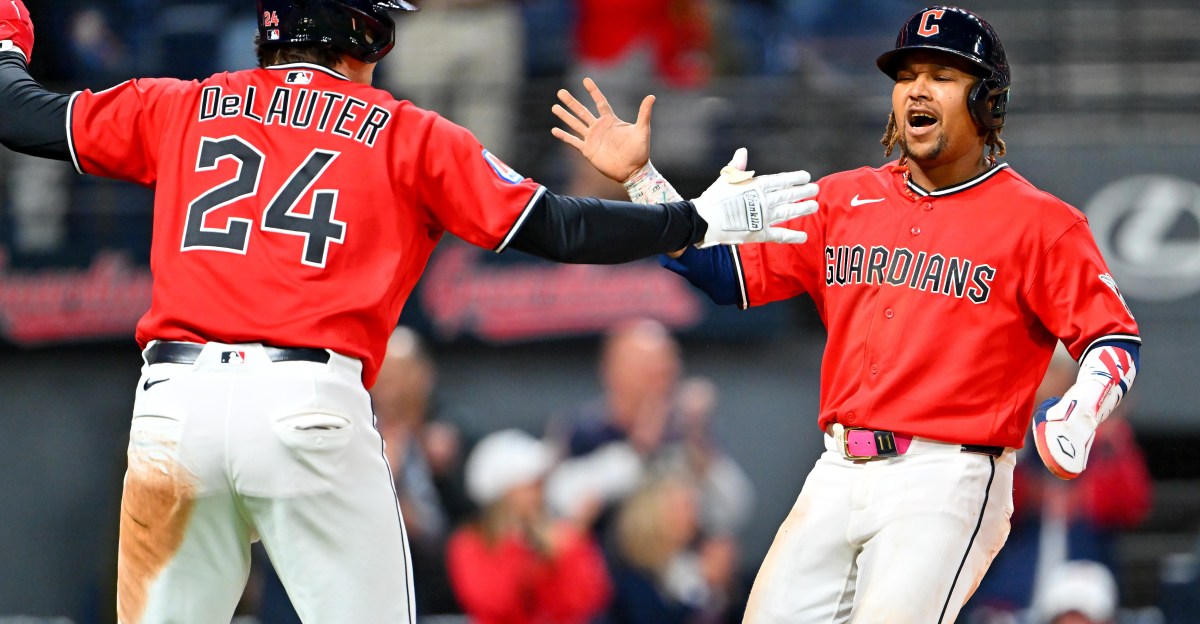
Rookie first-round selections Travis Bazzana and Chase DeLauter are demonstrating substantial offensive impact, reflected in their high weighted runs created plus (wRC+) metrics. Their immediate contribution validates the organization’s success in integrating high-potential prospects, forming a cost-effective and potent competitive advantage.
Defensive solidity from key players like shortstop Brayan Rocchio and left fielder Angel Martínez further fortifies the team’s performance. This balanced approach, integrating defensive acumen with offensive production, is crucial for success in high-pressure playoff environments.
Yankees Face Strategic Vulnerabilities Against Guardians’ Approach
Despite being home favorites, the New York Yankees confront strategic challenges that the Guardians’ contact-oriented offense is poised to exploit. The return of pitcher Gerrit Cole from elbow surgery, while promising, offers an opportunity for Cleveland to disrupt his rhythm through consistent ball-to-bat contact and disciplined plate appearances.
Cleveland’s league-low whiff rate and disciplined approach to the strike zone, characterized by minimal chases outside the zone, present tactical advantages against swing-and-miss reliant pitchers. This strategy aims to extend at-bats, increase pitch counts, and induce fatigue in opposing bullpens.
The potential absence of a key player like Aaron Judge due to injury would create significant lineup vulnerabilities for the Yankees, amplifying the importance of this series against a resurgent Guardians squad.
Market Dynamics and Betting Insights Favor Guardians’ Value
The betting market’s continued confidence in the Yankees as favorites, even with Gerrit Cole on the mound, reflects their established brand equity. However, the Guardians’ moneyline at +135, with potential value up to +120, signals an attractive proposition for bettors recognizing Cleveland’s superior underlying performance metrics and strategic advantages.
The game’s projected total of Under 7 runs, with a favorable line of +102, suggests an expectation of a tightly contested, low-scoring affair. This aligns with Cleveland’s proven ability to frustrate opposing pitchers and their own staff’s capability to limit high-scoring outcomes.
While Gerrit Cole’s recent performance metrics (zero barrels, low xERA) are noted, the long-term sustainability of elite performance immediately post-surgery against contact-heavy lineups remains a key analytical consideration.
League-Wide Repercussions of Guardians’ Sustained Success
The Guardians’ consistent success challenges the traditional AL hierarchy, particularly the perceived dominance of the AL East. Their ability to outperform expectations and lead their division through internal development offers a compelling alternative to the high-spending model employed by many franchises.
This performance leverage demonstrates that organizational efficiency, astute scouting, and effective player development can rival, and sometimes surpass, the impact of significant capital investment. It compels other organizations to re-evaluate their strategic priorities and the long-term value of robust farm systems.
A deep postseason run by Cleveland would further validate their organizational philosophy, potentially influencing future competitive strategies across Major League Baseball by highlighting alternative pathways to sustained success.
Historical Rivalry Meets Modern Analytics
The historical backdrop of intense playoff clashes between the Yankees and Guardians adds narrative weight to their current series. This legacy underscores the potential for high-stakes games and memorable moments, intensifying the competitive atmosphere of their regular-season encounters.
José Ramírez remains a pivotal force for Cleveland, providing veteran leadership and consistent offensive impact. His blend of power (8 HRs) and speed (20 SBs), combined with a strong walk-to-strikeout ratio, anchors the team’s younger talent and exemplifies their balanced offensive approach.
The Guardians’ consistent year-over-year outperformance suggests a resilient organizational culture and a strategic advantage in talent identification and development, positioning them as a perennial contender in the American League.
Organizational Strategy: Efficiency Over Expenditure
Cleveland’s organizational strategy prioritizes long-term sustainability and competitive advantage through player development over short-term market gains. This contrasts sharply with organizations heavily reliant on free agency and trades, showcasing diverse paths to success in a competitive league.
The successful integration of rookie first-round picks like Travis Bazzana and Chase DeLauter validates their advanced scouting and development infrastructure. This operational efficiency allows them to compete at a high level without the substantial payrolls of many rivals, creating a unique competitive leverage.
The Guardians’ consistent performance in a division widely predicted to favor other teams, like the Detroit Tigers, demonstrates strategic foresight and disciplined execution of their long-term vision, establishing them as a model for organizational efficiency within MLB.
Media Narrative: Underdogs Challenging the Establishment
The narrative of the Guardians emerging as a threat to the Yankees resonates deeply within baseball media and fan engagement. It presents a compelling underdog story challenging established powerhouses, sparking debate on league competitive balance and strategic innovation.
For stakeholders—ownership, front office, and players—this performance validates strategic decisions and reinforces organizational culture. It translates into potential revenue growth, enhanced brand value, and increased long-term investment in the franchise’s future.
A deep postseason run would solidify Cleveland’s status as a major American League contender, attracting further talent and investment and fostering a cycle of sustained success.
Capital Allocation: Smart Investment Yields Performance Leverage
Cleveland’s success, built on homegrown talent, exemplifies highly efficient capital allocation. By minimizing large free-agent expenditures, they reinvest resources into scouting, development, and infrastructure, generating performance leverage that higher-payroll teams struggle to replicate without similar strategic focus.
This model demonstrates that substantial financial resources are not the sole determinant of competitive standing. Strategic acumen in talent identification, acquisition, and development can yield results comparable, or superior, to simply outspending opponents.
The contrast between Cleveland’s development-centric approach and the Yankees’ perennial pursuit of top-tier free agents highlights divergent team-building philosophies. Cleveland’s current trajectory indicates their method is particularly effective in the current MLB economic and competitive climate.
Competitive Landscape: Guardians Reshape AL Dynamics
The Guardians’ emergence as a consistent threat reshapes the American League’s competitive dynamics. Their ability to challenge traditional powerhouses like the Yankees forces rivals to adapt strategies and reconsider the long-term implications of player development and roster construction.
This sustained performance leverage suggests the Guardians are not a temporary phenomenon but a durable competitive force. Their consistent outperformance and divisional leads indicate a robust organizational structure adaptable to evolving professional baseball demands.
The strategic implications extend beyond the current season, potentially influencing future talent acquisition and development strategies across MLB. Cleveland’s success serves as a vital case study in efficient capital allocation and strategic execution within the league’s intensely competitive landscape.