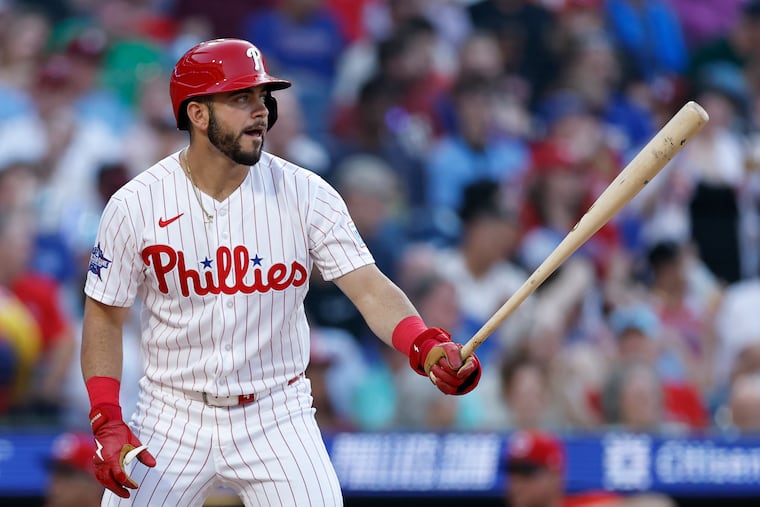
The Philadelphia Phillies have enacted key roster adjustments, optioning outfielder Otto Kemp to Triple-A Lehigh Valley and recalling switch-hitting outfielder Steward Berroa. These strategic moves underscore the team’s proactive approach to optimizing its playing roster and maximizing strategic depth during a critical phase of the season.
Operational Realignment and Strategic Depth
Otto Kemp’s option reflects a strategic recalibration of immediate roster needs and player development priorities. Kemp’s limited major league exposure, marked by a lack of recent games and a prolonged hitless streak, indicated a current role bottleneck. The Phillies’ strategy is to provide him with consistent at-bats in Lehigh Valley, facilitating player development crucial for unlocking his future major league potential.
Steward Berroa’s recall, acquired from the Milwaukee Brewers, introduces specific skills to the Phillies’ bench. His profile as a switch-hitting outfielder with speed suggests a strategic intent to enhance offensive versatility and baserunning capabilities. This acquisition and subsequent recall exemplify the organization’s agile approach to integrating player assets for tactical advantage.
Stakeholder Implications and Player Pathways
For Otto Kemp, the option represents a developmental phase focused on regaining form and consistency in the minor leagues. His trajectory hinges on performance and growth, a standard pathway for players seeking to establish themselves at the major league level.
Steward Berroa’s presence on the active roster offers tactical flexibility, providing options for pinch-running, defensive substitutions, or an offensive spark. His switch-hitting ability offers strategic advantages for manager Don Mattingly in managing lineups against diverse pitching matchups.
Personnel Management Amidst Competitive Resurgence
The Phillies’ recent performance, a significant turnaround resulting in a 29-27 record and second place in the NL East, highlights effective strategic personnel management under interim manager Don Mattingly. This resurgence emphasizes the importance of roster flexibility in driving team success.
While the pitching staff has been a cornerstone of their competitive strategy, the need for offensive and defensive depth remains critical. The roster adjustments directly address this by enhancing versatility and providing tactical options.
Paternity List and Pitching Staff Continuity
The temporary absence of veteran right-hander Aaron Nola, placed on the paternity list for the birth of his second child, necessitates immediate operational adjustments to the pitching rotation.
In response, the Phillies recalled right-handed pitcher Nolan Hoffman from Triple-A Lehigh Valley. This move ensures pitching staff continuity and rotation depth, demonstrating reliance on the minor league system for immediate reinforcements.
Impact on Pitching Rotation and Performance Leverage
Nola’s absence creates a void in the starting rotation that requires strategic management. The team’s strong pitching performance to date suggests resilience, but the loss of an established starter will test this depth. Performance leverage shifts to other starters and the bullpen to absorb the increased workload and maintain competitive standing.
Nolan Hoffman’s opportunity at the major league level, even temporarily, is a significant developmental step. His performance will directly impact the team’s ability to sustain its winning momentum and provides valuable experience for his career progression.
Broader Context: MLB Dynamics and Strategic Adaptation
These roster and personnel changes occur within the dynamic environment of Major League Baseball. Clubs continuously evaluate rosters to optimize talent, manage payroll, and adapt to evolving competitive landscapes. The Phillies’ actions reflect a strategic imperative for sustained competitiveness and long-term player pool development.
While financial details are not provided, transaction costs like cash considerations for player acquisitions are integral to club operations. Strategic roster decisions are intrinsically linked to capital allocation and the pursuit of on-field success as a driver of franchise value.
Competitive Positioning and Agile Decision-Making
The Phillies’ second-place standing in the highly contested NL East necessitates continuous strategic adaptation and operational efficiency. Roster moves, including Berroa’s recall and Nola’s temporary leave, are tactical responses to maintain this competitive edge.
The team’s smooth execution of these changes, leveraging its minor league system and scouting network, showcases institutional agility in decision-making. The interim manager’s role during this resurgence highlights leadership’s impact on team dynamics and maximizing performance under pressure.
The Role of Analytics in Player Evaluation
Decisions regarding Kemp’s option and Berroa’s recall are likely informed by data-driven player performance and potential evaluations. Modern baseball operations heavily integrate analytics to assess efficiency, identify improvement areas, and project future contributions, guiding strategic roster construction.
The Phillies’ successful season turnaround suggests effective integration of analytical insights with traditional scouting and development methodologies, crucial for identifying and integrating talent.
Future Scenario Considerations
The immediate future involves managing Nola’s absence and integrating Berroa into the active roster. The team’s performance in the coming weeks will be a key indicator of its ability to absorb these changes and maintain its upward trajectory.
Long-term, the development of players like Kemp and Hoffman is vital for sustaining organizational depth and providing cost-controlled talent, aligning with the Phillies’ vision for sustained success.
Balancing Personal and Professional Demands
Aaron Nola’s paternity leave exemplifies the balance between professional athletic demands and personal life milestones. MLB organizations increasingly prioritize supporting players through significant life events, fostering a more sustainable professional environment.
The operational framework for managing personal leaves, including robust minor league systems for immediate replacements, is now standard, ensuring competitive goals are not compromised by unavoidable personal circumstances.
Impact on Team Morale and Culture
Support for Nola during his paternity leave positively impacts team morale and culture, signaling a commitment to player well-being and fostering loyalty.
Conversely, the performance expectations placed on players like Hoffman during Nola’s absence highlight the inherent pressures of professional sports. The team’s collective navigation of these pressures will reflect its resilience and organizational culture.
Organizational Strategy and Capital Allocation
The acquisition of Steward Berroa for cash demonstrates a flexible and cost-effective player acquisition strategy, allowing the organization to address immediate needs without significant long-term financial commitments.
The optioning of Otto Kemp, while developmental, also reflects an assessment of his current market value and potential return on investment, highlighting continuous evaluation of player assets and balancing development costs against future performance potential.
Interim Management’s Role in Strategic Execution
The Phillies’ significant turnaround under interim manager Don Mattingly underscores leadership’s impact on executing organizational strategy, translating directives into on-field results.
This situation also highlights the inherent risks and opportunities in interim management, with Mattingly’s success raising considerations for the team’s long-term managerial direction and stability.
Market Dynamics and Competitive Pressures
The competitive MLB landscape, particularly the NL East, exerts continuous pressure for performance optimization. The presence of strong divisional rivals necessitates proactive and adaptive strategies, as evidenced by the Phillies’ roster adjustments.
These operational decisions are influenced by market dynamics, including player availability, contract valuations, and competing clubs’ strategic priorities, making effective navigation critical for sustained competitiveness.
Conclusion: A Season of Strategic Navigation
The Philadelphia Phillies’ recent roster moves—optioning Otto Kemp, recalling Steward Berroa, and managing Aaron Nola’s paternity leave—demonstrate active resource management and strategic imperative execution. These actions are integral to the team’s sustained resurgence and championship contention.
The organization’s adaptability to planned changes and unforeseen circumstances, like Nola’s leave, highlights its operational depth and strategic foresight. The team’s ongoing performance under interim manager Don Mattingly, coupled with tactical roster adjustments, signifies a coordinated effort to maximize current opportunities while building for future success.