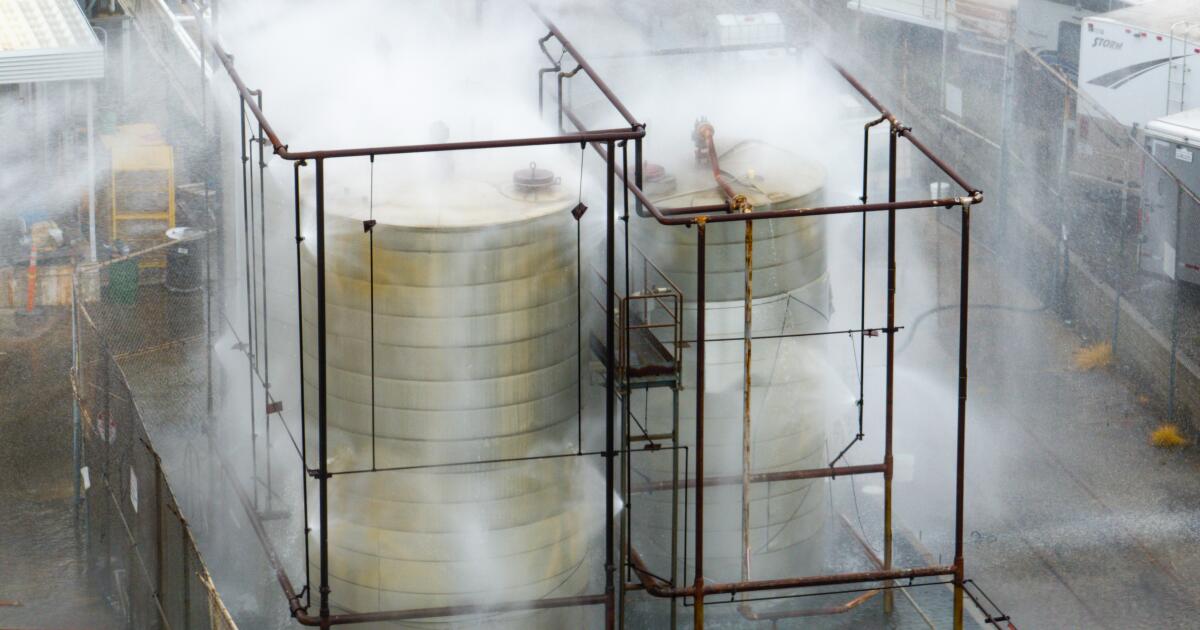
The stabilization of a compromised 6,000-to-7,000-gallon methyl methacrylate (MMA) storage tank at GKN Aerospace Transparency Systems in Garden Grove, California, concludes a high-stakes five-day industrial emergency. This incident highlights the critical structural, regulatory, and logistical vulnerabilities of operating high-capacity chemical storage in close proximity to dense residential zones. For nearly a week, municipal first responders and industrial safety teams managed a volatile, pressurized vessel, highlighting the friction between historical manufacturing corridors and expanding urban zoning.
According to the Orange County Fire Authority (OCFA), the acute threat of a Boiling Liquid Expanding Vapor Explosion (BLEVE) has been neutralized. For emergency managers, who had prepared for potential structural failure of the containment vessel, dropping the internal temperature to 93 degrees Fahrenheit indicated that the runaway chemical reaction had successfully ceased, allowing authorities to systematically scale back public safety measures.
While the immediate hazard has subsided, the incident leaves behind a complex web of operational questions regarding industrial safety protocols, municipal emergency preparedness, and the socioeconomic impact of large-scale evacuations. As local leaders and regulatory bodies evaluate the timeline of the crisis, attention shifts from active mitigation to long-term structural and regulatory accountability.
Technical Dynamics of the Methyl Methacrylate Runaway Reaction
The crisis began when thermal regulation systems failed on a storage tank containing thousands of gallons of MMA, initiating a rapid temperature spike and pressure escalation. MMA is a highly volatile, flammable monomer utilized in acrylic glass and resin production. It requires strict temperature control to prevent spontaneous polymerization. Left uninhibited, the monomer undergoes an exothermic reaction, generating self-sustaining thermal energy and vapor pressure that rapidly compromises containment structures.
The primary hazard driving the OCFA’s response was a potential BLEVE—a catastrophic event where a pressurized vessel ruptures due to structural failure, vaporizing superheated liquid and generating a devastating blast wave. To prevent this, tactical teams deployed constant water streams to absorb thermal energy while monitoring the vessel’s structural integrity.
A critical inflection point occurred when a physical crack developed in the tank’s outer shell. Although structural compromises are typically high-risk indicators, in this specific thermodynamic scenario, the breach functioned as an unplanned pressure-relief pathway. By venting accumulated gases, the fissure stabilized internal pressure, arrested the runaway reaction, and allowed cooling operations to systematically lower the core temperature.
Operational Scale and Evacuation Logistics
The scale of the initial evacuation perimeter reflects the high-consequence risk profile of an industrial explosion in a suburban zone. Upon assessing the runaway polymerization, incident command enacted a mandatory evacuation of approximately 50,000 residents. Coordinating a mass evacuation of this scale required immediate mobilization across multiple municipal agencies, law enforcement jurisdictions, and public safety networks.
As internal tank temperatures stabilized, the OCFA contracted the exclusion zone to manage public safety against the socioeconomic strain of displacement. The revised containment boundary—delineated by Orangewood Avenue to the north, Dale Street to the east, Knott Street to the west, and Garden Grove Boulevard to the south—restricted the active evacuation zone to approximately 16,000 residents. This tactical contraction demonstrates the necessity of dynamic, data-driven hazard modeling in urban emergency management.
This transition emphasizes the role of telemetry and continuous diagnostic monitoring in industrial emergencies. Responders relied on thermal imaging, pressure readings, and structural diagnostics to map the potential blast radius and update zoning boundaries, mitigating broad community disruption while preserving protective perimeters around the active hazard site.
Socioeconomic Strain and Community Infrastructure
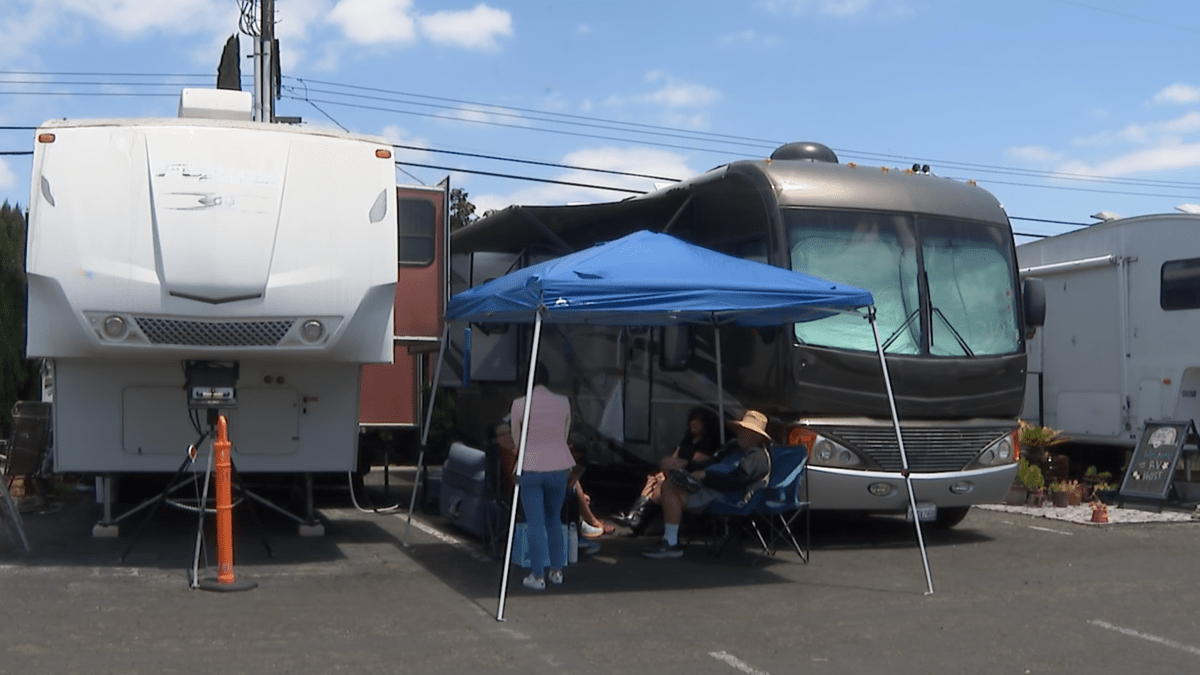
Displacing thousands of families for consecutive nights exposed immediate limitations in local temporary housing and emergency sheltering infrastructure. Displaced residents faced immediate financial and logistical challenges, relying on regional Red Cross shelters, community spaces, and commercial lodging. This multi-day displacement underscored the operational limits of short-term municipal housing programs during regional industrial emergencies.
The Garden Grove Elks Lodge became a vital municipal hub, operating at its peak capacity of 120 families. For many evacuees, community-managed shelters provided the primary defense against unexpected financial hardship, offering food, shelter, and medical support. The reliance on civic organizations highlights how critical community networks are to supporting formal municipal emergency response structures.
The economic impact of the GKN Aerospace incident extends beyond emergency housing to encompass lost hourly wages, business interruptions within the exclusion zone, and unbudgeted transit expenses. For working-class households in the affected sectors, a multi-day displacement causes measurable economic stress, emphasizing the need for comprehensive recovery frameworks that address financial vulnerabilities in communities adjacent to industrial zones.
Industrial Responsibility and Regulatory Scrutiny
The operational failure at the GKN Aerospace Transparency Systems facility will trigger rigorous investigations from local, state, and federal regulatory bodies. GKN Aerospace, a key manufacturer of military and commercial aerospace transparency systems, utilizes complex chemical processes requiring rigid hazard-mitigation systems. The thermal regulation failure on the MMA storage tank raises significant questions regarding maintenance schedules, redundant cooling systems, and early-warning telemetry.
Manufacturing facilities operating within municipal boundaries are subject to strict environmental and industrial safety mandates. Investigations will focus on the root cause of the initial overheating event and whether the facility complied with Process Safety Management (PSM) standards for hazardous chemical storage. The final findings will define corporate liability and outline necessary corrective actions to prevent recurrence.
Furthermore, this crisis reopens the policy debate surrounding urban-industrial zoning interfaces. As residential developments expand, they encroach on long-standing manufacturing corridors, amplifying the risk profile of industrial accidents. This event may prompt municipal planning boards to reassess buffer zones, chemical volume limits, and emergency notification protocols for facilities handling hazardous materials near residential neighborhoods.
Corporate Communication and Public Trust
During localized environmental crises, transparent, real-time communication from both corporate stakeholders and public officials is vital to public safety. Coordination between GKN Aerospace and the OCFA was key to maintaining orderly evacuation compliance. Informative updates help control panic and ensure that residents understand safety directives.
However, the anxiety felt by the displaced population underscores the difficulty of translating complex industrial risks—such as monomer polymerization and BLEVE dynamics—to the public. Building long-term community trust will require continued transparency from GKN Aerospace as investigations transition into the regulatory phase.
Strategic Impact on the Aerospace Supply Chain
The operational halt at the GKN Aerospace plant also introduces supply-chain risks for the broader aerospace and defense sectors. Specialized transparencies are critical, low-volume components; any extended disruption at a primary production site can delay deliverables for defense contractors and commercial aviation clients. Aerospace firms must evaluate the trade-offs of centralized chemical processing against the systemic risk of localized operational shutdowns.
In the wake of this emergency, aerospace manufacturers may face increased insurance premiums and stricter environmental safety audits. The capital cost of implementing automated pressure-relief networks, redundant backup chillers, and remote telemetry will likely rise as regulatory bodies integrate the lessons of the Garden Grove incident. Industry-wide, safety infrastructure must be viewed as an existential operational safeguard rather than a mere cost of compliance.