The strategic deployment of a name-based promotional campaign by Firehouse Subs represents a sophisticated and calculated escalation in the fiercely competitive North American quick-service restaurant (QSR) sector. Scheduled for May 6, 2026, the initiative, which offers a complimentary medium Steak & Cheese Melt to individuals named Mike (or common linguistic and gender variations), transcends a mere tactical giveaway. It is an overt brand-on-brand offensive, explicitly designed to leverage consumer identity for market engagement, brand loyalty acquisition, and direct competitive disruption against its primary rival, Jersey Mike’s. This move signals a new frontier in QSR marketing, where personal names become a direct battleground for market share.
Strategic Brand Erosion and Market Penetration
Firehouse Subs’ decision to target the ‘Mike’ demographic serves a multi-faceted strategic purpose. Firstly, it allows the brand to capitalize on the personal identity of its President, Mike Hancock, thereby humanizing corporate leadership while simultaneously attempting to dilute the brand equity and mental availability of Jersey Mike’s. By temporarily “claiming” the ‘Mike’ identity, Firehouse Subs seeks to disrupt the established cognitive association between that name and its competitor, effectively hijacking a core component of the rival’s brand architecture. This form of guerrilla marketing is designed for maximum media impact and widespread reach at a relatively contained customer acquisition cost.
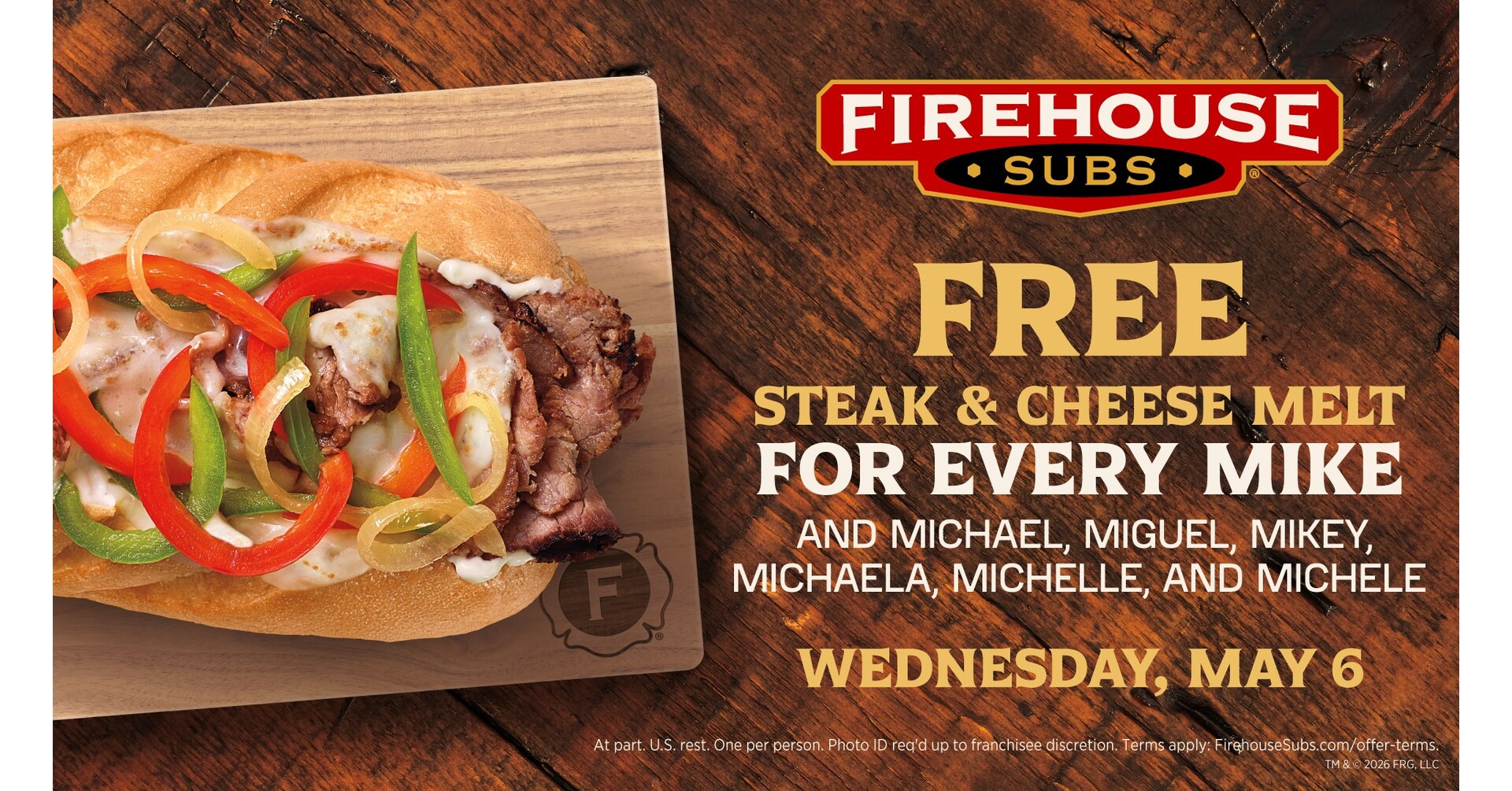
Furthermore, the promotion functions as a high-visibility, zero-barrier trial mechanism for the brand’s new Steak & Cheese Melt. This product is strategically positioned to compete in the premium sub-sandwich tier, featuring USDA Choice prime rib and boasting a significant 42 grams of protein. By eliminating the typical price barrier for a demonstrably large demographic, Firehouse Subs aims to accelerate the product’s adoption curve, generate immediate and widespread product reviews, and gather critical feedback across its extensive franchise network. This direct product experience is intended to convert trial users into loyal, high-value customers by showcasing quality and taste as key differentiators.
Operational Scalability and Supply Chain Resilience
Executing a nationwide ‘no purchase necessary’ promotion, particularly with a premium product, demands exceptional operational coordination and robust supply chain resilience. The reliance on specialized, high-quality ingredients like flame-seared prime rib and brown sugar caramelized onions introduces significant complexities in inventory forecasting, procurement, and prep-time efficiency. Participating locations must meticulously balance a projected surge in promotional traffic with their standard order fulfillment processes, rigorously testing the throughput capacity and consistency of the brand’s signature top-cut roll assembly system. The efficiency of frontline operations during this peak event is paramount to maintaining brand reputation and ensuring a positive customer experience for all patrons.
The requirement for valid identification at the point of sale introduces a critical layer of operational friction. While primarily serving as a verification protocol to protect promotional integrity and manage financial exposure for individual franchisees, this process also presents an invaluable data-gathering opportunity. Staff interactions with a high volume of ‘qualifying guests’ within a compressed timeframe can provide insights into demographic profiles and consumer behaviors, informing future targeted marketing strategies. The success of this logistical challenge hinges on the ability of staff to manage these interactions seamlessly, preventing any degradation of the overall customer experience for both promotional beneficiaries and regular paying customers.
Product Engineering, Nutritional Strategy, and Market Differentiation
The Steak & Cheese Melt’s robust nutritional profile, particularly its 42 grams of protein, is a deliberate strategic alignment with broader consumer trends favoring high-protein diets and functional nutrition. In an era where consumers are increasingly scrutinizing caloric density and macronutrient ratios, Firehouse Subs is positioning this menu item not merely as fast food, but as a performance-oriented, satiety-focused choice. This emphasis on high-quality protein serves as a potent differentiator against competitors who may rely on lower-cost fillers, thereby elevating Firehouse Subs’ perception in the premium QSR segment.
Furthermore, the innovative use of a ‘top-cut roll’ represents a critical aspect of the product’s functional engineering. By enabling ingredients to be loaded from the top rather than the side, the design significantly minimizes ingredient fallout—a common consumer pain point in the steak sandwich category. This attention to detail in the physical construction of the sandwich enhances the eating experience, reinforces the brand’s commitment to quality and operational excellence, and contributes to long-term customer satisfaction and retention, particularly following the initial promotional trial.
Financial Investment and Customer Lifetime Value (LTV)
While marketed as a ‘no catch’ offer, the underlying financial model of this promotion assumes a substantial conversion rate of promotional guests into recurring, high-value customers. The significant cost of goods sold (COGS) for a premium prime rib sandwich positions this as a high-stakes customer acquisition strategy. Firehouse Subs is making a direct investment, betting that the exceptional quality and memorable experience of the Steak & Cheese Melt will justify the immediate revenue loss through a substantial increase in the customer lifetime value (LTV) of acquired patrons. This approach prioritizes long-term market share gains over short-term profitability from the promotional event itself.
The inclusion of the ‘participating locations’ caveat is a standard yet crucial institutional safeguard, designed to manage the financial burden on franchisees who may operate in diverse markets with varying overheads and competitive landscapes. This allows for a strategically tiered participation structure, balancing the brand’s national marketing ambition with local economic realities. The true measure of this promotion’s success will extend beyond the volume of free sandwiches distributed; it will be gauged by the sustained post-event lift in sales for the Steak & Cheese Melt and the overall increase in system-wide transaction counts and customer loyalty metrics.
Strategic Demographic Inclusivity and Amplified Brand Reach
The thoughtful expansion of the promotion to encompass phonetic and cultural variations of ‘Mike,’ such as Miguel, Michelle, and Michaela, demonstrates a sophisticated understanding of demographic inclusivity within the diverse North American market. By broadening the scope beyond a singular anglicized male name, Firehouse Subs ensures the campaign resonates across diverse linguistic and gender lines, preventing any perception of exclusivity or alienation. This strategic inclusivity significantly increases the total addressable market for the one-day event, maximizing the potential for viral social media engagement, organic word-of-mouth marketing, and substantial physical foot traffic across its network.
Specifically, the inclusion of names like Miguel strategically targets the rapidly growing Hispanic demographic—a critical growth segment for QSR brands across the United States. This nuanced approach suggests that the ‘Mike’ campaign is not merely a playful competitive jab but a calculated effort to deepen brand penetration within key cultural cohorts and expand market reach. This institutional foresight mitigates risks of insularity, while simultaneously amplifying the core ‘Mike’ narrative to a broader and more diverse consumer base.
Orchestrated Campaign Management and Media Leverage
The involvement of major media outlets, such as PEOPLE, coupled with direct communication from President Mike Hancock, emphatically underscores the high-level institutional backing and strategic importance of this campaign. This is clearly not a localized marketing experiment but a nationally orchestrated strategy, designed to signal the brand’s aggressive growth posture and competitive ambition within the QSR landscape. The proactive use of social media platforms, like Instagram, to clarify that “the sub is for everyone” demonstrates sophisticated brand narrative control, effectively managing expectations and maintaining positive brand sentiment among those who may not qualify for the free offer.
The timing of the announcement, roughly a week prior to the event, allows for a meticulously sustained build-up of consumer anticipation and widespread media coverage. This lead time is essential for franchisees to optimize labor schedules, for the supply chain to finalize deliveries of specialized ingredients, and for the brand to maximize its earned media reach. The procedural nature of the promotion, involving valid ID checks and precise date constraints, reflects a disciplined approach to large-scale retail events that prioritizes operational order, brand integrity, and a controlled yet impactful consumer experience.
Long-term Industry Precedent and Competitive Dynamics
The ‘Mike’ promotion is poised to establish a significant precedent for how Firehouse Subs, and potentially other QSR brands, might leverage leadership identities and direct competitive rivalries to strategically drive market share. If this model of identity-based, demographically nuanced marketing proves successful, it could be replicated with other names, demographics, or even product categories, creating a recurring series of high-impact, brand-defining events. The long-term consequence for the industry may be a definitive shift towards more aggressive, personality-driven, and directly confrontational marketing tactics that challenge the naming conventions and established brand identities of long-standing players.
For Jersey Mike’s, the institutional response to this direct challenge will be critical. A failure to counter-program effectively, or to strategically reclaim their namesake identity, could result in a perceived erosion of brand authority and a tangible loss of mental availability among consumers. The ongoing “Sub Wars” are demonstrably evolving beyond mere price points and geographic locations; they are now being fiercely contested on the sophisticated terrain of brand identity, consumer psychology, and strategic nomenclature. Firehouse Subs has innovatively weaponized a common name to forge a distinct competitive advantage, effectively compelling its rivals to defend their very nomenclature both in the court of public opinion and in the competitive QSR marketplace.